Tag: secondary

  • How Does The Masters Ticket Lottery System Work?

    How Does The Masters Ticket Lottery System Work?

    It’s that time of year again. Applications for the 2027 Masters ticket lottery are now open, and for thousands of golfers and fans alike—hope springs eternal. The chance to walk Augusta National during Masters week remains one of the most coveted tickets in sports, yet the process for obtaining those tickets remains one of golf’s enduring mysteries.

    The application itself is straightforward enough. Augusta National allows one application per household. Applicants may request up to four tickets for practice rounds and up to two tickets for tournament rounds. You can select multiple days, but if your household is chosen, you can only win tickets for one day.

    And that’s about where the public information ends.

    Since the online application system began in 2012, Augusta National has treated the mechanics of the Masters ticket lottery like a closely guarded secret. We know the rules. We know the chances are slim. But we don’t know how winners are actually selected.

    That uncertainty has led to plenty of theories to surface over the years. Some applicants believe first-time entrants receive preference. Others suspect households that have gone years without winning gradually receive better odds. There are even theories that Augusta National balances winners geographically to ensure representation from across the country and around the world. Spend enough time on golf forums and you’ll find no shortage of explanations from people convinced they’ve cracked the code.

    The truth is nobody outside Augusta National knows.

    So I asked four AI models—ChatGPT, Claude, Gemini and Grok—to analyze the known facts and estimate the most likely lottery design. I gave each model the same prompt and asked them to make their best inference based on lottery design, probability and fairness principles.

    What surprised me was that three of the four models arrived at essentially the same conclusion, and their answer changed how I think about applying.

    The Theory: Households First, Days Second

    ChatGPT, Gemini and Grok all independently landed on a variation of the same idea: Augusta National likely selects households first and assigns days second.

    Under this theory, your household isn’t entered into separate lotteries for Tuesday, Wednesday, Thursday and Sunday. Instead, your household is entered into the lottery once. If your household is selected, Augusta National then determines which of your requested days receives tickets based on whatever inventory and allocation rules exist behind the scenes.

    The logic is compelling because it neatly satisfies every publicly known rule. The one-household limit suggests the household is the primary unit being randomized. The one-day-only restriction becomes easy to enforce because once a household wins, the household is simply removed from the process. The system also avoids the complexity of running separate lotteries for each day and then removing duplicate winners afterward.

    Grok described it as the cleanest solution because it satisfies all known constraints without requiring additional layers of bookkeeping or undisclosed priority systems.

    Of course, none of this proves that Augusta National actually conducts the lottery this way. But three different AI models analyzing the same problem independently arrived at essentially the same answer, which makes the theory highly compelling.

    Claude was the lone outlier. While it also favored a household-first system, it suggested Augusta National could potentially add weighting for applicants who have gone multiple years without winning. The idea would gradually improve the odds for persistent applicants while still maintaining a random draw. It’s an intriguing theory, though unlike the household-first model, the other AI systems did not independently arrive at the same conclusion.

    If They’re Right, It Changes Everything

    The most interesting part of the exercise wasn’t the theory itself. It was the implication for applicants.

    Many people approach the Masters lottery as though every day selected represents another chance to win. Under the household-first theory, that’s probably not what’s happening.

    Instead, your day selections function more like a preference sheet. You’re telling Augusta National which days you would be willing to attend if your household is selected.

    That creates an interesting strategic question.

    If you only select Sunday, you’re maximizing the chance that, if selected, you’ll receive the exact day you want. But you’re also limiting Augusta National’s flexibility. If Sunday’s inventory has already been exhausted by the time your household is drawn, you won’t get Sunday tickets, and since you didn’t apply for any other days, you’re out.

    If, however, you’ve selected Wednesday, Thursday, Saturday and Sunday, Augusta National has multiple opportunities to fulfill your request after your household has already been drawn, as inventory allows.

    Viewed through that lens, selecting more days isn’t necessarily increasing your chances of winning the lottery. It’s increasing the number of acceptable outcomes after you’ve already won.

    That’s a very different way of thinking about the application.

    How I’m Applying

    Assuming the household-first theory is correct—and again, none of us actually know—I’m approaching the application differently than I have in previous years.

    Rather than checking every box available, I’m treating the application as a list of days I’m genuinely willing to attend.

    A Masters trip is about more than simply obtaining a ticket. There are flights to book, hotels to reserve, days off of work to request and expectations for the experience you want to have once you arrive.

    For some, the ideal Masters experience is tournament play. They want to see meaningful competition, experience the Sunday pressure and the possibility of watching history unfold in person.

    For others, the practice rounds may actually be the better experience. Practice round lottery winners can purchase up to four tickets, making it possible for an entire family to walk the grounds of Augusta National together, visit the merchandise shop and then spend the weekend watching the tournament unfold from the comfort of their home. Unlike tournament days, you can take photographs for personal use during practice rounds (although not on a cell phone, which are prohibited at all times), which makes Monday-Wednesday very appealing days to attend.

    This is the angle I’m taking. I would rather go to a practice round with my family, take some pictures, hopefully pick up a gnome, walk Augusta National, and then watch the tournament from home. So I am applying for four tickets for Monday through Wednesday practice rounds only—no tournament days.

    If watching tournament golf is what matters most to you, only apply for Thursday through Sunday tickets. Likewise, if a Wednesday practice round with family sounds like your dream Masters experience, don’t overlook it because you won’t get a glimpse of a player slipping on the green jacket.

    The more I thought about the AI models’ answers, the more the application began to feel less like entering multiple lotteries and more like answering a simple question:

    If your household gets selected, which Masters experience do you want?

    And request your tickets accordingly.

  • Why the Scotty Cameron Gallery in Encinitas Is a Must-Visit for Golf and Design Enthusiasts

    Why the Scotty Cameron Gallery in Encinitas Is a Must-Visit for Golf and Design Enthusiasts

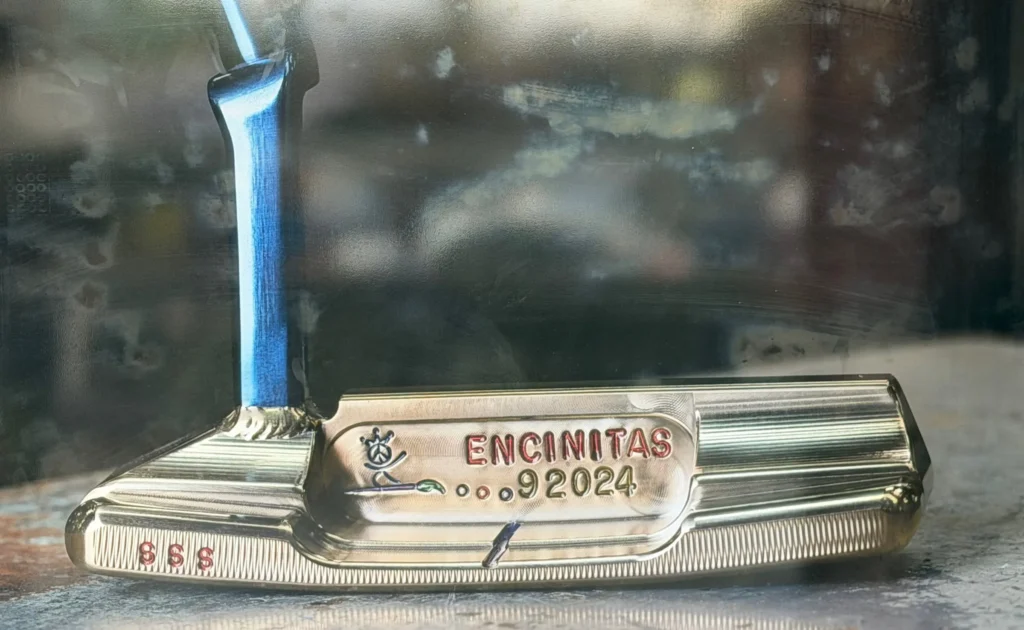
    There is a window display along historic Highway 101 with a picture of a putter golfers dream about—a rare Scotty Cameron prototype with a unique stamping on the back: a stick figure with a peace sign for a head, wearing a three-pointed crown, surfing on a paintbrush.

    The design imbues coastal lifestyle, craftsmanship and art—The Art of Putting.

    It is also the perfect embodiment of Encinitas, the laid-back and charming beach town in Southern California where Scotty Cameron established the Scotty Cameron Gallery in 2014. The coastal community is more than just a location; it is woven into Cameron’s work. On rare putters like the Timeless TT (Tour Type) SSS Chromatic Bronze & Blue prototype featuring the peace surfer design, the word “ENCINITAS” and its zip code, “92024,” are hand-stamped directly into the back.

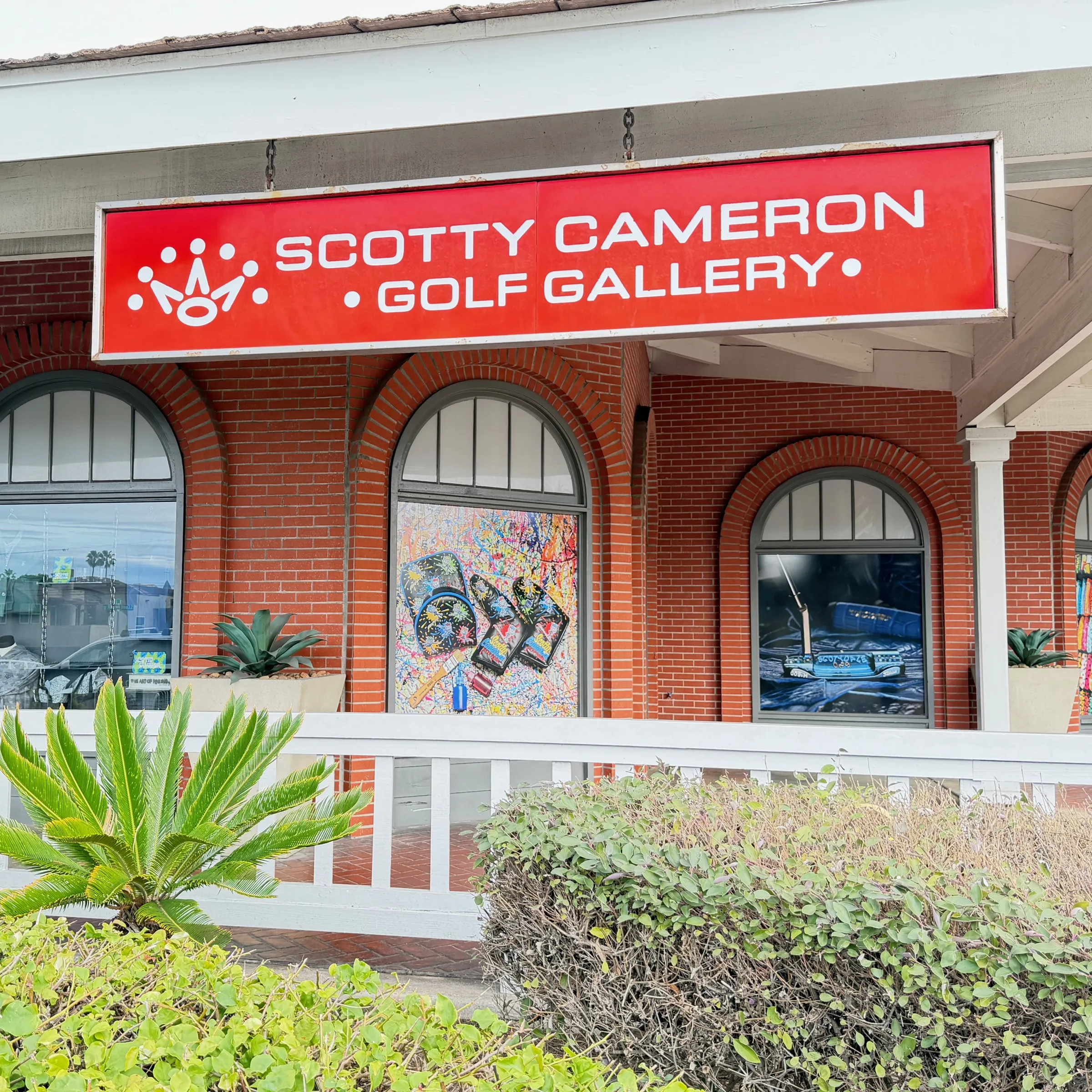
    One look at the window display and it is clear this is not your ordinary golf shop.

    A window display at the Scotty Cameron Gallery in Encinitas features a photograph of a rare custom putter. Photo by David Derwin.

    “I’ve always wanted a retail store where people who want Cameron items can come in and see great creations, and really price is no object when it comes to the design end,” Cameron said in a video, describing the gallery.

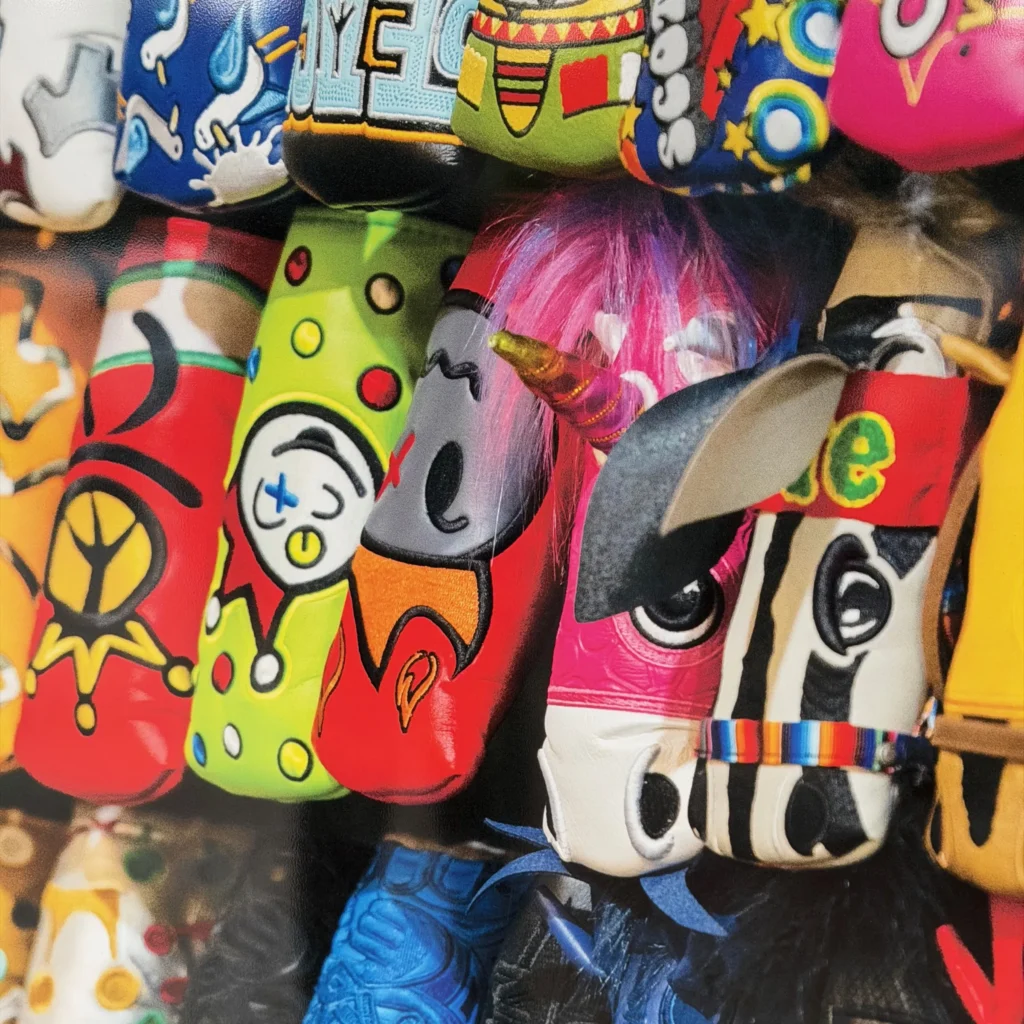
    The Scotty Cameron Gallery, located in downtown Encinitas, is a retail boutique and putter fitting studio where Cameron’s creations are on full display. And not just putters. The gallery features one-of-a-kind creations by Cameron, from ball markers and divot repair tools to headcovers, bag tags, golf towels, glassware, beach towels, hats, apparel and more, all featuring Cameron’s signature designs, like the Scotty Dog, crown, joker, rat and surfer.

    Emblazoned on many of the items is the Circle T icon, the unmistakable logo reserved for Tour Only putters. It is a coveted marking, one that signals rarity and makes even the smallest accessory feel like a piece of Cameron’s inner workshop.

    Cameron’s designs, embroidered on Peter Millar apparel ranging from polos and jackets to hoodies and vests, blend timeless fashion with a funky, whimsical edge that feels equally at home on the golf course or at the taco shop down the street. His designs draw inspiration from his Southern California upbringing in Huntington Beach and his home in nearby Carlsbad. Rats carrying surfboards, lifeguard towers and surfers appear in Cameron’s minimalistic art style, often rendered in unexpected color combinations that feel unmistakably coastal.

    The roots of that design language trace back to Cameron’s earliest days building putters in his garage.

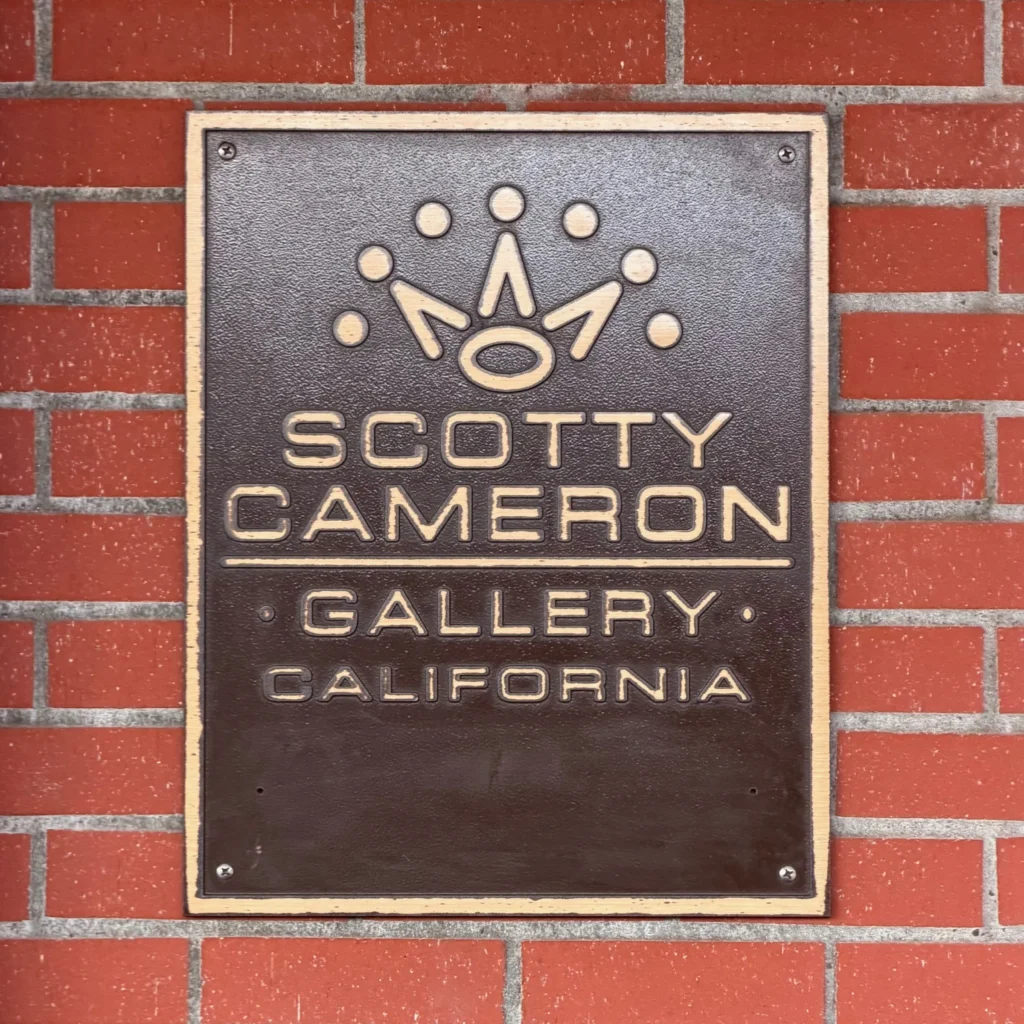
    Without the means to commission a formal logo, Cameron turned to the tools he had on hand. His iconic crown logo was created using a sideways zero stamp with three upside-down “V’s” forming the crown’s points, finished with seven dots representing the seven days it took him to build a putter from start to finish. The design was born out of necessity, but its simplicity became his signature style. Clean lines. Bold shapes. Instantly recognizable.

    The iconic Scotty Cameron crown logo displayed on a plaque outside the Scotty Cameron Gallery in Encinitas. Photo by David Derwin.

    Those same principles carry through everything in the gallery today. The items feel intentional. Personal. Hand-made in spirit, even when produced at scale.

    Items sold at the Scotty Cameron Gallery are made in extremely limited quantities. What is in stock today may not be there next week and items are likely to never be available again once they sell out. The inventory rotates constantly, creating a sense of discovery and encouraging repeat visits. No two trips feel exactly the same.

    That rarity is not accidental. It is central to what makes the gallery special.

    “I like to see innovation and I wanted to be able to dream,” Cameron said of his vision for the gallery. “Whether it’s an alligator grip or a sterling silver insert, we will have stuff there that you won’t see any place else in the world.”

    That last part isn’t hyperbole—the Encinitas Gallery is the only Scotty Cameron retail location in the world. While there is a second Gallery in Shizuoka, Japan, it operates primarily as a museum and does not offer retail. Some apparel and accessories occasionally appear on the Scotty Cameron online store, but the vast majority of items are available only in person at the Encinitas Gallery.

    If you are a golfer, the name Scotty Cameron precedes the visit. You know the putters. You have seen them win majors. But what you may not know is the depth of Cameron’s creative output outside making some of the best putters in the world.

    Capacity inside the gallery is limited, and a wait is part of the experience. When you arrive, you add your name to a waitlist at the door. You leave your phone number and group size, and they text you when it is your turn to enter.

    And so you find yourself back at the window display.

    While you wait, the windows offer a preview of what is inside. They are thoughtfully curated and have long been part of the gallery’s identity. During COVID, the gallery operated entirely through window shopping, with customers filling out scorecard-like sheets using golf pencils to select items displayed behind the glass. The gallery has since returned to full in-store browsing, but the windows remain the gallery’s introduction, setting the tone before you ever step inside.

    Photography is prohibited in the store, preserving the sense that what you are seeing exists only in that moment. It makes the visit feel more personal, more immersive, and more memorable.

    Beyond the retail space, there is a full putting studio where golfers can be fitted for putters. Players can also bring their Scotty Cameron putters to be re-gripped on site. More extensive custom work, including stamping and restoration, is handled at Cameron’s nearby San Marcos facility.

    Even for those who have never played golf, the gallery holds its own appeal. It is as much a design gallery as it is a retail space. Art lovers will instantly recognize and appreciate the craftsmanship and clarity of vision carried through every object, from Tour Only putters and apparel, down to the smallest accessories.

    A photograph of rare and unique Scotty Cameron putter headcovers displayed in the window of the Scotty Cameron Gallery in Encinitas. Photo by David Derwin.

    Plan Your Visit

    Scotty Cameron Gallery

    927 S Coast Hwy 101 #100, Encinitas, CA 92024

    After your visit to the Scotty Cameron Gallery, enjoy an afternoon along historic Highway 101 with a curated list of the best the area has to offer:

    Pannikin Coffee

    510 N Coast Hwy 101, Encinitas, CA 92024

    Housed in a historic train station originally built in 1888, Pannikin Coffee is hard to miss with its bright yellow exterior. Serving coffee, tea and house-baked pastries since 1968, it remains a local favorite for its friendly vibe, relaxed atmosphere and rotating display of local art.

    Juanita’s Taco Shop

    290 N Coast Hwy 101, Encinitas, CA 92024

    Family-operated since 1980, Juanita’s is beloved by locals for some of the best Mexican food in North County. Go-to orders include the California burrito and the fish tacos.

    Modern Times Brewery

    470 S Coast Hwy 101, Encinitas, CA 92024

    Opened in 2018, Modern Times offers craft beer in a bright, thoughtfully designed space with large open windows along Highway 101. The brewery features 30 beers on tap, ranging from favorites like the Orderville Hazy IPA to specialties like the Pickle Pils—a M.T. Pils served with a salt rim and pickle brine.

    Hansen Surfboards

    1105 S Coast Hwy 101, Encinitas, CA 92024

    Family-owned since 1961, Hansen’s reflects Encinitas’ deep surf heritage. The shop carries beach and snow apparel, surfboards and snowboards—everything needed for a day at the beach or on the slopes.

    La Paloma Theatre

    471 S Coast Hwy 101, Encinitas, CA 92024

    Anchoring downtown Encinitas since 1928, La Paloma is a historic single-screen theatre and one of the first to show “Talkies.” Inside, it still features the pipe organ that was used during the Silent film era. Its classic vertical marquee remains a Highway 101 treasure.

    Walk Along the Seaside Bluffs

    Cross Highway 101 from the Scotty Cameron Gallery and head south along the bluffs overlooking Swamis and Pipes Beach toward Cardiff. Along the way you’ll catch gorgeous ocean views, a walk especially majestic at sunset. A good turnaround point is the surfer statue known as “The Magic Carpet Ride,” though locals call it the “Cardiff Kook” for its awkward surfing stance. The locals celebrate The Kook by frequently dressing it up for holidays and events.

    The seaside bluffs overlooking the Pacific Ocean along Highway 101 in Encinitas. Photo by David Derwin.

    Your Next Read