When viewers tune into The Players Championship this week, one of the first things they will notice about the TPC Sawgrass Stadium Course is the water.
There is so much of it.
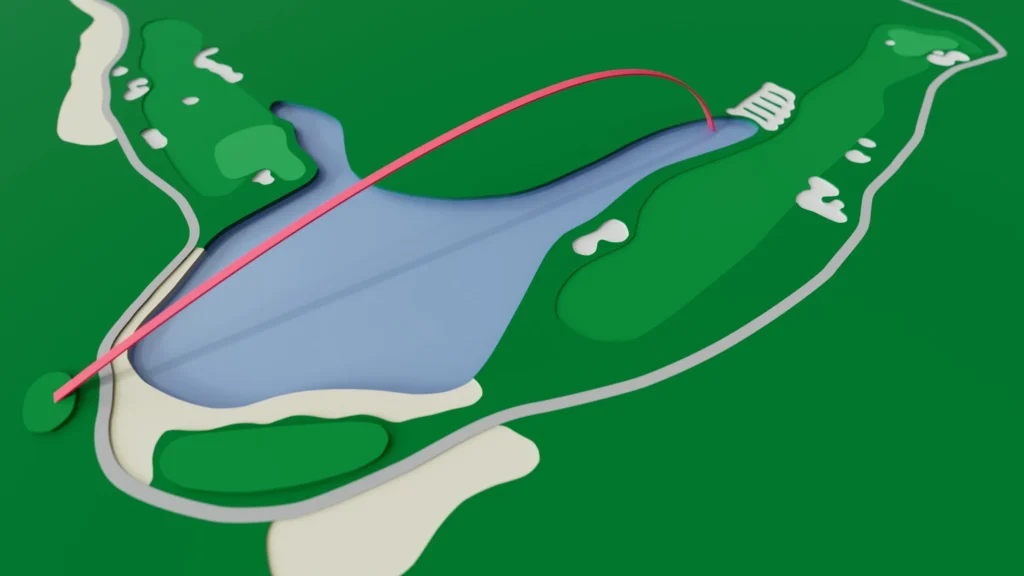
Lakes appear everywhere—guarding greens, framing fairways, and most famously surrounding the par-3 17th hole. At first glance, it might seem like these hazards were placed simply to challenge the best players in the world. However, the real reason there are so many lakes at TPC Sawgrass has just as much to do with the spectators as it does the players.
A Stadium Built From the Ground Up
In the late 1970s, PGA TOUR Commissioner Deane Beman had a radical dream: a permanent home for the TOUR’s flagship tournament that was designed specifically for fans. He purchased 415 acres of wooded wetlands and swamp in Ponte Vedra Beach for the sum of just one dollar. At the time, the land was so inhospitable and snake-infested that the groundbreaking ceremony had to be held on the edge of the highway because the interior was inaccessible.
Beman worked with legendary architect Pete Dye to create a “stadium” for golf. They wanted natural viewing areas—elevated mounds that mimicked the angled seating of a football or baseball stadium—so that thousands of fans could watch the action without standing ten-deep on flat ground.
There was just one problem: the property was almost entirely flat, with no more than 18 inches of elevation change across the site. To build the 30-foot spectator mounds they envisioned, Dye needed massive amounts of dirt.
Because the project was operating on a tight budget, they couldn’t afford to haul in fill from off-site. The solution was simple but transformative: excavate the soil from different parts of the property and use it to build the mounds. The resulting pits were filled with water, creating the intricate network of lakes that define the course today.

The Accidental Island Green
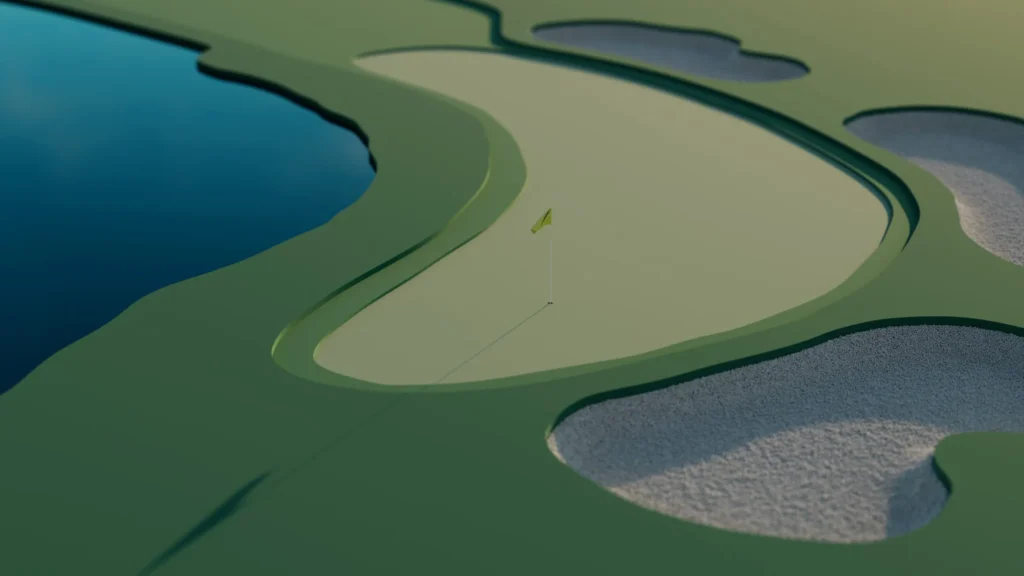
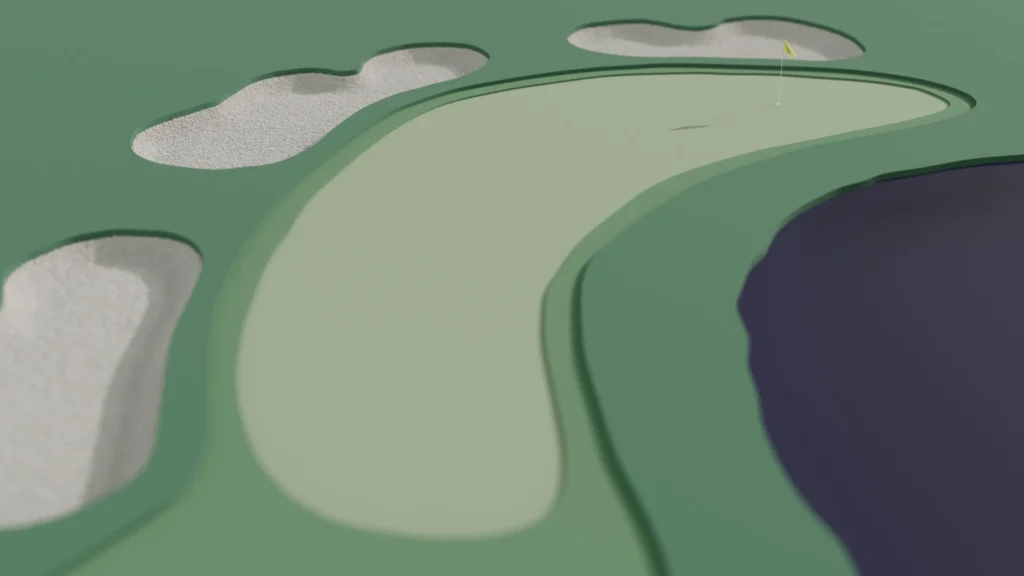
The most famous example of this “dig-and-build” strategy is the 17th hole.
Early designs called for a conventional par-3 with only a small pond near the green. However, as construction progressed, workers discovered that the area around the 17th green contained the best sand on the property—a valuable material needed elsewhere to cap fairways and build the base for the greens.
Dye’s team kept digging and hauling sand away until a massive crater remained. With the tournament approaching and the land around the 17th green virtually gone, Pete Dye was reportedly stumped. It was his wife and design partner, Alice Dye, who offered the legendary suggestion: “How about an island green?”
What began as a construction necessity became one of the most recognizable holes in golf.
Water With a Purpose
The lakes of TPC Sawgrass serve a purpose far beyond providing drama to the 17th hole. On the finishing 18th hole, the massive lake that guards the entire left side of the fairway provided the dirt for where fans now sit to watch the tournament conclude.
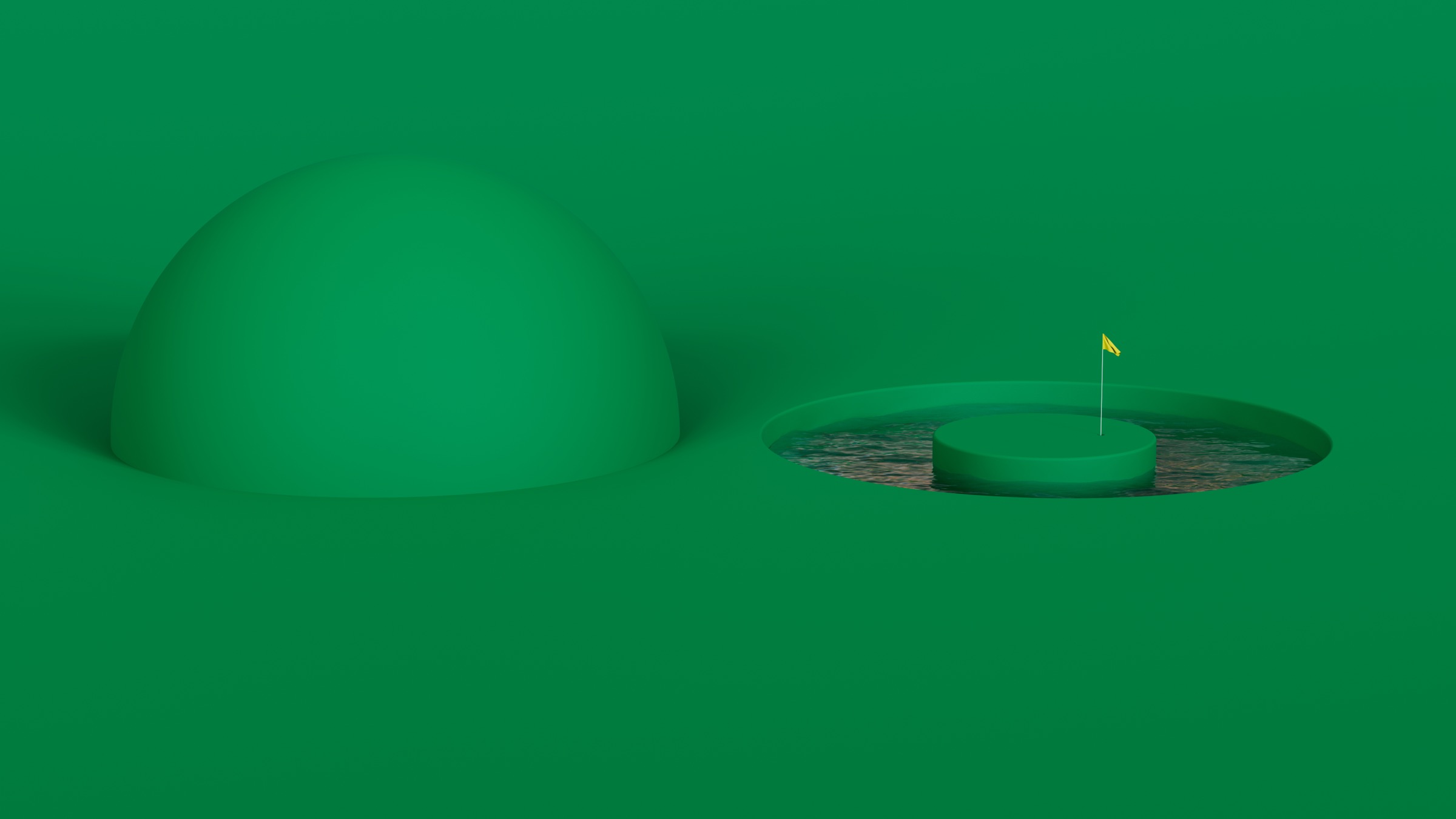
In art and architecture, negative space is the area around the subject that defines it. At TPC Sawgrass, the spectator mounds that define the stadium viewing experience become the subject and the lakes, the negative space.
Today, these water hazards serve multiple purposes:
- They act as strategic hazards that test a player’s nerves.
- They function as a sophisticated drainage system for the Florida marshland.
- They provide the “negative space” left behind by the creation of the stadium mounds.
If you took away the lakes, the mounds would disappear, and it would just be another flat Florida golf course. Every gallon of water a player avoids this week is effectively the footprint of a hill where a fan is standing.
At TPC Sawgrass, the depths of the hazards are exactly what allowed the heights of the stadium to exist.