Welcome to the August edition of What I’m Buying, Trying and Eyeing.
As a competitive amateur player and lifelong student of the game, I’m constantly researching golf equipment and training tools that might improve my game. While I’m genuinely interested in new golf technology, I’m also incredibly picky about what actually earns a place in my bag or practice routines. I spend a lot of time trying to separate the signal from the noise, and this monthly column is where I’ll share what’s currently caught my attention, what I’m evaluating, and what I’ve found compelling enough to buy.
What I’m Trying
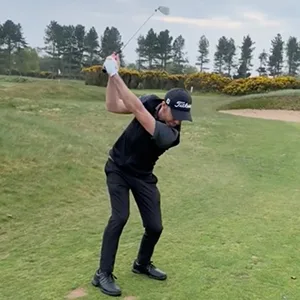
RADMOR Player Performance Glove
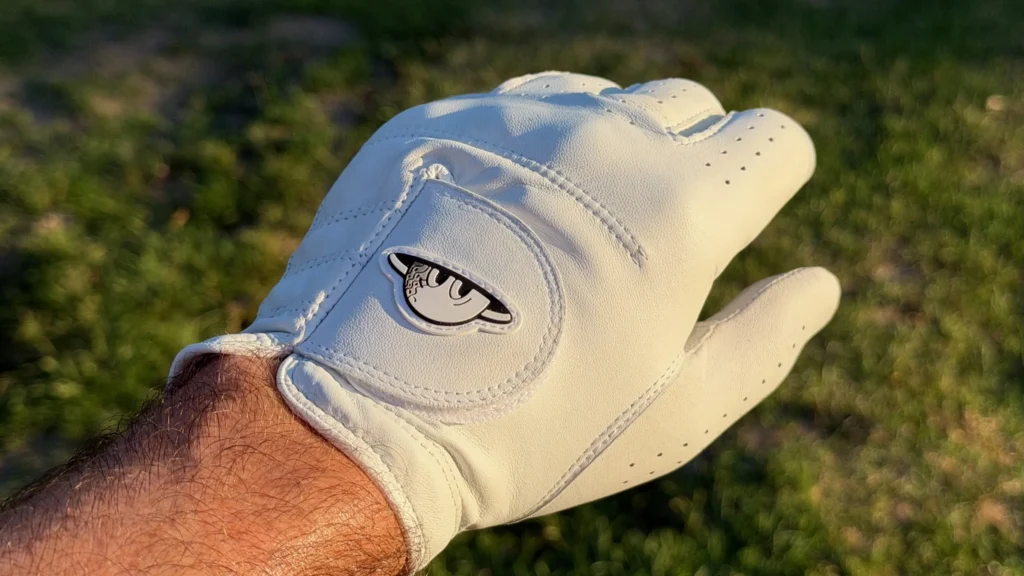
Golf gloves aren’t usually the most exciting purchase. Like golf balls or tees, they are essential for players, but we don’t often look forward to buying them. We might not think much about them at all beyond rebuying the same one when they wear out or picking up whatever is closest to the cash register while paying for our tee time.
But when a golf glove is designed particularly well, you notice the difference. The fit is precise, the Velcro closure lands exactly where it should, and there’s no excess material around the fingers or palm. A well-fitting glove should disappear when you put it on, allowing you to focus on the shot rather than fiddling with something on your hand.
This was exactly my experience when I tried RADMOR’s limited edition Player Performance Glove this month. It quickly became the favorite golf glove I’ve tried, so much so that I reached out to RADMOR’s co-founder, Scott Morrison, to find out what exactly went into making this glove. Its origin story explains that making a high-quality glove is anything but straightforward, but the result is well worth the time.
I will genuinely be sad when I wear this glove out.
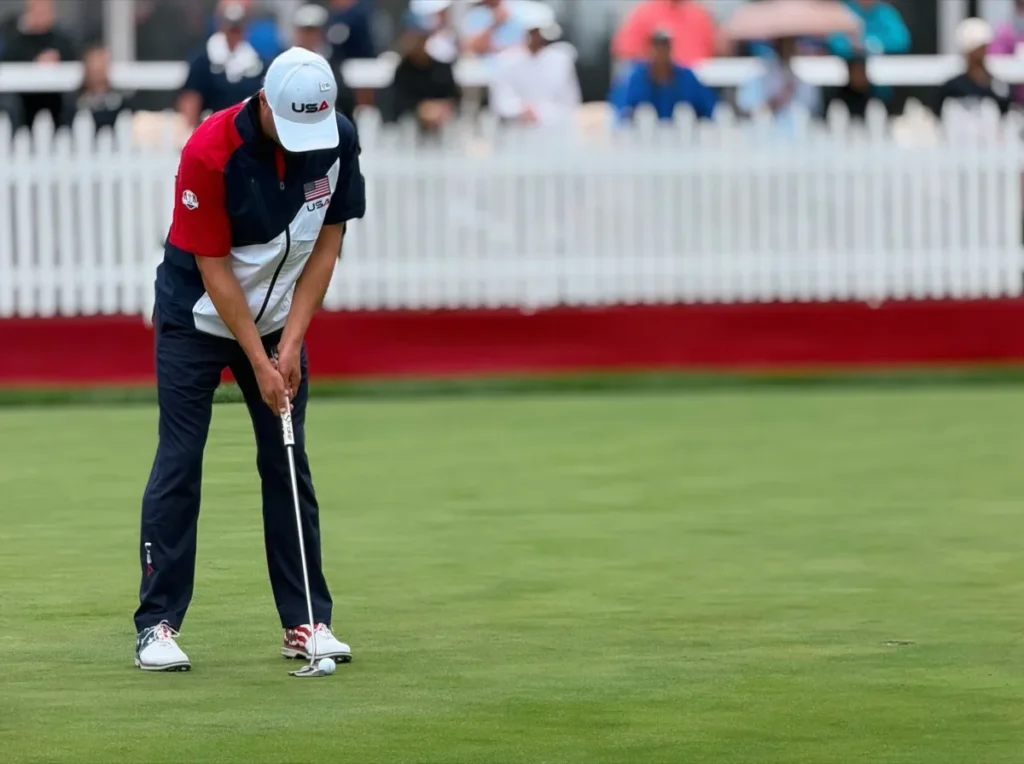
B.Draddy Presidents Cup COOL DUKE POLO
The Presidents Cup is coming up and in advance of the tournament I was able to preview items from the U.S. Team’s uniforms, which are designed by B.Draddy and Zero Restriction.
I wore the Presidents Cup COOL DUKE POLO during a round of golf in Los Angeles on a particularly hot afternoon. It’s the conditions the COOL DUKE POLO was designed for. The material is lightweight and breathable, and I particularly like the restraint used on the design—it’s stylish and performant, not loud or flashy.
If you haven’t checked out this year’s Presidents Cup uniforms yet, make sure to read my write up about them here.
What I’m Buying
Scotty Cameron Surf Dog Hat
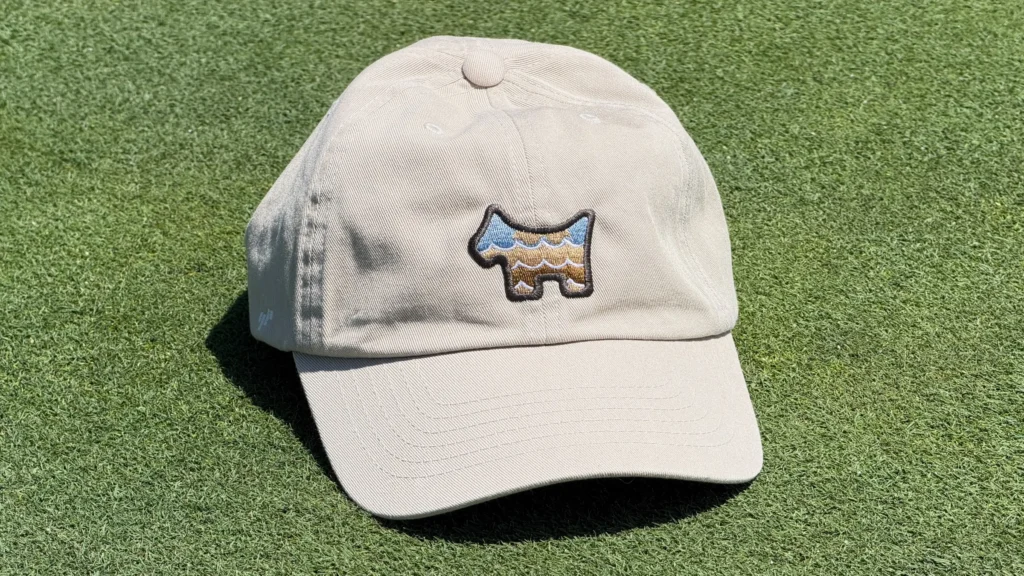
Every time I visit Encinitas I stop by the Scotty Cameron Gallery on Highway 101. It’s my favorite place to go. No matter how many times you visit, there are always new items to discover and everything is made in limited quantities—once they’re gone, they’re gone. Even if you’re not in the market for a Scotty Cameron putter or a specific apparel item, it’s fun to browse what’s new. After all, you can never have too many hats or golf towels.
During my last visit I found this cool surf dog hat. I love the Scotty Dog logo, and the unstructured dad hat fit is perfect. This design was too good to pass up!
[solidcore] Membership

I recently tried [solidcore] for the first time and it really intrigued me, especially coming at it with fitness for golf in mind.
[solidcore] uses machines similar to Reformer Pilates but with an emphasis on slow movements with high resistance. Their workouts work on the principle of time under tension. Think that feeling when you’re holding a plank and start to shake. It’s that, but for every exercise you do.
If you walk into a [solidcore] class, it might not look like much is happening. The movements are intentionally slow and controlled to activate slow-twitch muscle fibers.
But don’t take the slow movements as a sign of an easy workout.
The transitions between workouts are quick. During a 50-minute class, you are holding time under tension for just about all of it.
Bottom line—their workouts are really hard.
Anything you do at a gym can be done on a [solidcore] custom-built reformer. Each class starts with core exercises and then the focus muscle groups of the day. The muscle groups rotate daily so you don’t overwork the same muscles, but every class works the core—hence the name, [solidcore]. The result is total-body workout that focuses on strength, flexibility and balance—exactly what you want for golf.
I haven’t seen anyone talking about [solidcore] specifically for golf but I think their low-impact, high-intensity strength-training workouts are great for golfers. Having a strong core is critical for golf, especially if you carry your bag like I do.
I signed up for a year membership and am excited to keep progressing into their more advanced classes. I’ll be paying attention to what, if anything, changes in my golf game along the way.
What I’m Eyeing
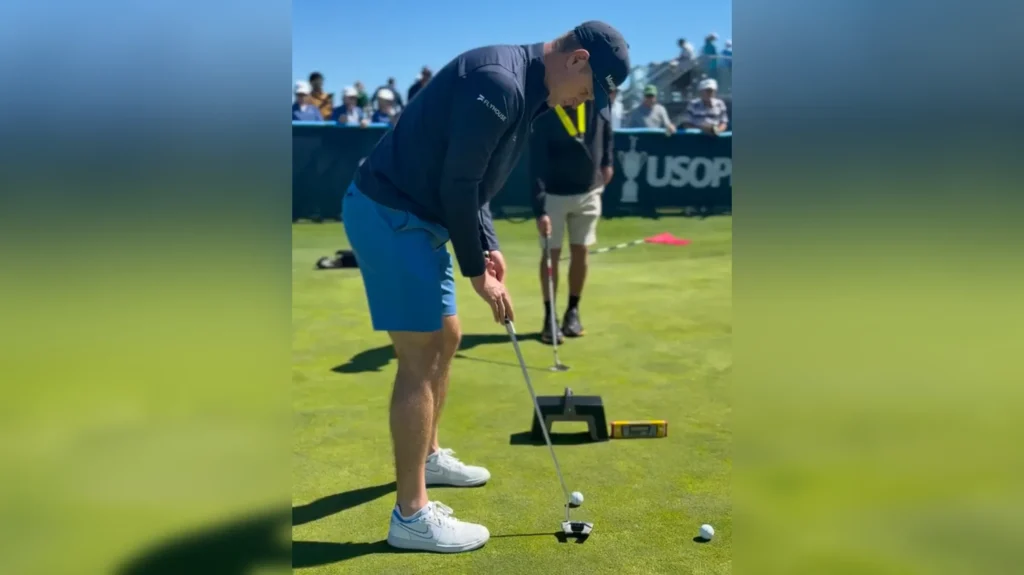
Vertex Golf Tour Series Putting Sensor
Spend any amount of time watching PGA TOUR pros practice putting on Instagram and you might notice a little device clipped to their putter shaft. It took me a bit of digging to figure out what it was—it’s the Tour Series Putting Sensor by Vertex Golf.
The Tour Series Putting Sensor is a small, lightweight device that analyzes up to 30 metrics of the putting stroke, from face change, rhythm and lie angle at impact, to club head speed, backstroke length and more. It captures similar data points as the Blast Motion putting sensor, except it attaches to the putter shaft and not the end of the grip like Blast’s stroke analyzer.
I used Blast for a long time and really loved it for checking face angle at impact and backstroke and forward stroke time to make sure I was getting close to a 2:1 rhythm. I stopped using Blast when I opened it one day and after 15 strokes it said I would need to subscribe to unlock full access to the sensor beyond 15 strokes per day.
I’m really not a fan of the subscription model on top of the cost of the device, and unfortunately, Vertex Golf is the same. You get 10 metrics included with the purchase of the sensor for $379. To unlock all 30 of the data points of measurement requires an additional $119.99/year subscription.
The product is thoughtfully designed and has been used in practice by Collin Morikawa and putting coach, Phil Kenyon with his players, so the information it provides looks trustworthy.
I’m always on the lookout for helpful putting tools and this is something I’m eyeing. If it weren’t for the subscription model, this would be in the I’m Buying section by now.
That’s what’s currently occupying my golf brain this month.
Some of these products may eventually become permanent fixtures in my game, while others may prove they aren’t for me. Either way, I’ll continue sharing the process, along with the lessons learned along the way. I’ll be back next month with another edition of What I’m Buying, Trying and Eyeing.