This review may include affiliate links, meaning The Golf Player may earn a small commission if you make a purchase—at no additional cost to you.
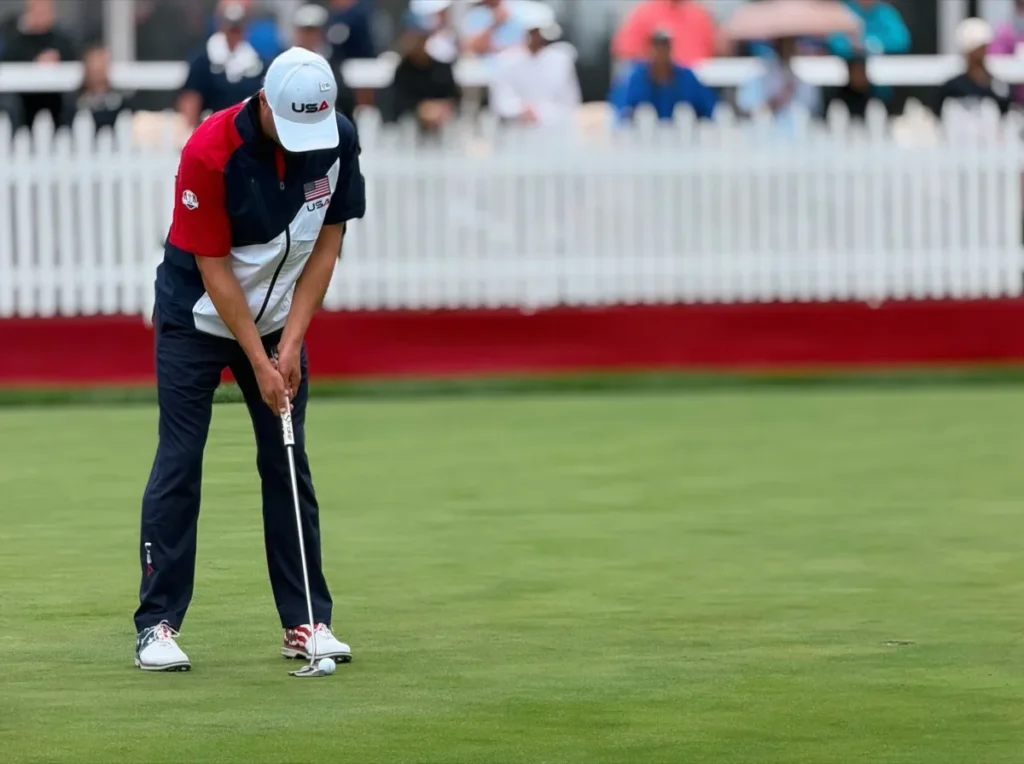
There aren’t many clubs that draw a reaction quite like L.A.B. Golf’s DF3 putter. Part putter, part conversation piece, the best-selling offering from the Oregon-based company is entirely unlike anything most players are used to seeing at address. Its polarizing design inspires confidence in some while drawing sneers from others, but one thing is for sure—if you haven’t tried one, chances are you’re curious about it. And for good reason, the DF3 is a proven winning putter on Tour and was in the bag for J.J. Spaun’s last two wins, first at the 2025 U.S. Open and more recently at the 2026 Valero Texas Open.
One year ago I would have said “that’s going to be a no for me, dawg” to the DF3. My first experience with a L.A.B. putter was their first heel shafted design, the OZ.1i HS, which had a more conventional mallet shape that initially appealed more to my eye. My favorite part about that putter was the steel insert, which had an excellent firm feel that really dialed in my speed control (I break this down further in my OZ.1i HS review).
When L.A.B. put that same insert on their flagship DF3 putter, I had to give it a try. Was I missing out by initially overlooking the DF3, and would the addition of the steel insert that I liked so much be a winning combination? I put the DF3i in my bag to find out.
Tested Configuration
- Length: 34”
- Lie Angle: 70 degrees
- Head Weight: Standard
- Shaft: ACCRA x L.A.B. Black
- Grip: Press Pistol 2° Black
- Alignment Mark: D
Review Methodology
Great putting relies on three factors: proper green reading, the ability to start the ball on the intended line, and matching that line with the correct speed.
While no putter can correct a bad read, it can influence start line and speed control. With that in mind, here’s what I was looking for from the DF3i:
- Stability at address
- Strong alignment cues
- Consistency with lag putting
- Confidence in the critical 3-7 foot range
Did the DF3i deliver? To answer that, it’s important to first understand the technology that defines every L.A.B. putter—lie angle balance—before diving into the specifics of the DF3i and how it performs on the course.
What Is Lie Angle Balance?
Putters naturally want to open or close during the stroke due to how the head and shaft are weighted and balanced. This twisting force, known as torque, is counteracted by the players’ hands and arms to keep the face square during the stroke. L.A.B. Golf putters are engineered to stay square to the arc of the stroke throughout the entire motion without manual manipulation; this is made possible by their patented weighting technology known as Lie Angle Balance. According to L.A.B., if you hold the putter with a light grip, the face stays exactly where it’s supposed to be, allowing for a simpler, more repeatable stroke.
For a more in-depth explanation of torque and lie angle balance, check out my OZ.1i HS review. It is important to note that torque is inherently neither good nor bad, but is an important concept to understand when discussing any L.A.B. putter.
What Is the L.A.B. DF3i?
The DF3i represents the latest milestone in a design lineage that began with a radical departure from traditional putter aesthetics. To understand where the DF3i came from, one must look back to the foundation of L.A.B. Golf: the Directed Force 2.1.
Designed by L.A.B. Golf founder Bill Presse, the DF 2.1 was the original “Directed Force” putter and the first to feature the company’s signature Lie Angle Balance technology. While its oversized, mallet shape was undeniably bold and “weird” to many, it favored pure performance and forgiveness over traditional looks. The DF 2.1 became the cornerstone of the brand, and its silhouette remains immortalized in the L.A.B. Golf logo.
While the DF 2.1 was getting good reviews in terms of performance, players had one widely agreed upon piece of feedback for the brand: Can you make it less weird looking? The first major evolution in that pursuit came with the DF3, which took the foundational technology of the DF 2.1 and distilled it into a more compact, sleek, and “less weird” package. The market responded immediately; the DF3 became L.A.B.’s best-selling model and a champion’s choice, most notably used by J.J. Spaun to win the 2025 U.S. Open.
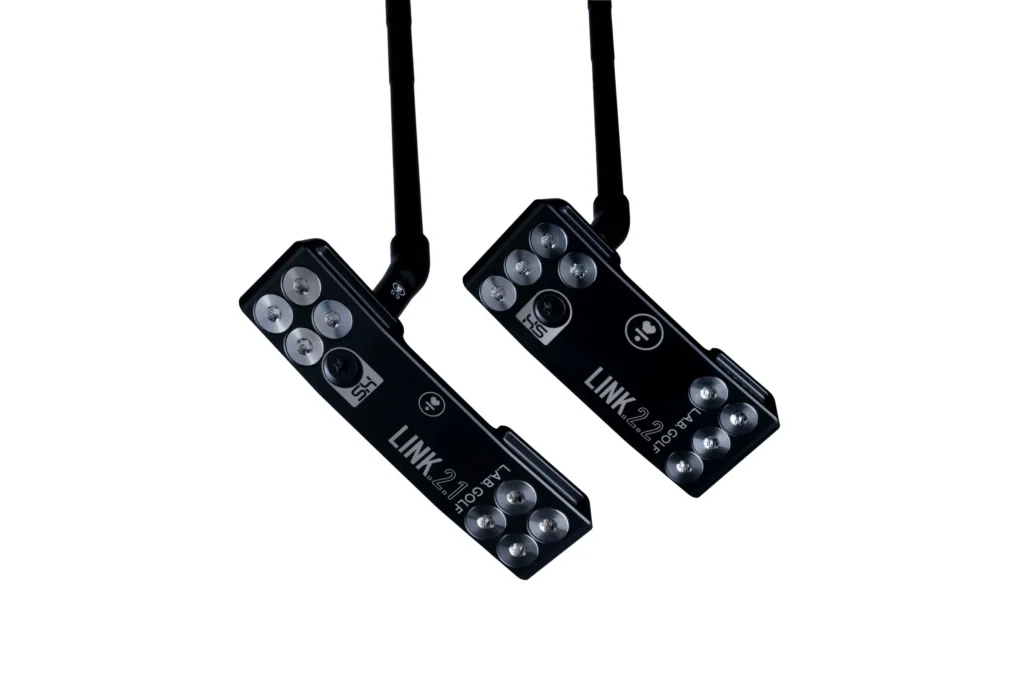
While the original DF3 is CNC milled from 6061 aluminum for a soft feel, L.A.B. began experimenting with different impact sensations in late 2024. Following the success of the stainless steel inserts found in the OZ.1i and OZ.1i HS, the company set out to bring that same firmer, high-performance feel to the DF3 shape.
Creating the DF3i required significant re-engineering of the DF3 design. Because stainless steel is significantly heavier than aluminum, simply adding an insert would have ruined the putter’s balance to its lie angle. Taking cues from the OZ.1i, engineers cut a specific pocket into the DF3 face to redistribute weight rearward. This modification allowed for a thinner stainless steel insert that provides approximately 2% faster ball speeds and a firmer “pop” off the face, all while keeping the putter perfectly balanced.
The result is the DF3i: a sophisticated blend of the DF 2.1’s original DNA, the DF3’s refined shape, and the advanced material science of L.A.B.’s newest insert technology.
But how does it perform on the course? I put it in the bag to find out.
Stability at Address
The first thing I noticed about the DF3i is how stable it is at address. Despite being a more refined version of the DF 2.1, it is still a large putter compared to other mallet putters on the market, and a benefit of the larger head is added stability at address.
I sometimes have a tendency to fidget over putts, making small adjustments to my line or just settling into my setup while lining up over the ball. Doing this can sometimes inadvertently rotate the putter face slightly off-line from where I was aiming when I initially stepped into the putt, especially with a blade putter. Any stability I can gain at address is a welcomed benefit.
To that point, I was very pleased with how extremely stable the DF3i is at address. When you set it down, it takes more than a subtle movement of the hands to manipulate the face while lining up a putt, which means I could settle over the ball without worrying about accidentally moving the putter off of my intended line. All you need to do is make sure you’re lining it up where you are intending to, and as long as you make a good stroke, it will go in that direction.
Design & Aesthetics
When it comes to design, the DF3i is a unicorn. It’s one of one. There is no other putter that looks like it, except the original DF 2.1 of course, but for most players, they are moving to a DF3i from a traditional blade or mallet putter.
Even though the DF3i head is more compact than the original DF 2.1 putter, its shape is still polarizing among players. Some won’t even consider it based on its size and shape, and I would have put myself in this category until I actually got the DF3i in my hands. I was surprised how quickly I warmed up to it, especially with my background playing a blade putter for so many years.
Since the DF3i has little to nothing in common with a standard putter, the player has little to no reference as to what to expect from it. This is both good and bad. The design feels foreign at first but the weighting technology becomes apparent immediately. It’s only when you pick back up a standard putter again that you are reminded of the differences. The longer I worked with the DF3i the more comfortable it felt, and the less I was thinking about how different it is from my usual gamer.
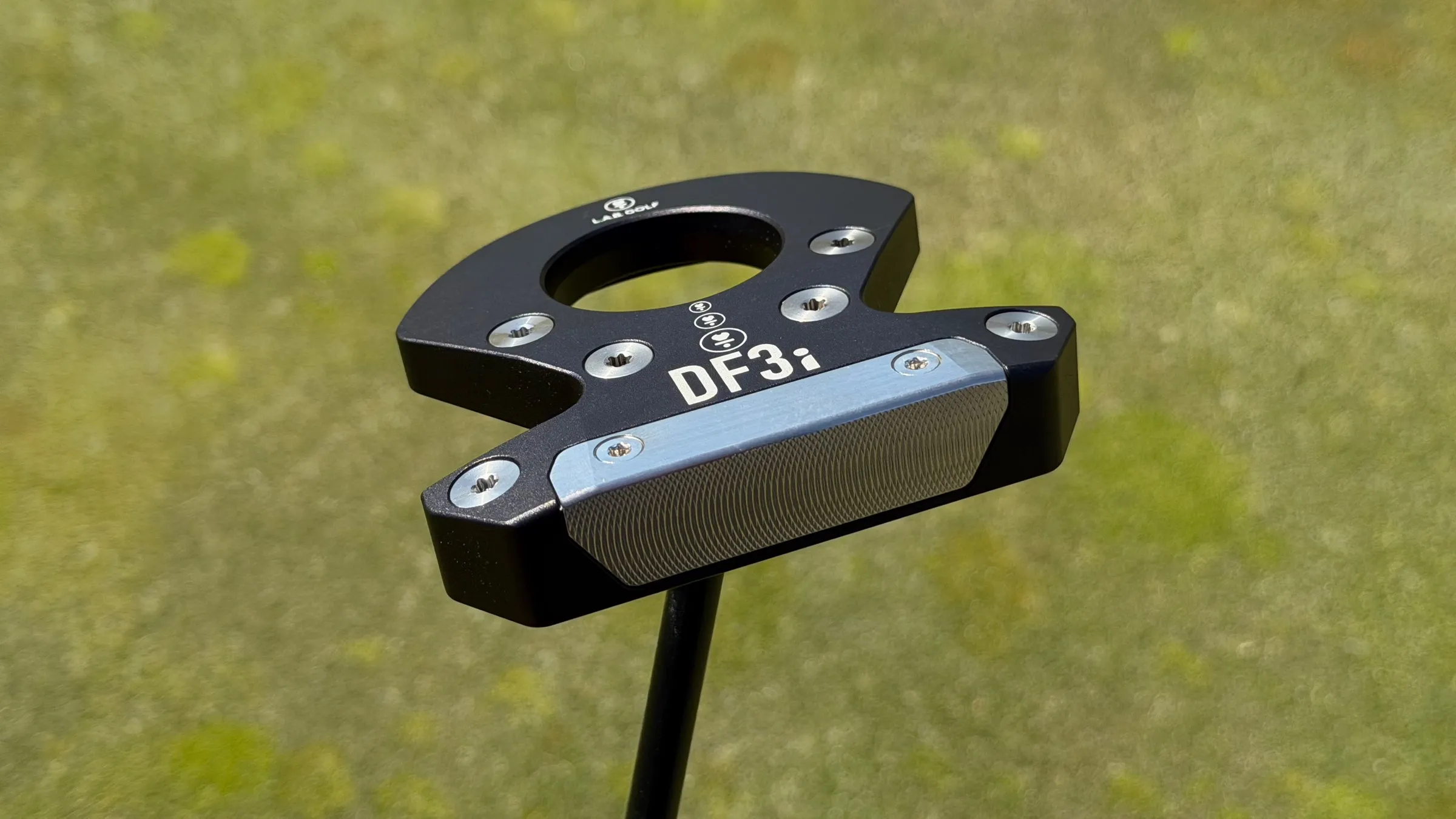
The DF3i has two elements to its design: a thicker top line and a rounded back that tapers as it connects to the back of the putter face. I didn’t find the large rounded back to be distracting at all. While putting, I’m focusing on lining up the putter square to my target line using the putter face and the single alignment guide line. The rest of the putter doesn’t even cross my mind when I’m going through my putting routine on the course.
Despite being large, the DF3i design has moments of respite—negative space that helps it feel less imposing, like the circular cutout at the back of the head. The hole isn’t just for weight distribution; it’s functionally designed to pick the ball up without you having to bend over, something L.A.B. calls the “Gimme Getter.” While it may sound like a gimmick (“you’ll hit putts so close with this putter you’ll be picking up the gimmes so often”), the Gimme Getter is actually awesome. I was amazed how little force you need to press on the ball for the DF3i to pick it up. It is perfectly engineered and fun to use. I particularly enjoyed using it on the practice green to move balls around while doing various putting drills.
There is not a zero shaft lean option on the DF3i. It comes with two degrees of shaft lean to have the shaft inserted behind the putter face for balance but then have the handle back in line with the putter face at the grip. To counter the leaning shaft angle, L.A.B. pairs the putter with a press grip so the grip is square. It’s a foreign concept coming from a traditional putter but on the DF3i the shaft lean felt natural.
L.A.B. does offer a Pistol 0° Grip option for players who prefer a familiar grip profile without the press. Players have put standard putting grips on their DF3 as well, including J.J. Spaun, who uses a standard Scotty Cameron Pistolini grip to achieve a more traditional feel.
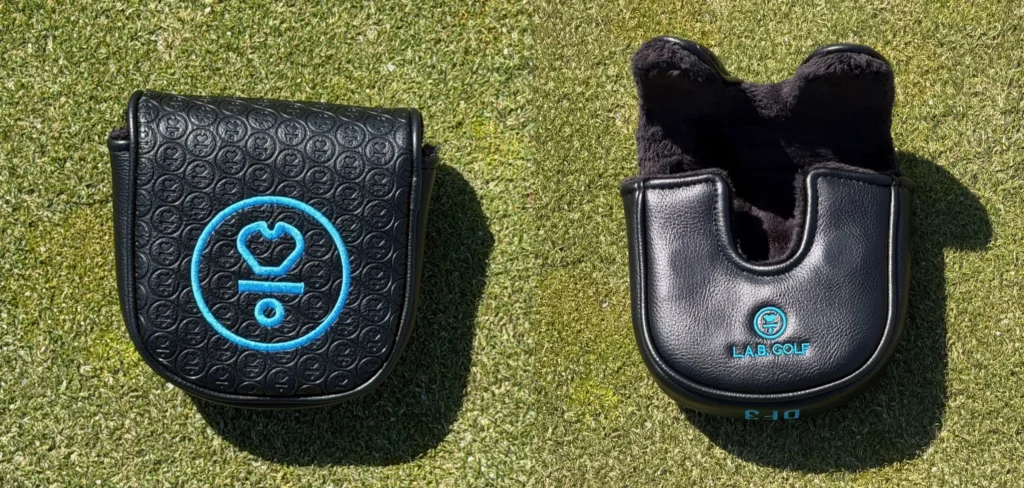
The DF3i comes with a premium leather headcover that secures by magnetic closures on either side of the shaft—a welcome upgrade over Velcro. This makes for silent removal of the headcover while others in your group are putting, something that would be very distracting with Velcro.
Alignment Cues
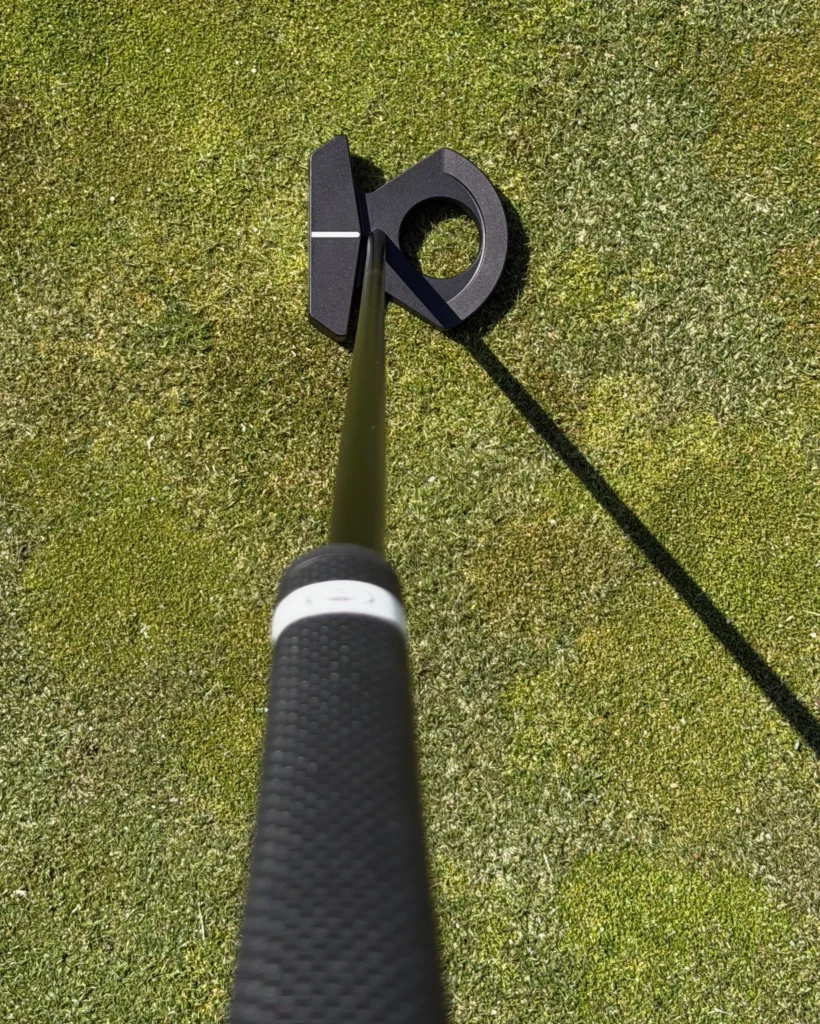
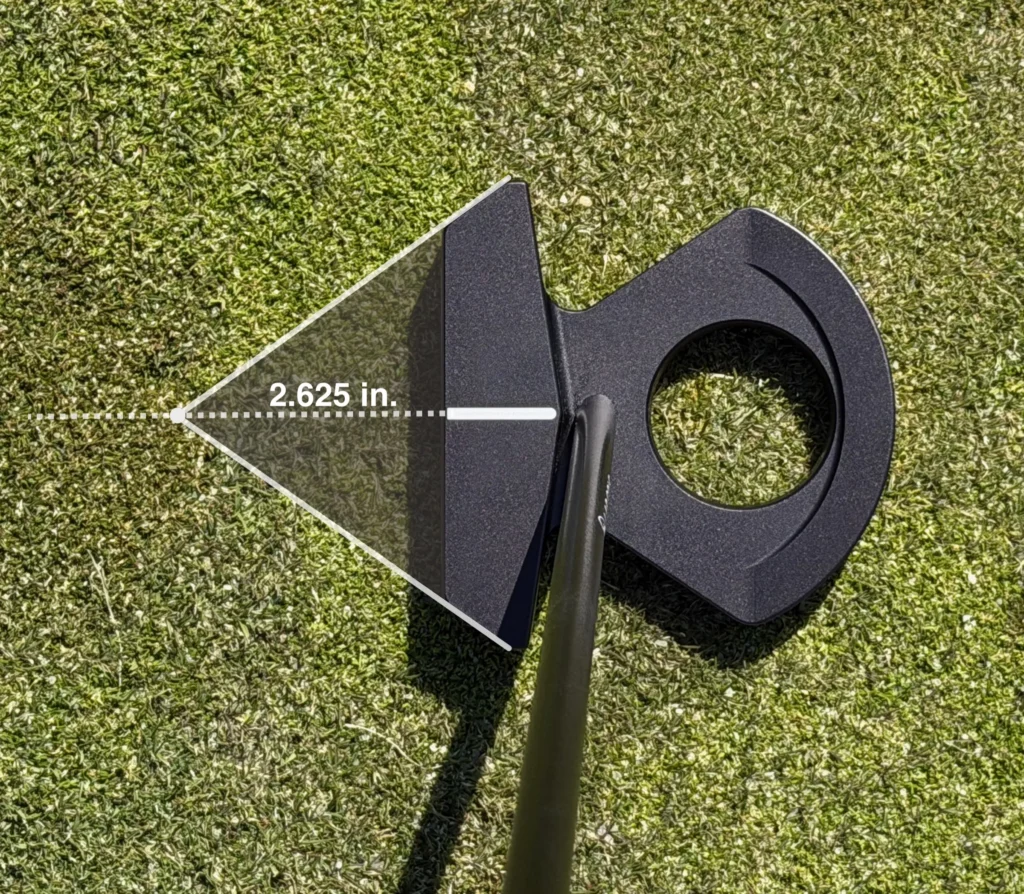
The DF3i features a triangular topline with angles on the heel and toe that converges 2.625 inches in front of the putter face, roughly the length of a long tee. This, combined with the rounded back which tapers toward the front gives the appearance of an arrow which I found to be a great visual tool built right into the physical design to help envision where the putter face is aiming.
While the DF3i felt comfortable at address right away, there came an “ah-ha” moment after a couple of rounds where the alignment just clicked. It just started looking really good at address and I could really visualize where I was aiming it.
In addition to the physical alignment cues, the DF3i can be customized with 47 alignment mark options. This is a huge benefit of the custom order where players can be extremely specific with choosing the alignment marks that inspire confidence for them. I went with alignment mark “D” which is a simple line on the topline and kept my focus near the ball to let the rest of the putter fade into my periphery.
Consistency with Lag Putting
The area I found the DF3i to excel the most in is lag putting. My distance control was really good with this putter and I really enjoyed the firmer feel of the steel insert. The DF3i is also very forgiving so any slightly mishit putts weren’t severely punished in terms of speed control. The feeling off the face is very consistent, whether a center strike or slightly off-center, and this gave me a lot of confidence when facing longer putts. The firmer insert also helped give a little extra pop which helps on particularly long putts, those occasional 50-60 footers on slower muni greens where the extra 2% ball speed comes in handy.
The Critical 3-7 Foot Range
Mark Broadie’s book, Every Shot Counts, reveals that the most important putt according to strokes gained is five feet, followed by four and six feet. According to Broadie’s research, putts from three to seven feet account for 38% of total strokes gained on the PGA Tour. Needless to say, the 3-7 foot range is crucial to playing great golf.
When testing any putter I closely pay attention to these shorter range putts. While I don’t keep Matt Fitzpatrick level notes on every putt I hit, I do recap my putting performance after every round. Did I have any three putts? Did I miss any putts inside five feet? If so, did I miss because it was a poor stroke, aligned wrong or read wrong? Did I consistently miss on the same side? Did I miss because of poor speed? Reviewing my rounds this way I’m able to get a sense of if my putting was about what I would expect, better, or worse.
For me, the DF3i performed well inside of seven feet, consistent with what I would expect from my usual putting. This means I was able to line it up properly without much effort or changing anything about how I normally align and address the ball. I just used my normal stroke, letting the putter face naturally open and close just how I would on my blade putter, and let the lie angle balance weighting do its job under the hood to help keep the face square. I didn’t feel overly confident at short range but I could see over time and working with the putter more how I could develop even better performance in that range.
Price, Customization & Value
The L.A.B. DF3i starts at $499 for the stock configuration which comes with a Matte Black Premium Steel shaft, lie angle of 69 degrees and Press Pistol 2 Degree Black grip. The stock DF3i can be ordered in 33, 34 or 35 inch lengths.
For any lie angle other than 69 degrees or to further customize the DF3i is considered a custom order which starts at $599. A custom DF3i can be configured as a standard or counterbalanced style, with one of three head weights: lighter, standard or heavier.
The custom order opens up additional shaft options from ACCRA, GEARS, Diamana and TPT. Shafts other than the stock Premium Steel carry additional costs ranging from $100-$399 depending on the shaft.
I built my DF3i with an ACCRA x L.A.B. Golf Black Shaft and am very pleased with this upgrade. The ACCRA shaft was developed specifically for L.A.B. putters to enhance the lie angle balance technology. It is constructed from high-modulus carbon fiber, a composite material which results in extra stability with a softer feel. While I didn’t have a DF3i with the stock steel shaft to do a direct comparison, I was able to tell a difference compared to my OZ.1i HS with the steel shaft, and I much prefer the look and feel of the ACCRA shaft.
While L.A.B. provides a primer on custom shafts and what to expect from each, the actual feel of each will be subjective to every player. Choosing a custom shaft is a way to really fine tune the feel and feedback the putter provides, but starts to get into the weeds in terms of sound, stiffness and feel differences that are hard to quantify without directly testing each one.
Ultimately, it comes down to cost to performance ratio to determine if a custom shaft is best for you. At $399, a TPT shaft upgrade can almost double the cost of the putter, so unless money is no object, throwing in the highest tier custom shaft on impulse can be an expensive customization unless you’re sure you love it.
At $100, the ACCRA shaft is a great cost to performance upgrade not only for the extra stability it provides but also from a purely visual standpoint—it simply looks better than steel. The stock steel shaft has a lot of steps in it, which for me is not as appealing as the smooth, non-stepped ACCRA shaft. For some players, the visual difference might not bother them but for me the $100 shaft upgrade to the ACCRA is worth it alone for how much better it looks, let alone taking advantage of the improved feel it provides.
Who the L.A.B. DF3i is for
- Players who value stability and forgiveness— the DF3i is very stable and hard to inadvertently manipulate at setup. It’s large head is incredibly forgiving on off-center strikes which makes it a powerful tool.
- Players seeking consistency—I found my distance control to be excellent with the DF3i and this was true across varying green conditions and speeds at different courses.
- Juniors looking to play competitively— the DF3i is a great choice for junior golfers looking to play high school or collegiate golf. While millennials and older Gen Zers have histories playing offset blade style putters and tendencies they need to potentially overcome when moving to a DF3i, juniors with little prior histories with other putters can develop great putting fundamentals with the DF3i.
- Players who are interested in technology—Players who consider themselves tinkerers and love golf tech will enjoy what the DF3i brings to the table. It feels like holding a science experiment (in the best possible way), and appeals to a player willing to try new things to gain an edge on the greens.
- Players who value customization— the DF3i offers custom configuration options that far exceed what other manufacturers offer. With multiple color options for the putter head, three weighting options, 47 alignment mark options, as well as various grip and shaft upgrades—it’s perfect for players who like customizing every facet of their equipment.
Who the L.A.B. DF3i is not for
- Traditionalists who prefer a compact putter shape—The DF3i, though smaller than the original Directed Force 2.0, is a large putter compared to other mallets. It’s what allows the weight to be distributed across the face to balance like it does which gives the putter so much stability and forgiveness, but the trade off is its large size which won’t be appealing to everyone.
- Players expecting “magical” results—The lie angle balanced weighting of the DF3i can be overcome relatively easily with poor mechanics and expecting quick results right away can lead to disappointment. J.J. Spaun still misses putts with his DF3. It’s not a magic bullet, although it can become a powerful weapon if you put the time and practice in with it.
- Players who prefer more toe flow—the center shafted lie angle balanced DF3i may be too neutral along the arc of the stroke.
- Players whose natural stroke benefits from more torque—Some players’ putting strokes are better suited for a putter with a higher torque profile than the DF3i.
Pros & Cons
Pros
- The DF3i is L.A.B.’s “L.A.B.iest” putter in terms of feeling the benefits of lie angle balance straight away. The DF3 is L.A.B.’s best selling putter for a reason and the insert is an appealing option for those favoring a firmer and faster feel off the face.
- Forgiveness on off-center strikes which leads to more consistent distance control. This was the area I saw the greatest benefit of the DF3i.
- The “Gimme Getter” is awesome. I enjoyed using it on the practice green to pick up balls and move them around while doing various drills.
- Appealing all black design (head, shaft and grip) included in stock configuration
- Major components made and assembled in the United States
Cons
- It’s physically large
- The design won’t appeal to some players
- Because the design is so unique, it may require an adjustment period. However, in my experience, it clicked for me after just a couple of rounds and became very natural to use, even coming from a background playing blades.
Final Verdict
L.A.B.’s DF3i is perhaps the most unique and technologically advanced putter to hit the market in a long time. It provides exceptional stability at address, which helps when lining up putts, as well as in motion, thanks to the lie angle balanced technology that is felt more strongly in the DF3 model than other L.A.B. offerings.
Even though the DF3i head is more compact than the original DF 2.1 putter, its shape is still polarizing among players. Some won’t even consider it based on its size and shape, and I would have put myself in this category until I actually got the DF3i in my hands. I was surprised how quickly I warmed up to it especially with my background playing a blade putter for so many years.
For those looking to make a change to their putter, the DF3i is a strong contender for players serious about improving their putting. The most important thing is determining if a lie angle balanced putter is suited for your stroke and if so, determining which shape performs the best for you. Even if you think the DF3i is weird looking, I’d suggest you at least give it a try before completely ruling it out—you might change your mind after you hit it.
Why Trust This Review
This review is based on extended, real-world use—not initial reactions from hitting a couple of putts on a practice green. I tested the L.A.B. DF3i over the course of several months, across varying course conditions and green speeds in Los Angeles and New York.
I also come to this putter from the perspective of a competitive amateur. I played NCAA Division II golf at Chico State and currently carry a +1.0 handicap at the time of writing. In 2025, I qualified for the MGA Public Links Championship, placing sixth in qualifying. While I’m nowhere near a professional golfer, I’m a serious player actively working with my lifelong swing coach to improve while continually evaluating my game in search of lower scores.
I am a golf player first and golf writer second. I review products to seriously consider putting them in my bag and I write about my experiences in hopes it helps others choose products that are right for them, too.