Category: Ryder Cup

  • Inside Ryder Cup Putting Practice: The Drills and Training Aids Pros Actually Use

    Inside Ryder Cup Putting Practice: The Drills and Training Aids Pros Actually Use

    I often find watching pros practice is more interesting than watching them during tournament play. Sure, it’s fun watching them bomb drives, stick an approach shot or make a clutch putt on the course— it shows just how ridiculously good they are and under pressure, too. But watching them practice gives an insight into the methodology that got them to that high level.

    One area I particularly love watching players practice is on the putting green.

    While the average player might not be physically able to replicate the shoulder turn of Rory McIlroy or Bryson DeChambeau, just about any player has the physical ability make a putting stroke just as efficient as a tour pro.

    I spent a lot of time during the Ryder Cup around the practice greens watching players putt, seeing what types of drills they were doing and what types of putting training aids (if any) they were using. If some of the best players in the world are practicing putting a certain way, perhaps there are drills or tools I could add to my own pre-round putting routine.

    I’ve rounded up eight players I observed on the practice putting green at the Ryder Cup and detailed how they were practicing. While some of the techniques and putting training aids were more standard, like string lines, mirrors and putting gates, others were much more sophisticated and elaborate.

    Perhaps the most interesting work I observed was done before any player arrived to the practice green.

    Before Players Arrive

    Phil Kenyon is one of the preeminent names when it comes to specialized putting instruction. Kenyon works with many of the top players in the world including Scottie Scheffler, Justin Rose and Tommy Fleetwood, just to name a few, and he was very busy at Bethpage making sure his players were at peak putting performance for the Ryder Cup.

    Prior to players arriving to the practice putting green, Kenyon set up several practice stations using a putting ramp to confirm breaks of putts, marking the start position and points along the break with a chalk pen.

    FARMINGDALE, N.Y., Sept. 28, 2025—Phil Kenyon marks the break on the practice green using a chalk pen during the Ryder Cup. Photo by David Derwin.

    These chalk marks are invisible from just about any distance off of the green and if you missed Kenyon’s prep work, it might look like players are putting from arbitrary locations—but their practice is anything but arbitrary. They are working with carefully mapped out stations that ensure maximum feedback and information. They know a well aligned and well struck putt at the correct pace will go in because they know exactly how that putt breaks.

    Players that didn’t work with Kenyon had their caddies or dedicated putting coach set up similar stations using putting ramps to either find straight putts or confirm exactly what the break is before their players arrive.

    Scottie Scheffler

    Putter: TaylorMade Spider Tour X L-Neck
    Practice Aids: N/A

    Scottie Scheffler spent time working Kenyon on a feel based and random putting practice approach, going through his full putting routine for each putt without the use of any practice aids.

    Scheffler’s caddie, Ted Scott, set up random putts for the world number one, placing one ball at a time to different holes using a wedge to measure putts exactly three or four wedges-lengths in distance. Simply put, Scheffler was focusing on the 9-12 foot range.
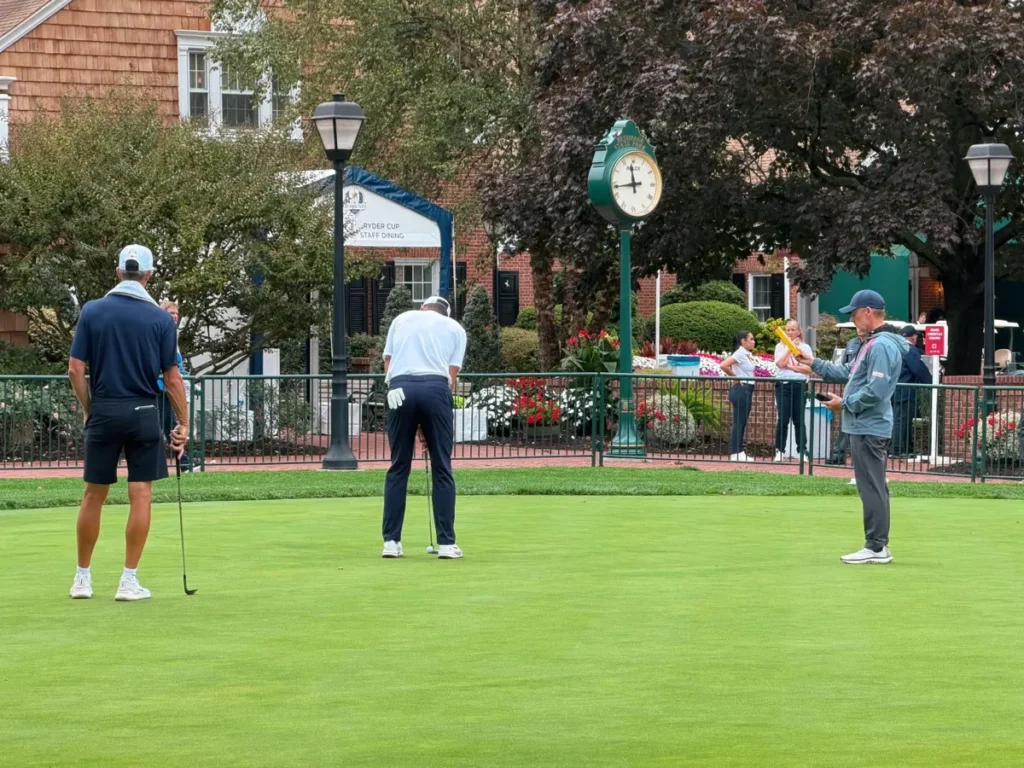
    FARMINGDALE, N.Y., Sept. 25, 2025—Scottie Scheffler practices putting with caddie Ted Scott and putting coach Phil Kenyon. Photo by David Derwin.

    Once you get outside seven feet the chances of making the putt for a tour pro drops off significantly. For the 2025 season, Scheffler’s make rate at seven feet was 71.67%, ninth best on the PGA Tour. At just two feet longer that percentage for Scheffler drops to 45.65% and 36.84% between 10-15 feet.

    Scheffler ranks first in Approach the Green and Proximity to the Hole strokes gained statistics, so even one additional 9-12 footer made in that 35-45% make rate distance offers him a great area of opportunity to pick up strokes on the field.

    Justin Rose

    Putter: Scotty Cameron T-5
    Practice Aids: Digital Level, String Line, Visio Putting Gate

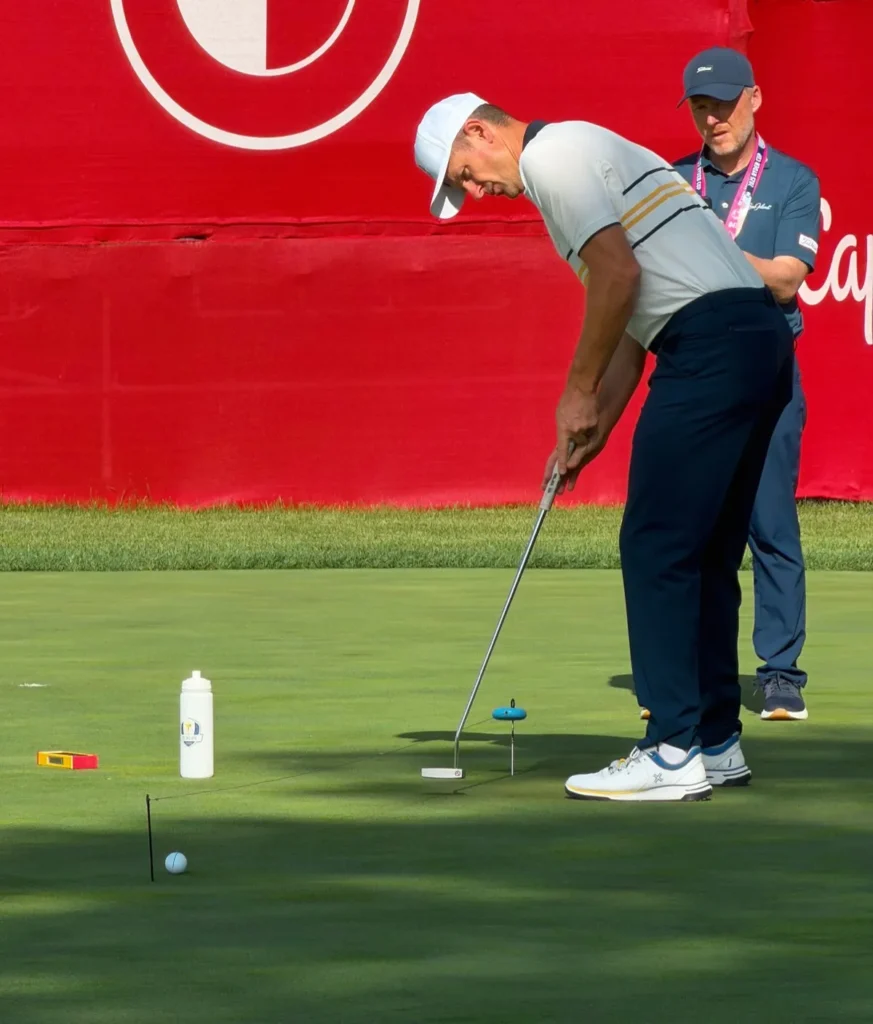
    Justin Rose worked with his long time putting coach Phil Kenyon on setup and start line using a string line and Visio Putting Gate. Rose lined up the line on his ball through the center of the putting gate which would also line up with or be parallel to the string line when viewed from above, depending on his intended eye position over the ball. Rose then removed the putting gate and used the string line on a straight putt, putting not to a hole but to the post at the end of the string line.
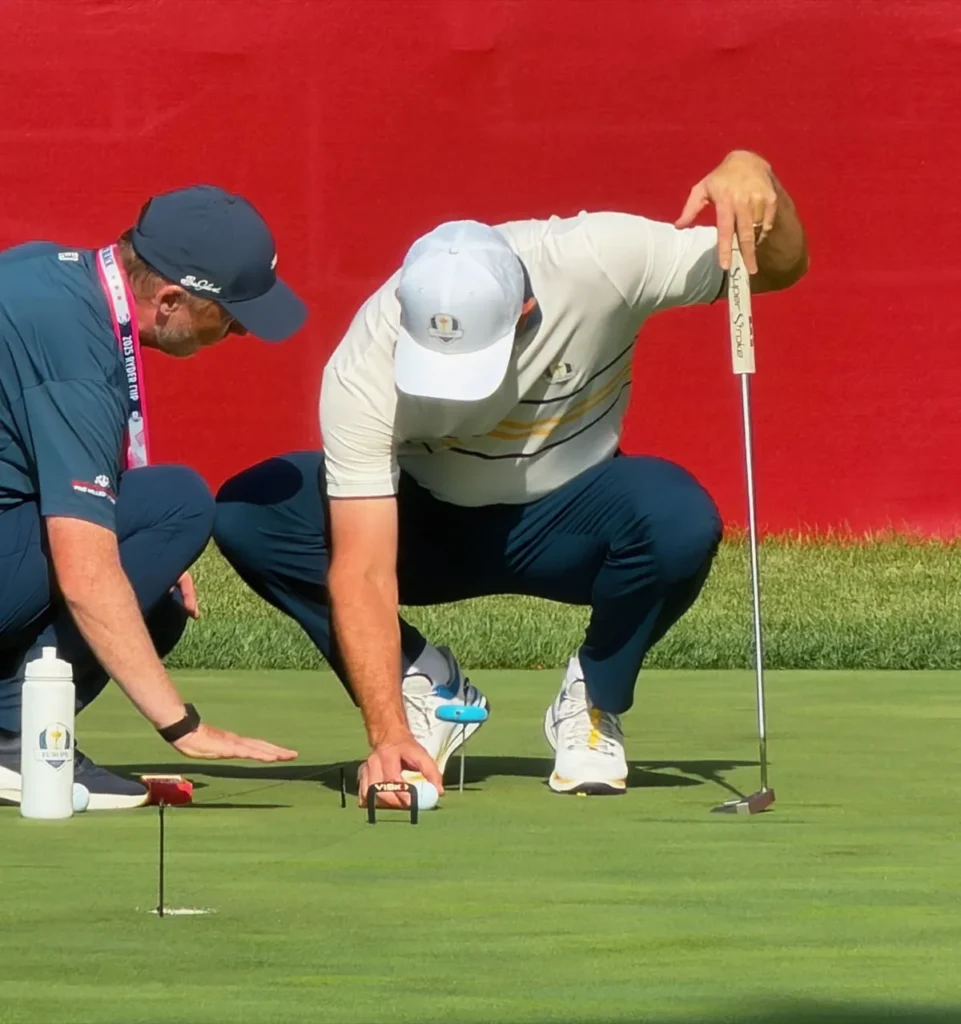
    FARMINGDALE, N.Y., Sept. 28, 2025—Justin Rose lines up a putt with putting coach Phil Kenyon. Photo by David Derwin.
    FARMINGDALE, N.Y., Sept. 28, 2025—Justin Rose practices putting with a string line under the guidance of putting coach Phil Kenyon. Photo by David Derwin.

    Collin Morikawa

    Putter: TaylorMade Spider Tour-V
    Practice Aids: Digital Level, Tape Measurer

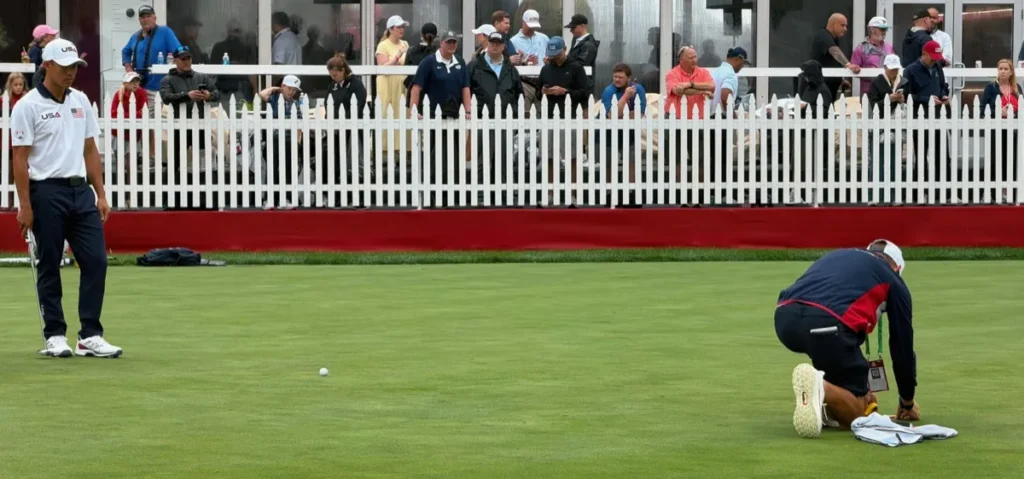
    Collin Morikawa’s putting practice was one of the more scientific approaches and centered around calibrating his AimPoint. Morikawa straddled the line of a putt, feeling the amount of slope on the green with this feet. Morikawa’s caddie, Mark Urbanek, used a digital level to measure the actual degree of slope. Urbanek then paced the distance of the putt and calculated the amount of break in inches using the degree of slope and the distance of putt. Urbanek then used a tape measurer to measure that amount of break from the center of the hole, marking that distance outside the hole on the green with a chalk pen, which served as the aim point. Morikawa then went through his full routine and hit the putt.
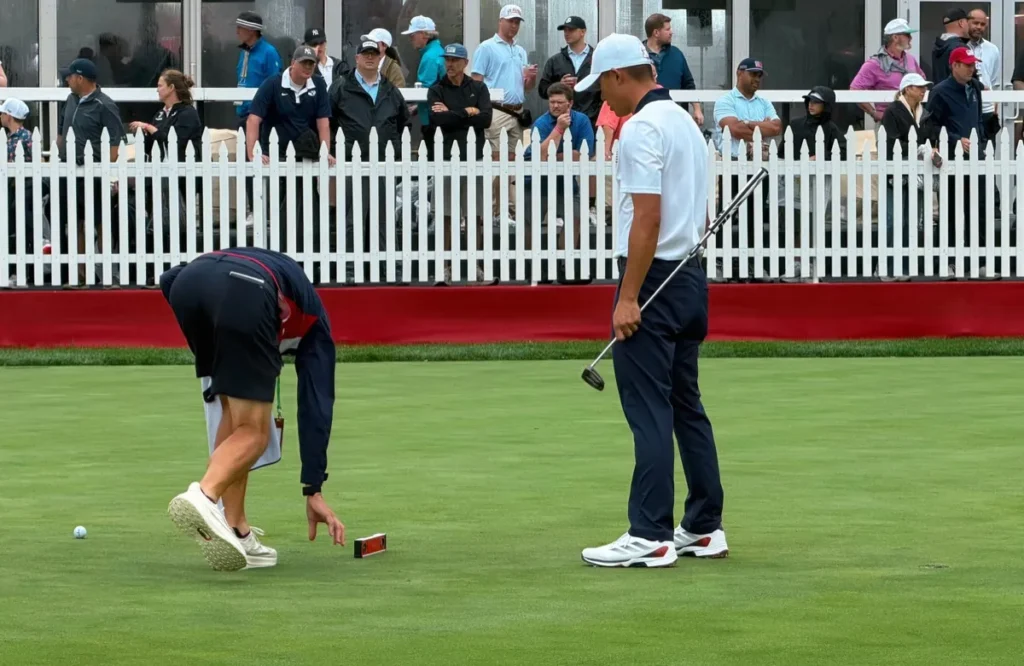
    FARMINGDALE, N.Y., Sept. 28, 2025—Collin Morikawa feels the break of a putt while his caddie Mark Urbanek measures the slope with a digital level. Photo by David Derwin.
    FARMINGDALE, N.Y., Sept. 28, 2025—Collin Morikawa’s caddie Mark Urbanek measures the amount of break with a tape measurer. Photo by David Derwin.

    One such formula to calculate the amount of break in inches is by multiplying the distance of the putt by the degrees of slope divided by two.

    Break (in inches) = (Distance in feet) x (Slope %) / 2

    This formula gets more complex when you factor in uphill or downhill slope, as a downhill putt will break more than an uphill putt, but on a relatively flat putt with some degree of sideways break it could yield more or less correct results.

    While we don’t see a tape measurer used during tournament play, in practice Morikawa and Urbanek are dialing in the feels of Morikawa’s feet and their ability to correctly estimate the slope of the green. They’re getting used to seeing and confirming the amount of break by measuring it exactly, then marking the aim point.

    Xander Schauffele

    Putter: Odyssey Red Milled Seven X
    Practice Aids: String, Putting Plates

    Xander Schauffele had a unique and clever practice routine to check his alignment using string and a Putting Plate. Schauffele would go through his full routine and line up a putt aimed at a tee placed in the ground near the hole. Schauffele then addressed the ball and paused in his set up position while his caddie, Austin Kaiser, removed the golf ball and placed a Putting Plate square to Schauffele’s putter face.

    FARMINGDALE, N.Y., Sept. 28, 2025—Xander Schauffele lines up a putt while his caddie Austin Kaiser holds a putting plate and string line. Photo by David Derwin.

    Using string connected to the tee at Schauffele’s aim point near the hole, Kaiser pulled the string taught along the center of the Putting Plate. If the string lined up with the center line of the Putting Plate, Schauffele lined the putt up correctly. If the string line was skew to the center line of the Putting Plate, Schauffele’s alignment was incorrect to his intended line. Kaiser then removed the Putting Plate, put the ball back, and Schauffele hit the putt.

    Ben Griffin

    Putter: Scotty Cameron Concept 2 Tour (w/ Stainless Steel Insert)
    Practice Aids: Tee Putting Gate

    Ben Griffin focused on a consistent center strike and square impact position using a tee placed closely on either side of his putter at address. Griffin hit several four footers using his right hand only, at times with his left hand in his pocket. He then hit putts with his left hand only. After hitting one-handed putts with each hand, Griffin then hit putts with his regular grip.
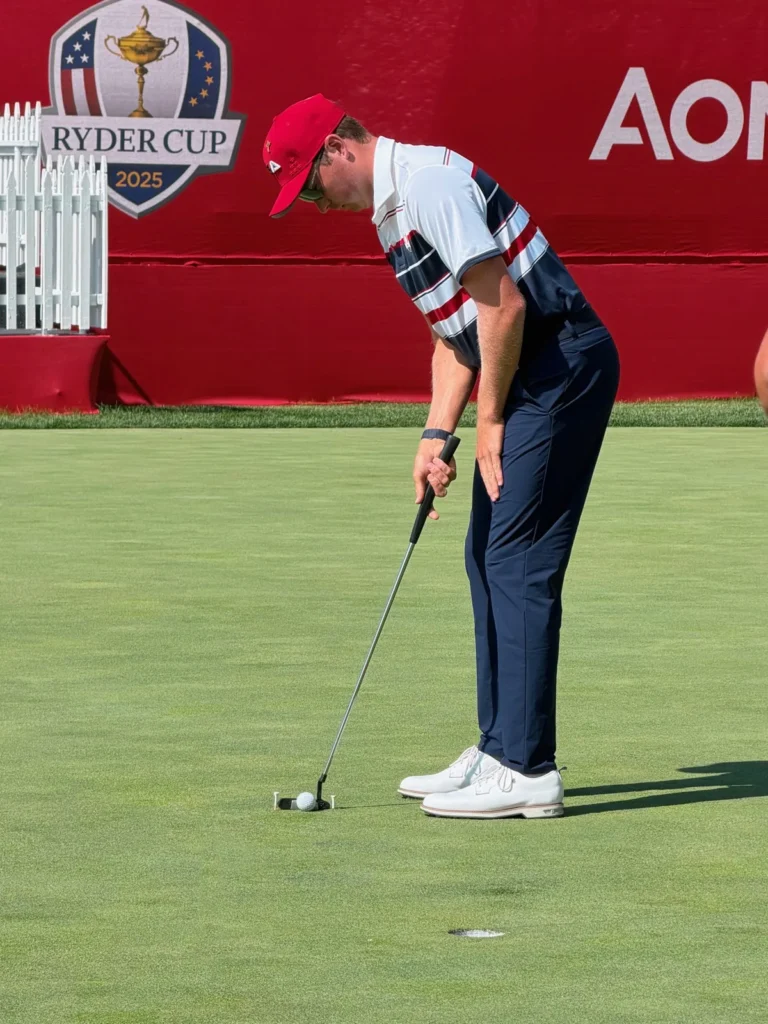
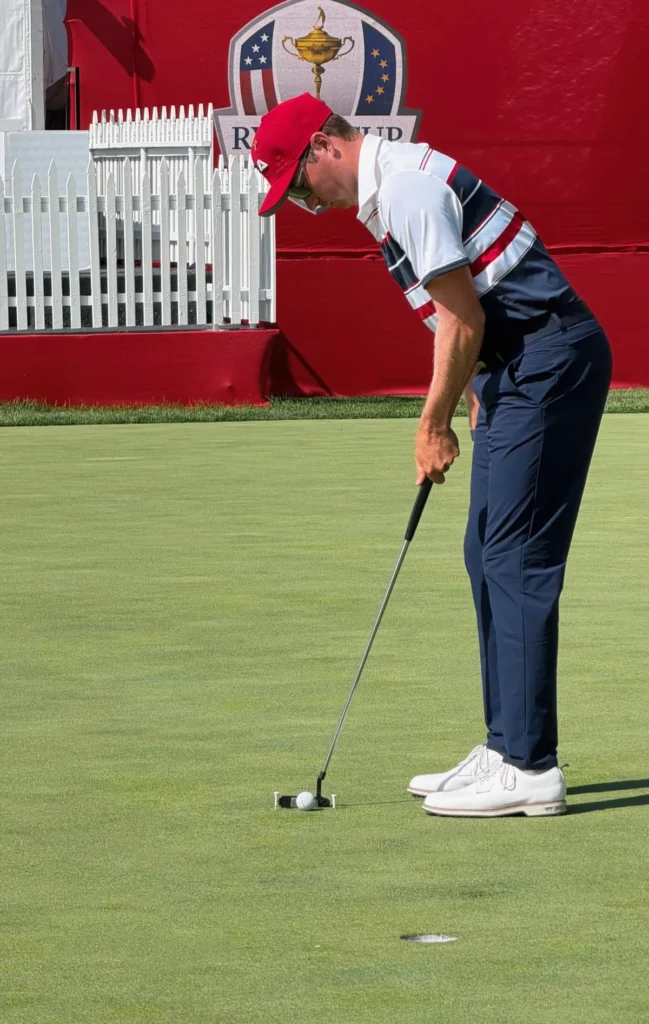
    FARMINGDALE, N.Y., Sept. 28, 2025—Ben Griffin practices putting with his right hand in preparation for the Ryder Cup. Photo by David Derwin.
    FARMINGDALE, N.Y., Sept. 28, 2025—Ben Griffin practices putting with his left hand in preparation for the Ryder Cup. Photo by David Derwin.

    Tommy Fleetwood

    Putter: TaylorMade Spider Tour Black
    Practice Aids: Digital Level

    Tommy Fleetwood has been working with Phil Kenyon since 2016 and the pair spent time on the practice green at Bethpage primarily calibrating AimPoint feels on short range putts. Using a digital level, Kenyon measured the slope along the path of five to six foot putts, after which Fleetwood straddled the line to calibrate his feel against the actual slope measurement reading prior to lining up and hitting the putt.
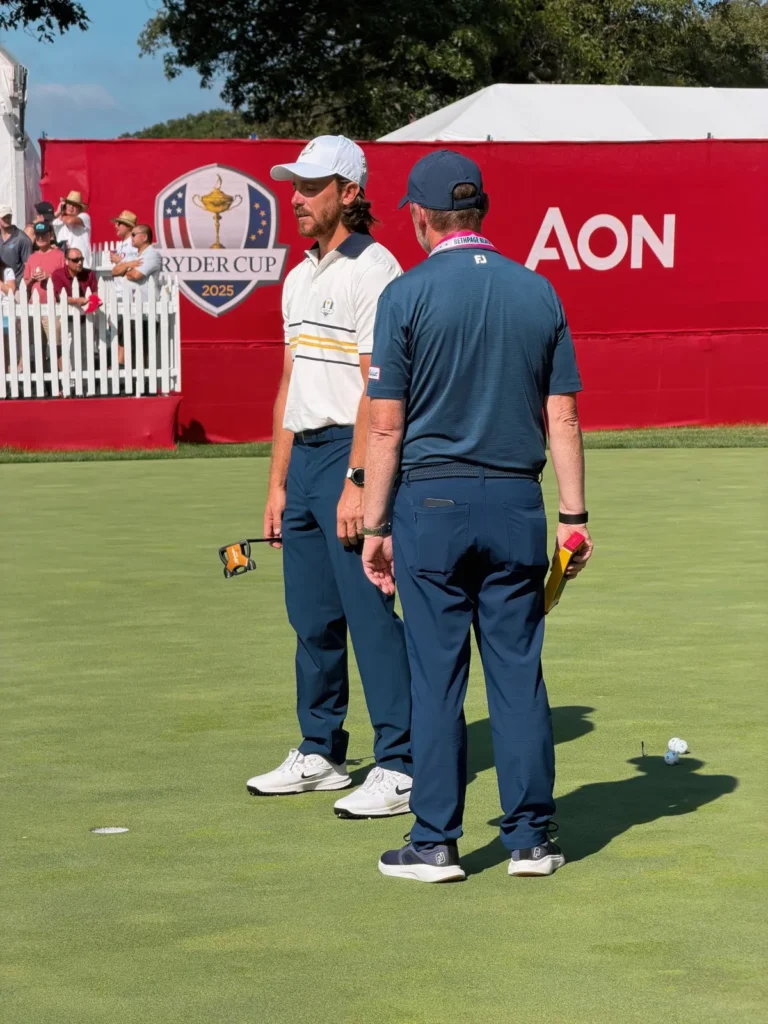
    FARMINGDALE, N.Y., Sept. 28, 2025—Tommy Fleetwood feels the slope of a putt under the guidance of putting coach Phil Kenyon. Photo by David Derwin.

    Bryson DeChambeau

    Putter: SIK Pro C-Series Armlock
    Practice Aids: Tee Putting Gate, Chalk Line

    Bryson DeChambeau made a putting gate using six tees and a chalk line marking a straight putt to a putting disk. DeChambeau’s putting stroke is unique in that he uses an arm-lock grip in a very upright setup position and he putts along a truly straight back and straight through path with minimal to no face rotation. Because of this, DeChambeau’s putting gate used the straight chalk line to make a row of three gates in a perfectly straight line where the ball was placed between the middle gate and the back and front gate were used to ensure a center strike on the putter when swinging in a straight back and through path.

    DeChambeau also had someone from his team filming his stroke from a down the line angle using an iPhone.
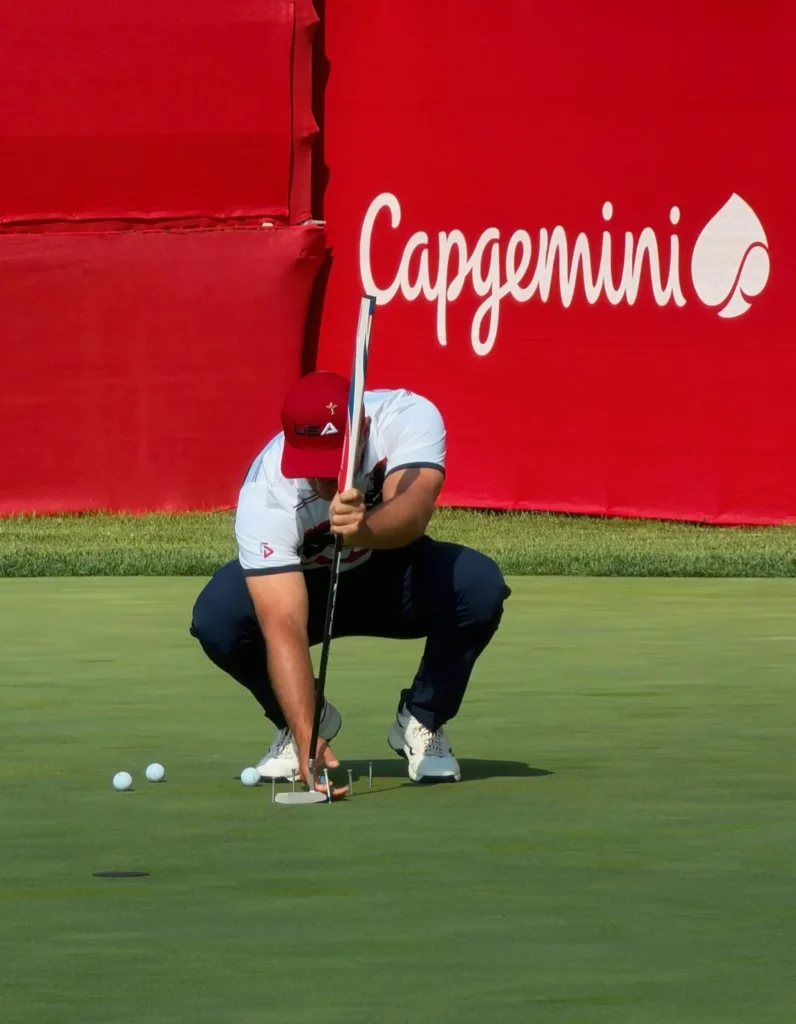
    FARMINGDALE, N.Y., Sept. 28, 2025—Bryson DeChambeau makes a putting gate with tees. Photo by David Derwin.
    FARMINGDALE, N.Y., Sept. 28, 2025—Bryson DeChambeau practices putting using a tee gate while a team member films his stroke with an iPhone. Photo by David Derwin.

    J.J. Spaun

    Putter: L.A.B. Golf DF3
    Practice Aids: The Putting Arc MS-3D, Putting Mirror

    The 2025 U.S. Open winner did block practice to a putting disk around five feet away with a focus on dialing in a correctly arching stroke. Spaun used a Putting Arc MS-3D practice aid placed at the heel of the putter which acts as a template for a mathematically ideal amount of arc for a putting stroke.

    Spaun then removed the arc training aid and used a putting mirror at this same distance with a gate set up by placing a tee on either side of the putter at address to dial in a centered impact position at the ball.

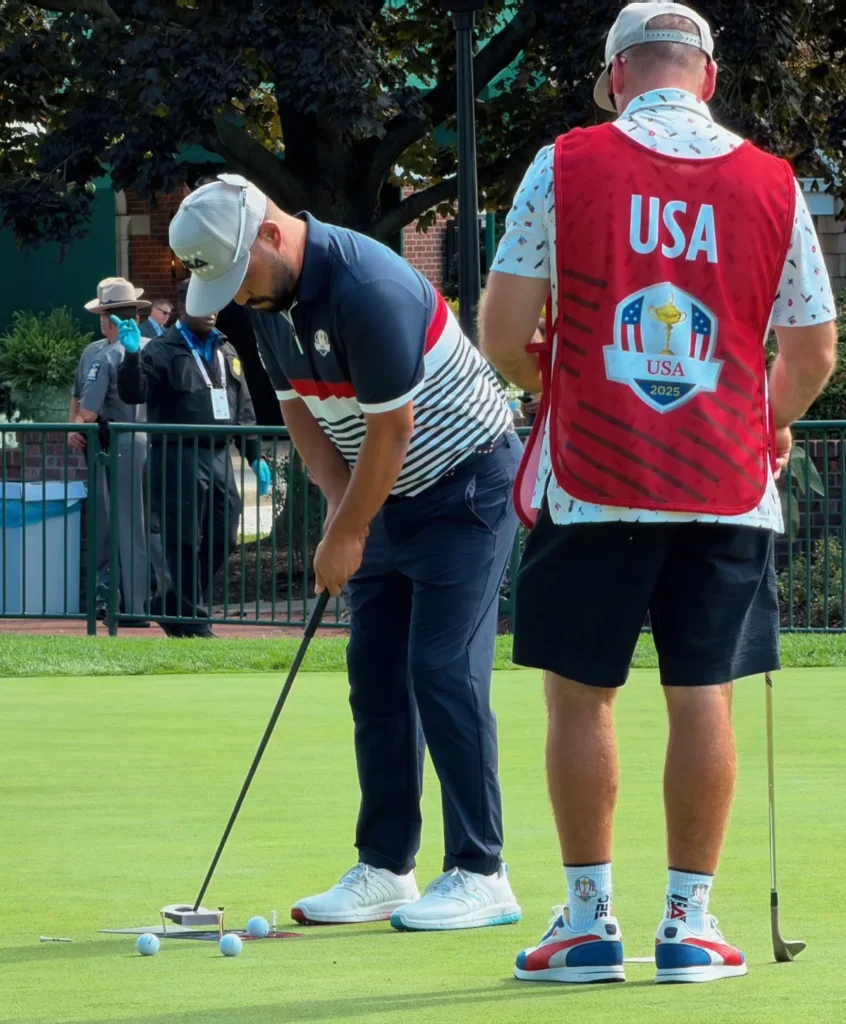
    FARMINGDALE, N.Y., Sept. 28, 2025—J.J. Spaun practices putting with a putting arc training aid. Photo by David Derwin.
    FARMINGDALE, N.Y., Sept. 28, 2025—J.J. Spaun practices putting with a putting mirror and tee putting gates. Photo by David Derwin.

    Key Takeaways

    One tool used by pros that is not often used by amateurs is the putting ramp— likely due to time and money. Putting ramps like those from The Perfect Putter start at $299 which is good for putts up to 15 feet. An extension is required for putts up to 35 feet.

    FARMINGDALE, N.Y., Sept. 28, 2025—A player team member prepares a practice station by rolling a ball down a putting arc. Photo by David Derwin.

    Pros have a caddie or dedicated putting coach that is able to prepare their putting stations ahead of time, allowing them to step in for 20 minutes of high quality practice. If you’re hitting some putts before your 8:06 a.m. tee time at your local course, you’d have to allow extra time to map out your practice station with a putting ramp.

    That said, if you’re serious about improving your putting, it is one tool you can add to level up the quality of your putting practice.

    A second tool used by pros and not often used by amateurs is a digital level—most likely due to money and the technical learning curve of applying the slope information into practice. The level of choice for Phil Keynon and other players is the Stabila 9 in. IP67 TECH 196 DL Digital Level which costs $248 and trusted for its speed and accuracy, as well as the ability to measure slope in percent and convenient to read display on the top. Where you find a tour pro putting you will find a digital level not far away. Even players like Scottie Scheffler, who use a more traditional green reading style, use a digital level during practice. They leave little guesswork to their putting practice and know exactly what degree of slope they are putting on, even if they don’t use AimPoint.
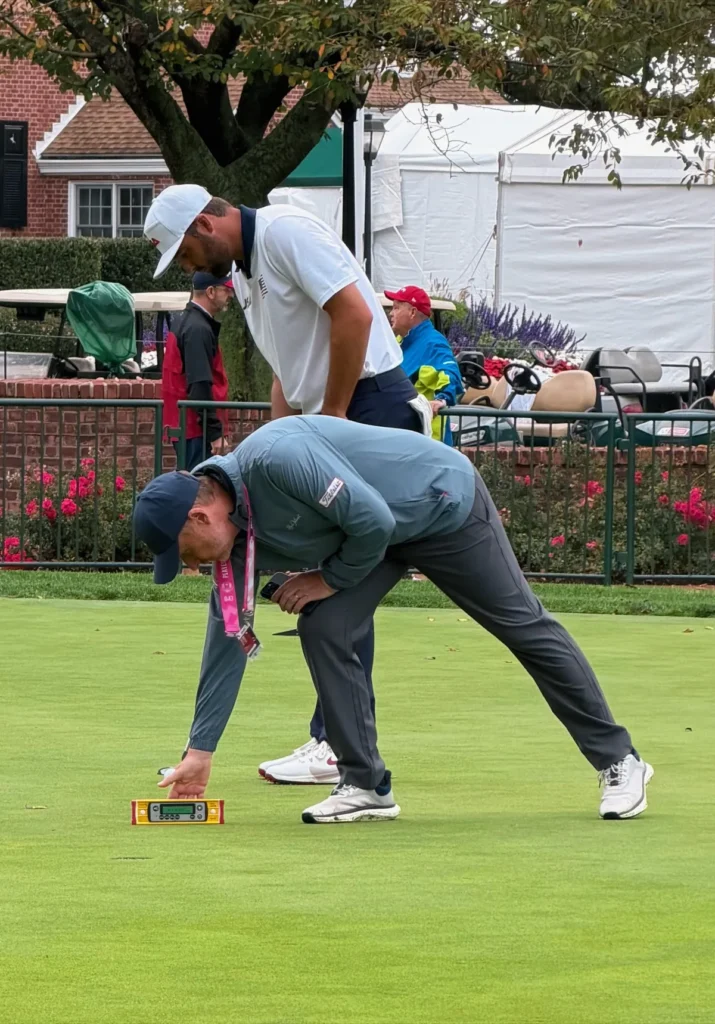
    FARMINGDALE, N.Y., Sept. 28, 2025—Phil Kenyon measures the slope of the green with a digital level while working with Scottie Scheffler. Photo by David Derwin.

    The most observed training aid used at the Ryder Cup was Visio’s Mi Putting Template 3.0. The template packs a lot of feedback in a small package and gives the player instant awareness of their ability to hit their start line by using a gate made from two tees placed in the template roughly 13 inches in front of the ball. Two more tees placed on either side of the putter at address also trains the players’ ability to achieve a center strike on the putter face.
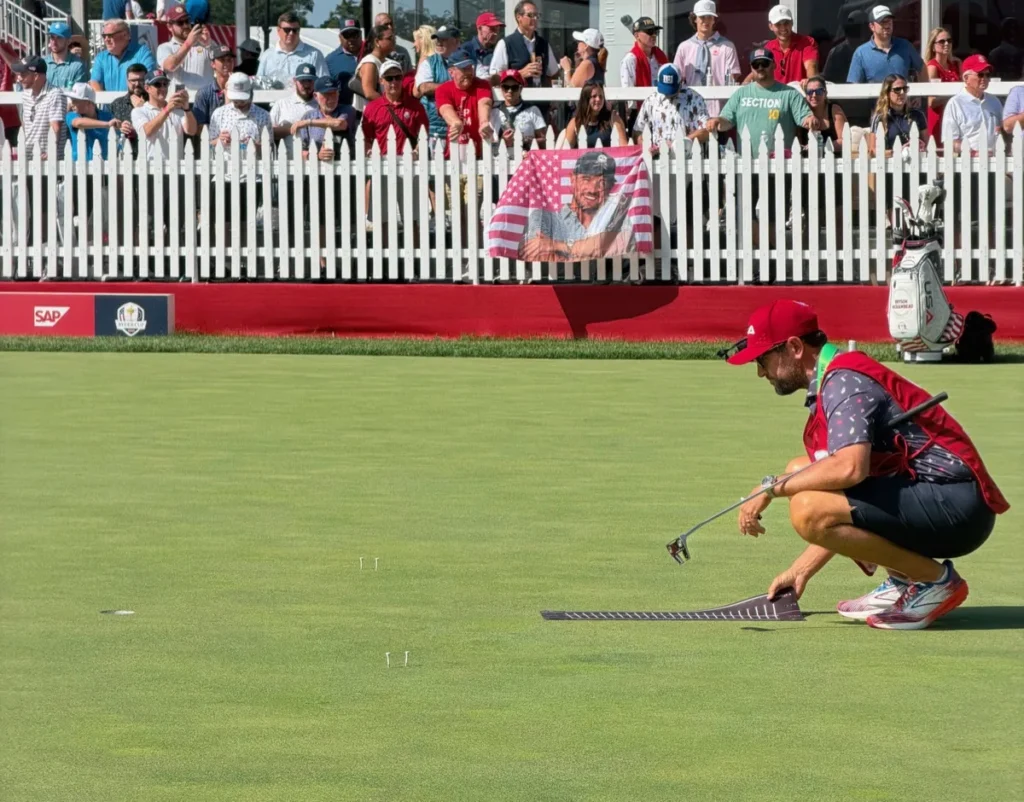
    FARMINGDALE, N.Y., Sept. 28, 2025—A caddie uses a Mi Putting Template to create putting stations around the hole. Photo by David Derwin.
    FARMINGDALE, N.Y., Sept. 28, 2025—A team member uses a putting ramp and a Visio Mi Putting Template with Visio putting gate. Photo by David Derwin.

    That said, you don’t need anything more than a couple of tees to make a gate for your putter face like Ben Griffin or Bryson DeChambeau. For additional feedback, place two tees just outside with width of a ball placed a foot in front of your putter head to check your start line for high quality putting practice before your next round.

    Whatever your putting practice routine is, the main takeaway is practice with purpose. Practice with intention.


    Your Next Read


  • Scenes From the Ryder Cup

    Scenes From the Ryder Cup

    Bringing the Ryder Cup to Farmingdale, NY was a spectacle twelve years in the making. Last week, the American and European teams descended on Bethpage Black for the 2025 Ryder Cup, an historic moment for the beloved A.W. Tillinghast masterpiece, which became the first municipal golf course in the United States to host the biennial event.

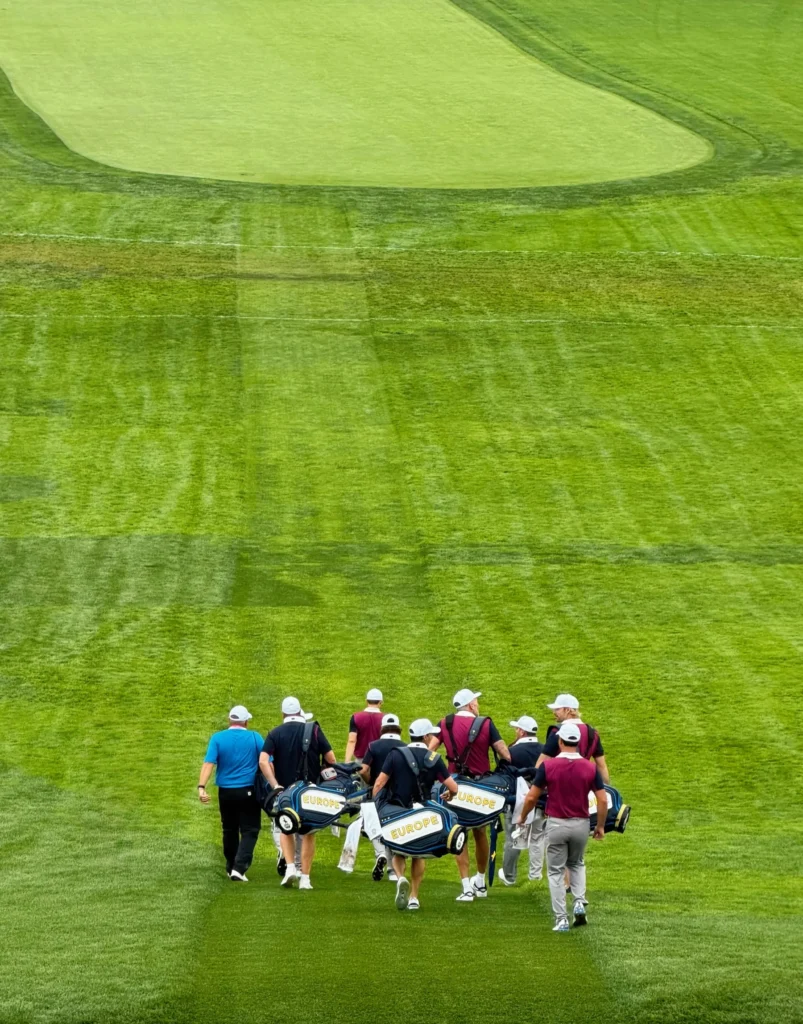
    Matt Fitzpatrick, Tommy Fleetwood, Viktor Hovland, and Robert MacIntyre walk down the first hole during a practice round at Bethpage Black ahead of the 2025 Ryder Cup.
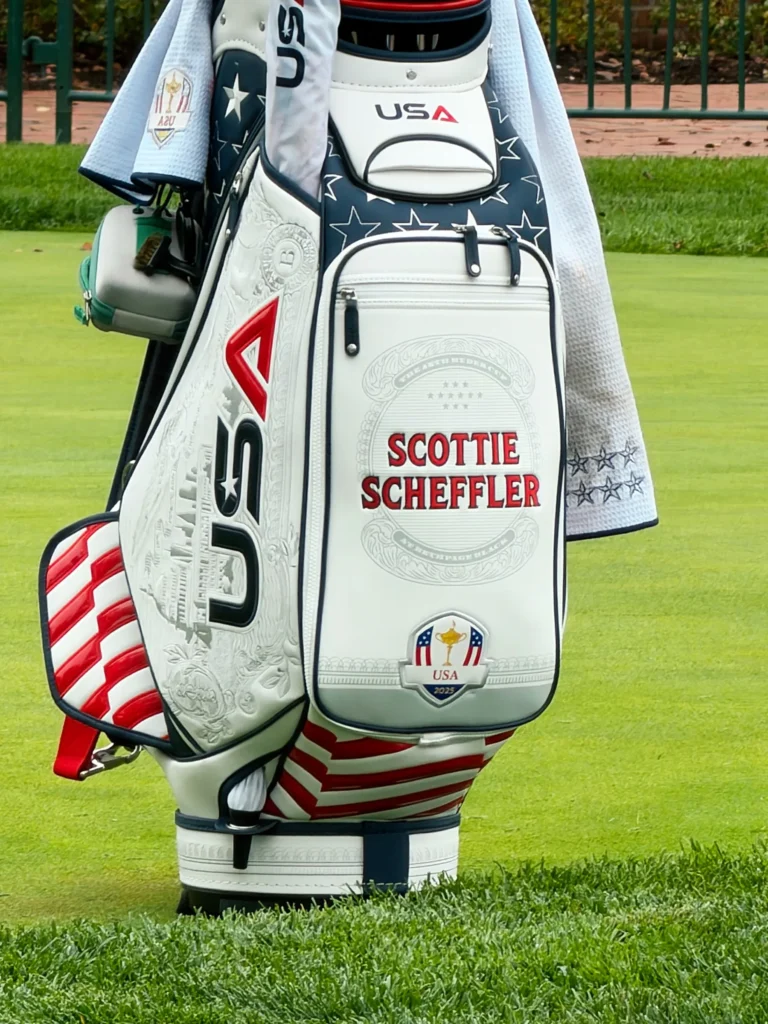
    Scottie Scheffler’s golf bag rests beside the practice putting green before play begins at Bethpage Black.
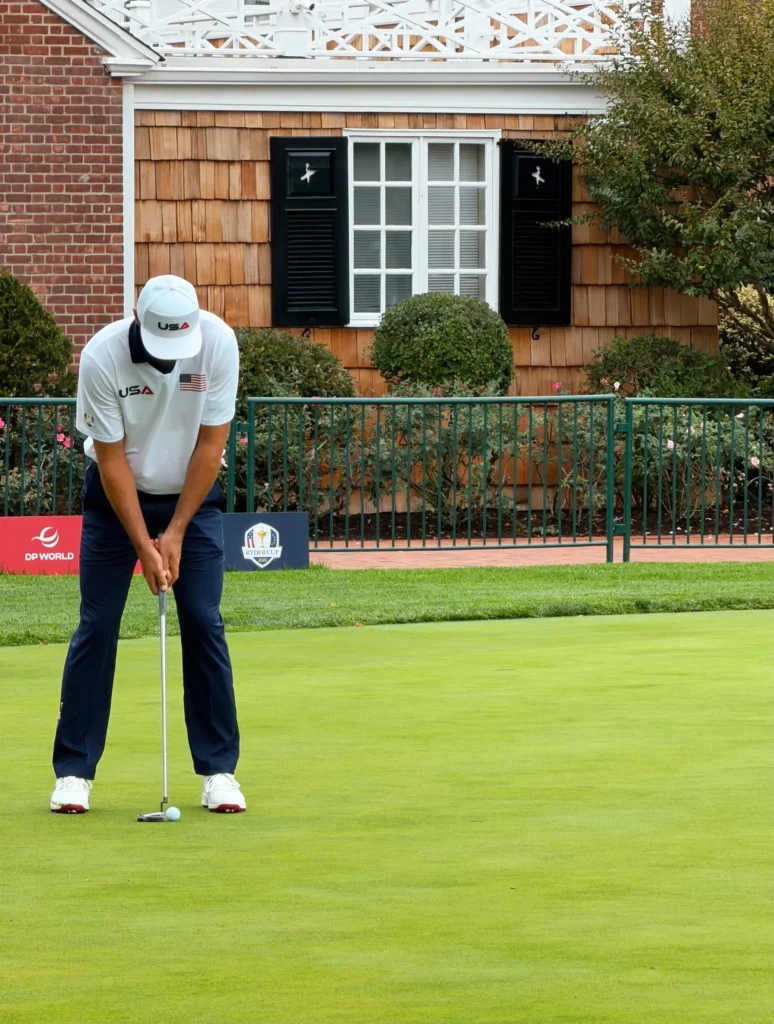
    Scottie Scheffler practices putting on Thursday morning before the opening rounds of the Ryder Cup.
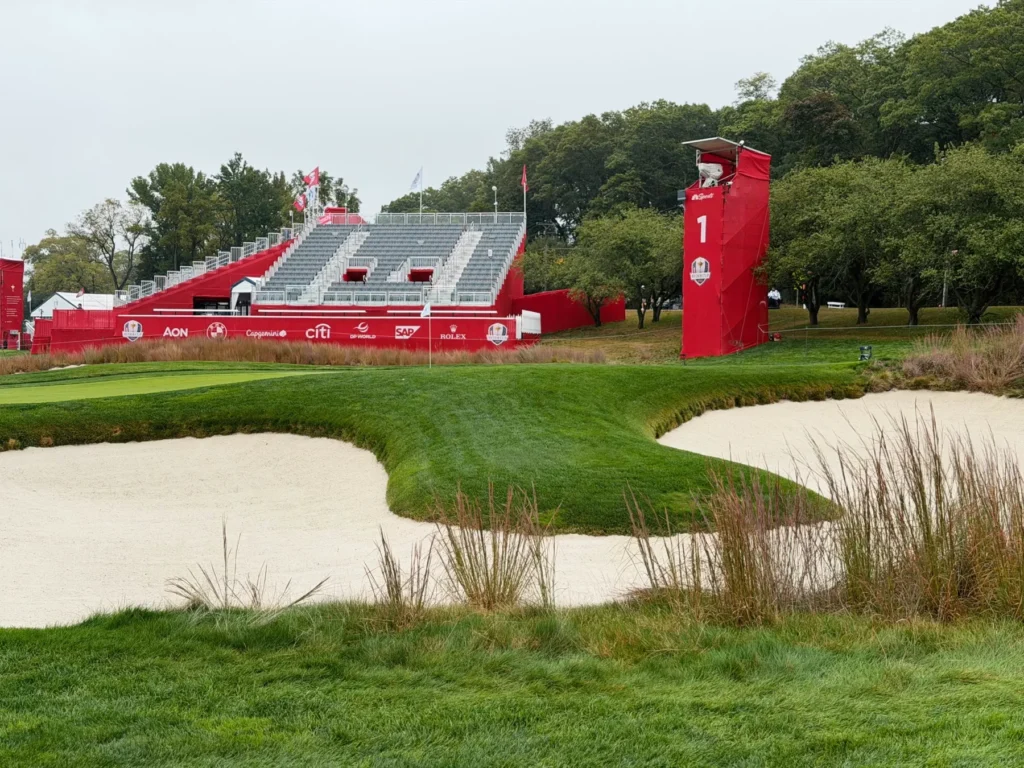
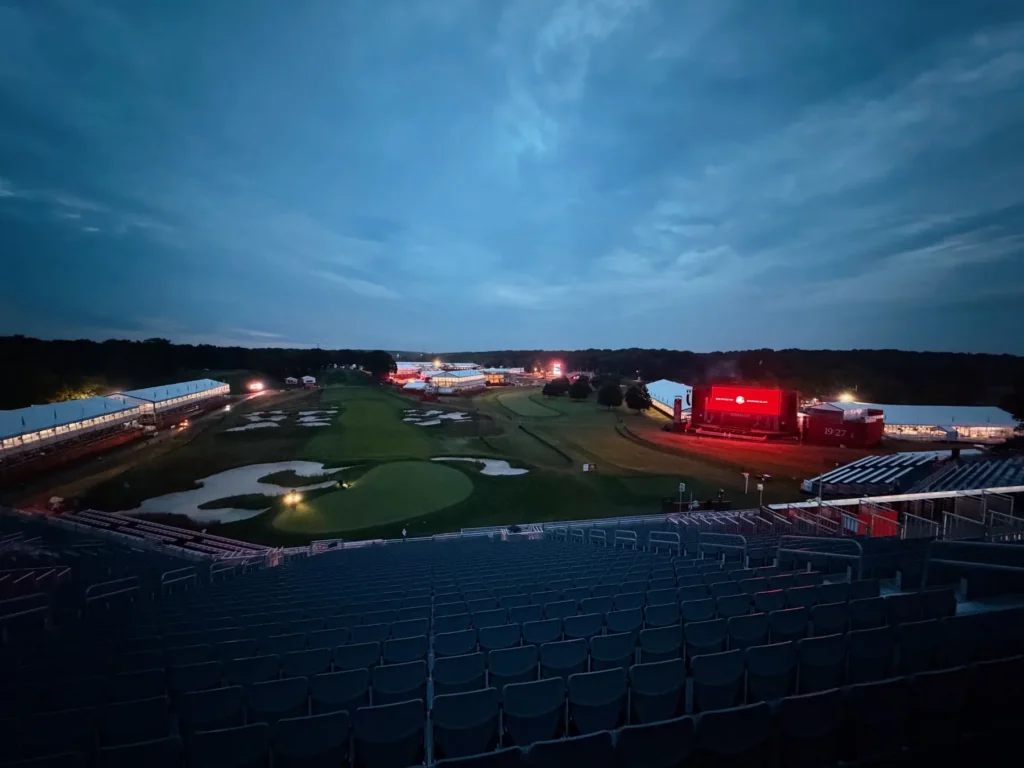
    Grandstands rise behind the first green at Bethpage Black during a quiet moment before the crowds arrive.
    Spectators line up at dawn for general entry on the opening day of the Ryder Cup.
    Fans fill the grandstands behind the first green as play begins on Friday morning.
    Jon Rahm tees off on the fifteenth hole during Friday’s opening matches at Bethpage Black.
    Rory McIlroy’s caddie, Harry Diamond, walks from the practice range to the first tee.
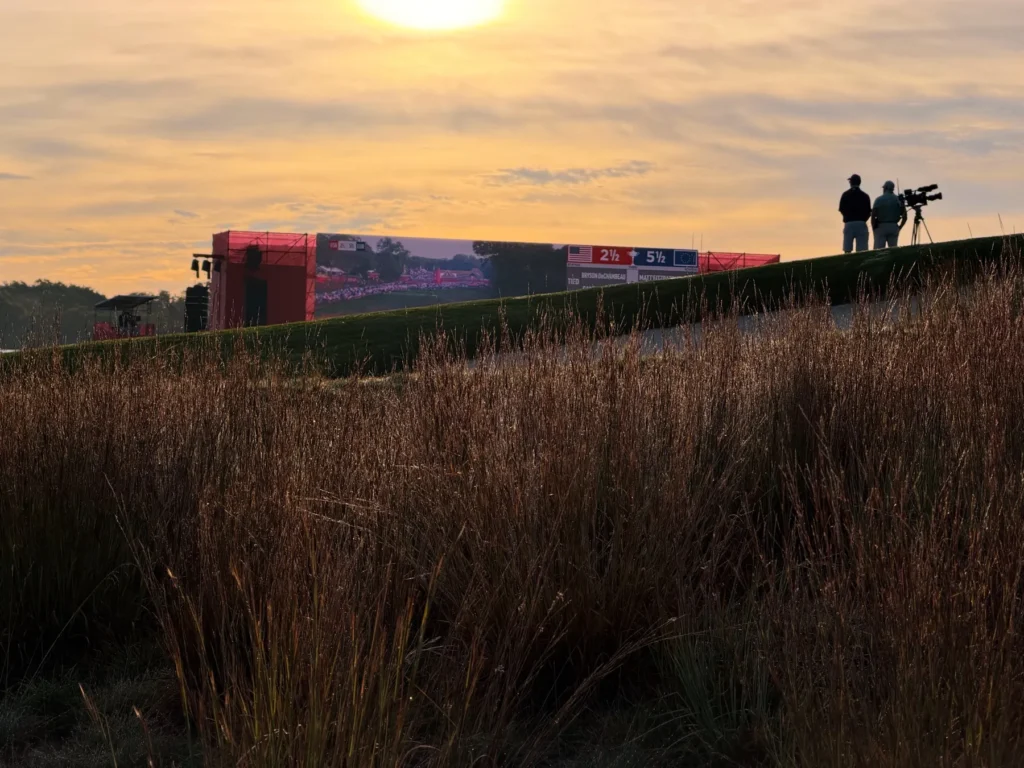
    Cameramen position themselves along the first hole before the start of Saturday’s matches.
    Early risers settle into the grandstands behind the first tee on Saturday morning.
    Sunrise breaks over the eighteenth hole at Bethpage Black on the second day of competition.
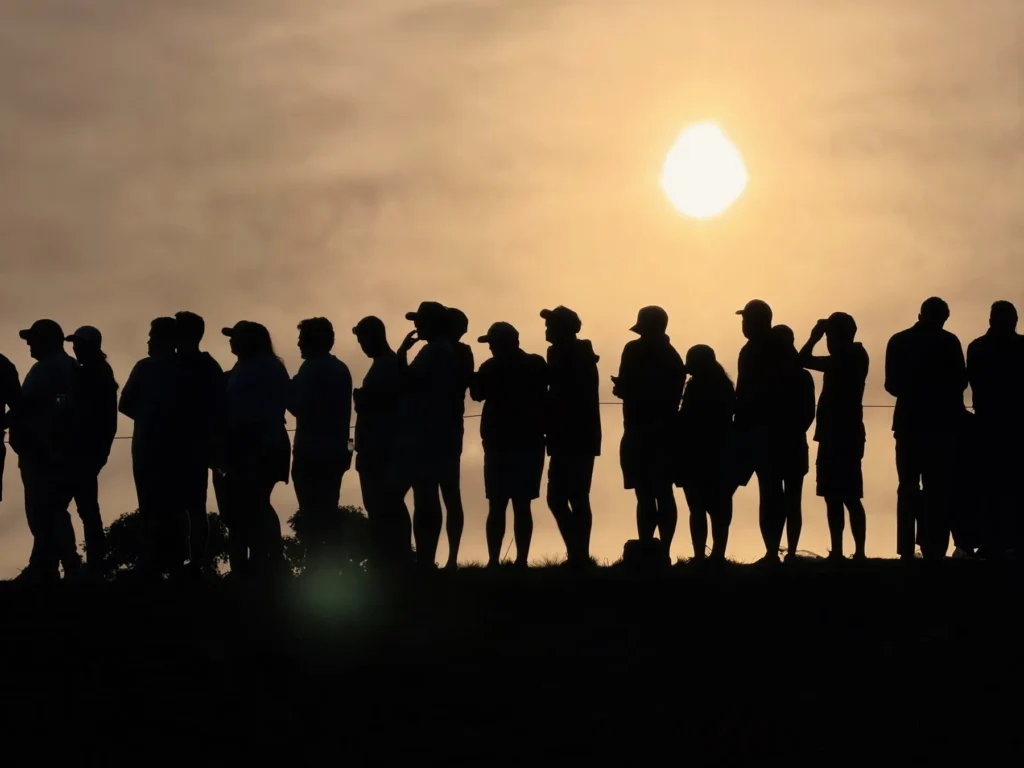
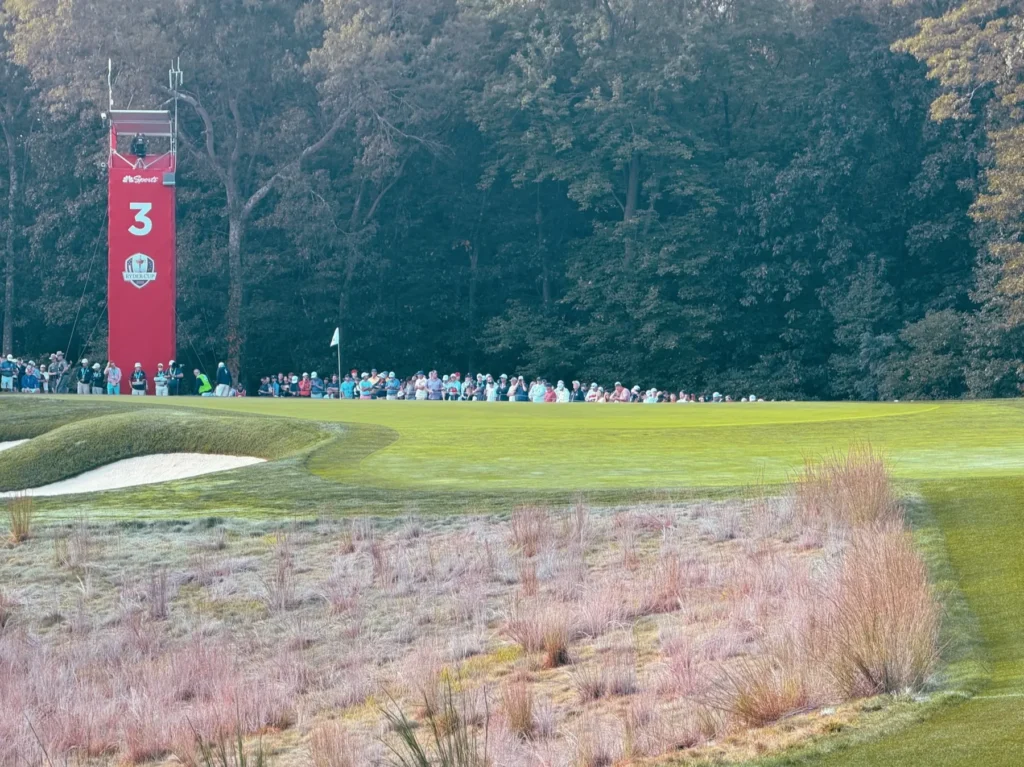
    Spectators line the third hole as play unfolds on Saturday.
    A look toward the third green during Saturday’s matches at Bethpage Black.
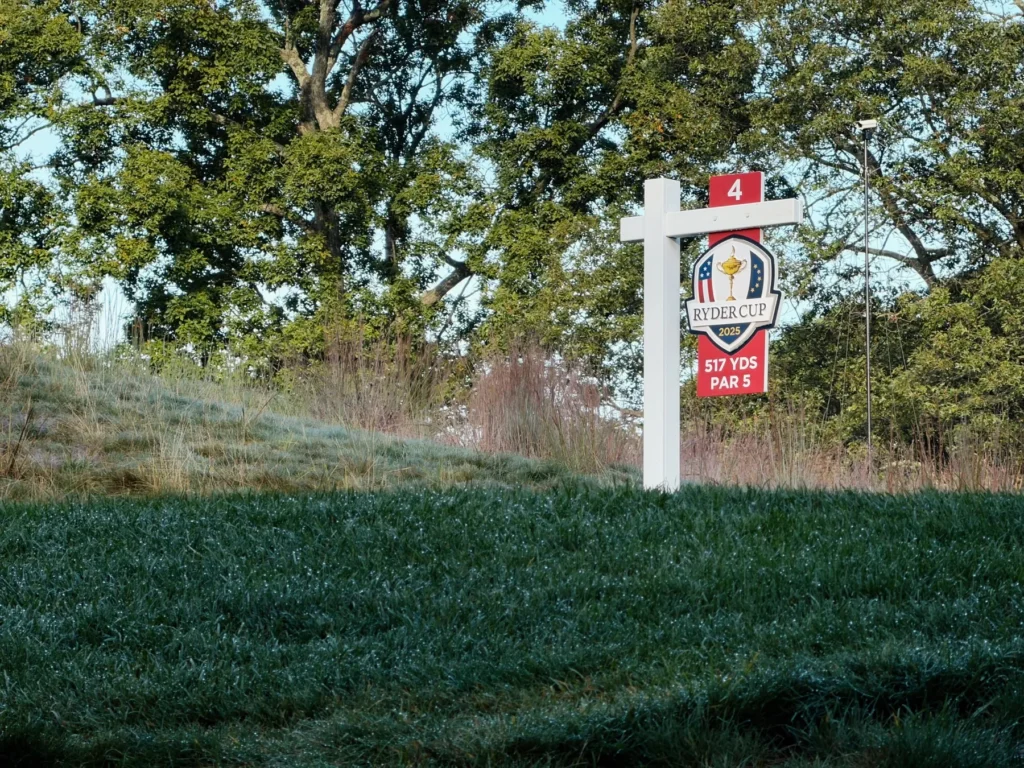
    The fourth tee box sits framed by morning light on the second day of play.
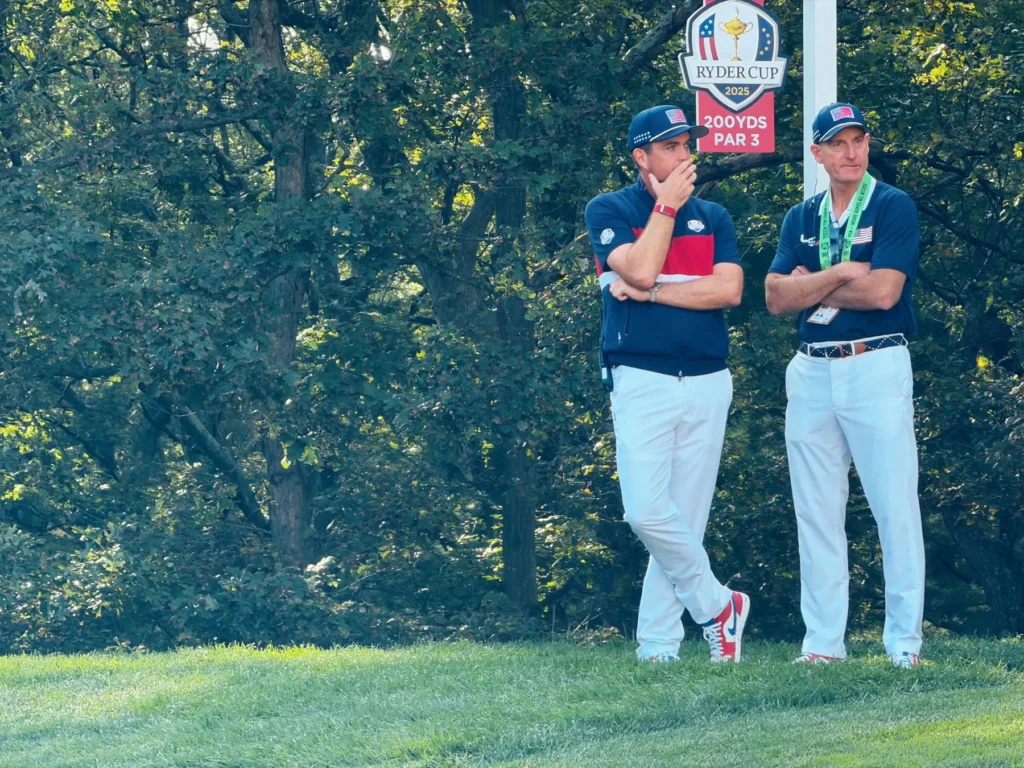
    U.S. Captain Keegan Bradley and Vice Captain Jim Furyk stand together on the eighth tee during Saturday’s round.
    A European fan uses a periscope to glimpse the seventh green from the gallery.
    Crowds stretch along the eleventh fairway of Bethpage Black on a warm Saturday afternoon at the Ryder Cup.
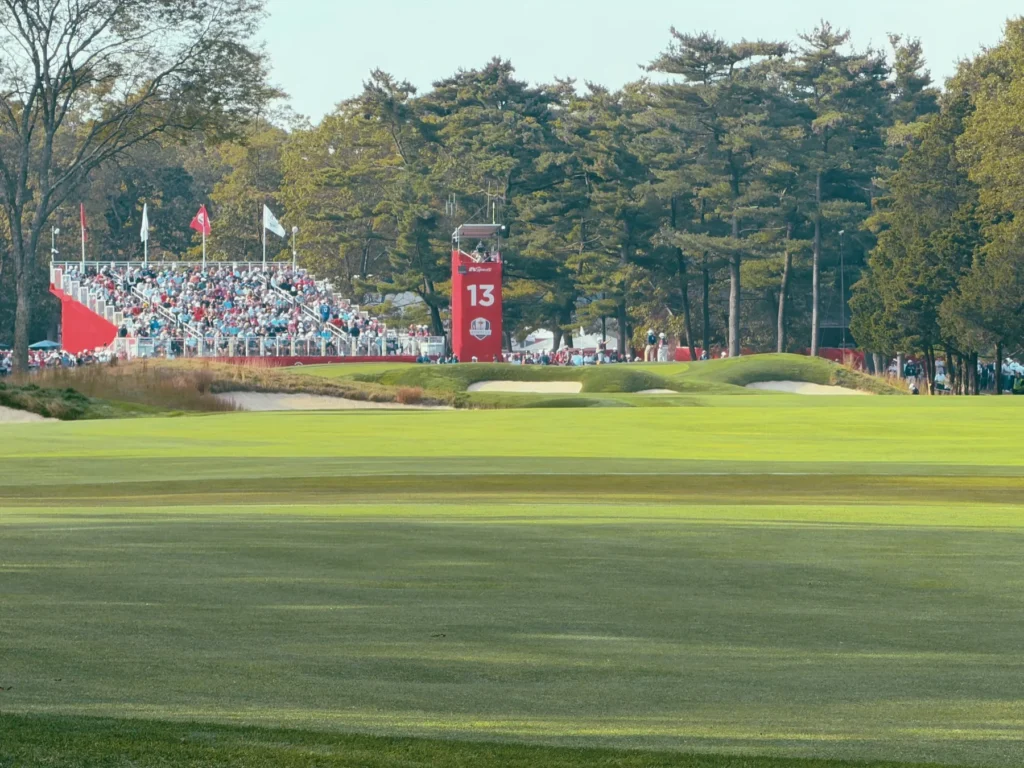
    The thirteenth fairway glows in the afternoon sun at Bethpage Black.
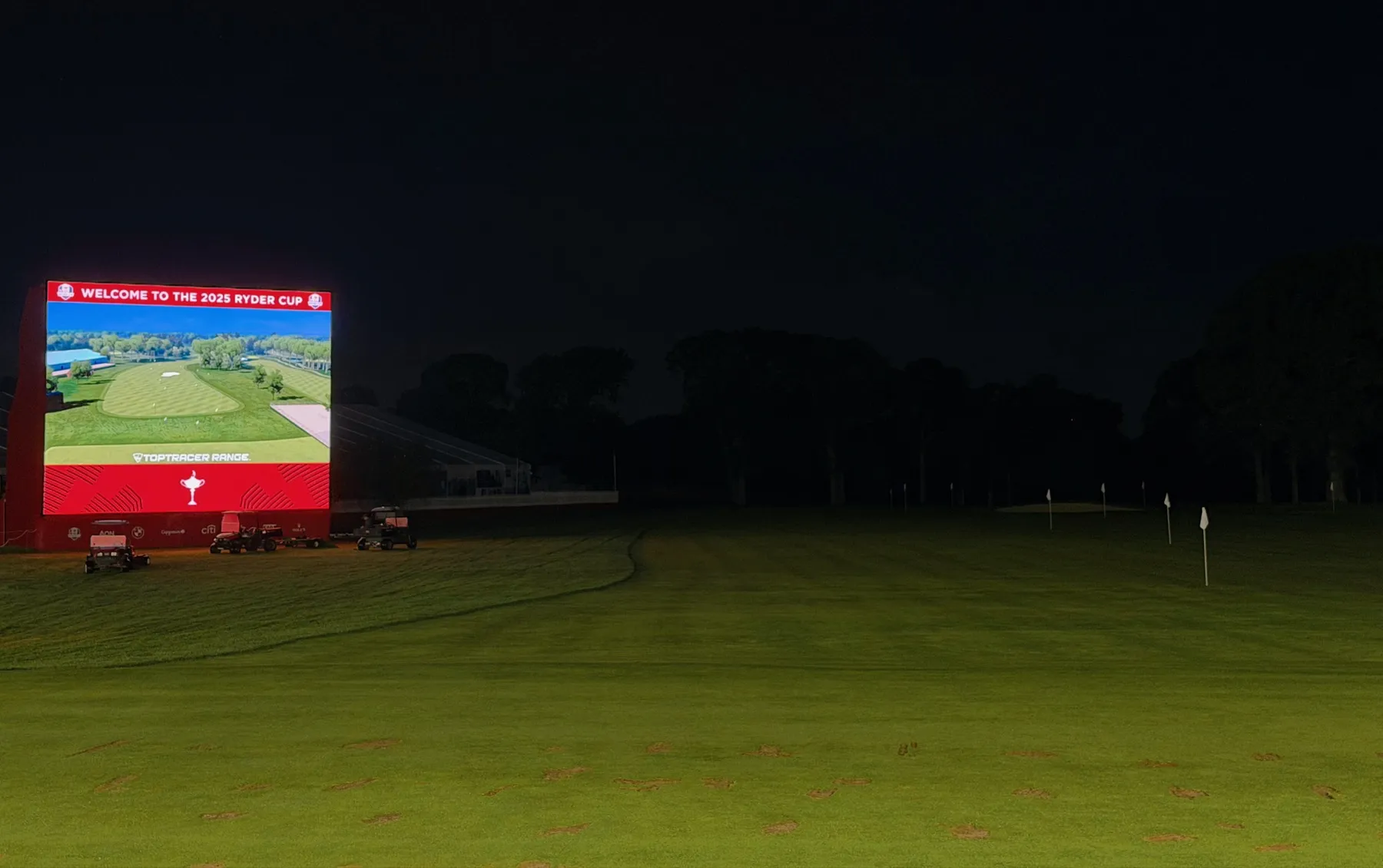
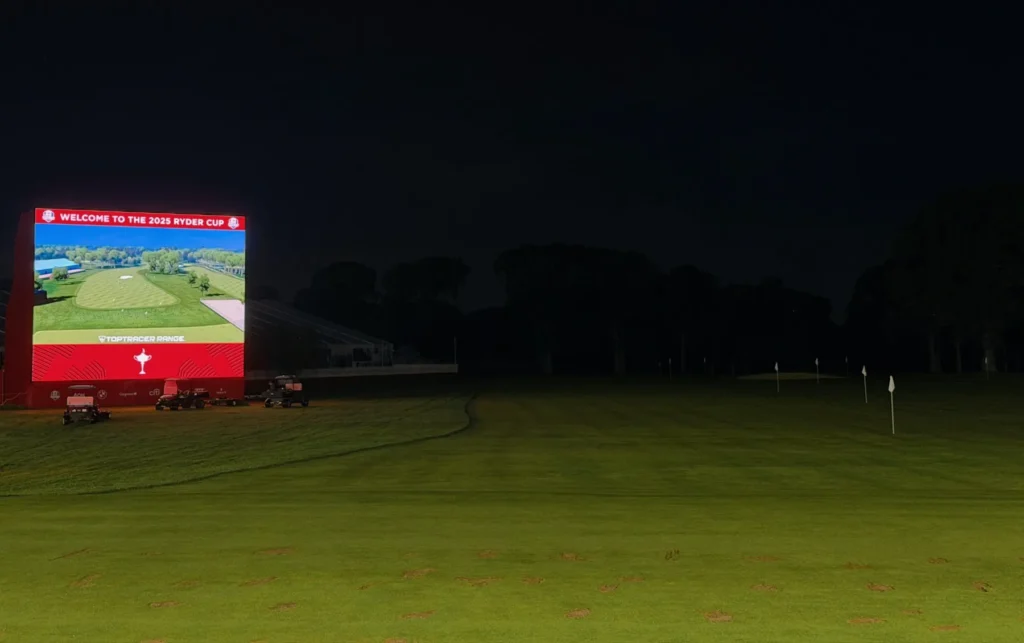
    The practice range lies quiet before dawn on Sunday, the final day of the Ryder Cup.
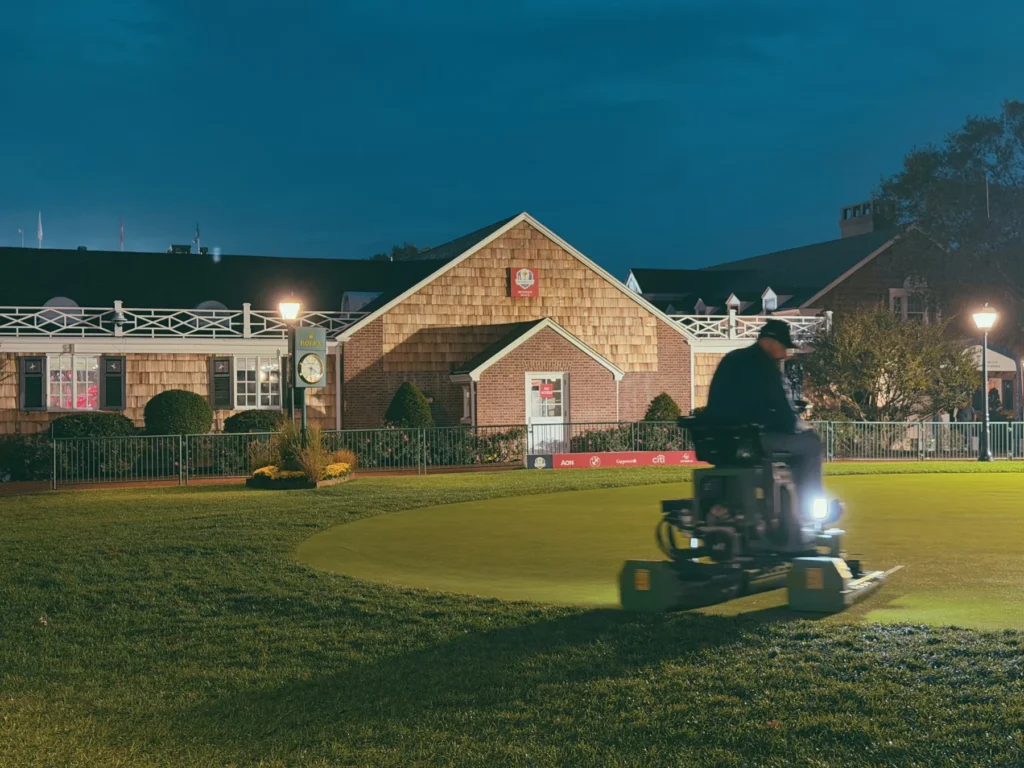
    A greenskeeper mows the practice green before play begins on Sunday morning.
    The Bethpage State Park clubhouse, adorned with a Ryder Cup sign, on the final day of competition.
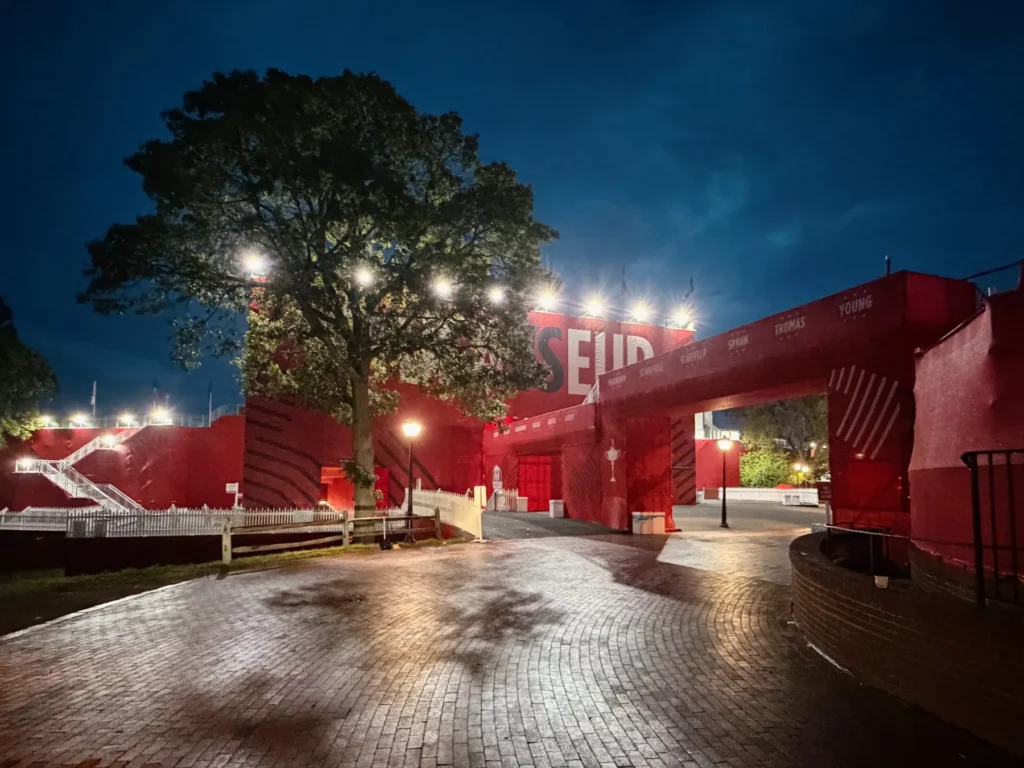
    The entrance to the grandstands surrounding the first tee and eighteenth green early Sunday morning.
    Grandstands overlook both the first tee and eighteenth green on the final morning of the Ryder Cup.
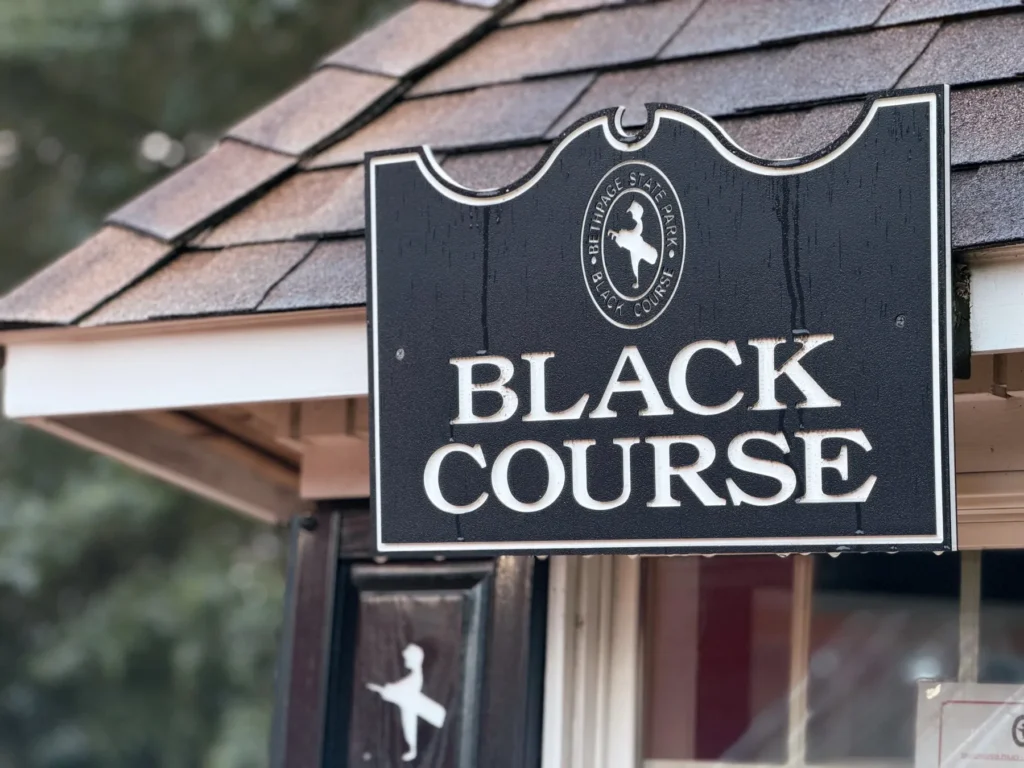
    The iconic Bethpage Black sign adorns the starters booth on the final day of the Ryder Cup.

    Your Next Read


  • The Quiet Certainty Behind Sam Burns’ Putting Stroke

    The Quiet Certainty Behind Sam Burns’ Putting Stroke

    Sam Burns is one of the best putters in the world. For the 2025 season, he ranks number 1 on the PGA TOUR for strokes gained putting (0.983) and 4th in putts per round (27.96). Not only is Burns making more putts inside ten feet than any other player on the PGA TOUR this year (90.85%), he is also making more putts in the critical four to eight foot range as well (77.88%).

    Put another way, when Burns is within ten feet of the hole, he makes the putt nine out of ten times.

    Needless to say, Burns is doing something right on the greens and it has helped the 29 year-old Louisianian capture five PGA TOUR wins since turning pro in 2017.

    While being a good putter requires a certain level of technique, there are many more factors that go into putting that physical mechanics alone can’t account for. The putt must be read correctly. The read must be matched up with the correct pace—two factors that are more feel oriented and less technical than the actual putting stroke. Beyond the read, pace and stroke, there is the internal dialogue to manage, the internal— and external— pressures placed on each putt that can turn an otherwise straight forward six footer into a mental minefield of doubt.

    Sam Burns was asked about this during Thursday’s press conference at the Ryder Cup, and his response provides some key insight into the mindset of the best putter on the U.S. Ryder Cup team.

    “I try to keep putting as simple as possible. I think there are so many things that happen after you hit a putt that are out of your control, whether it hits a spike mark or an imperfection on the green or the wind blows it, there’s so many things that can happen,” explained Burns.

    “For me, I try to read it, start it on the line I want to with the right speed, and after that, whatever happens, happens. I think that’s the best way to approach putting for myself.”

    Burns also shared the importance of taking your time with your routine and putt only when you’re ready to putt.

    “Sometimes things can happen quickly, so just making sure you’re settled in or not rushing it, making sure you take the appropriate amount of time to kind of settle into your routine,” he said. “There’s definitely nerves. There’s definitely excitement. It’s just settling yourself down and realizing that a six-footer is a six-footer. It’s a lot more difficult to do when you’re out there, but I think that’s the simplest form of doing that.”

    Burns controls what he can during his routine, never overcomplicating the process, but its the last thought that runs through his head before taking the putter back that might be the key to his success on the greens—the quiet certainty of commitment.

    “I would say the last thought is, I mean, for me, it’s committing to a line that I’ve read. I think the worst thing you can do in putting is kind of be unsure. Because a lot of times if you’re unsure, you don’t really make a good stroke or don’t really have good speed. So really, it’s just committing to that line and trying to make a good stroke, and then being able to accept the result.”


    Your Next Read


  • If You’re Early, You’re Late—Chaos at the Ryder Cup’s Opening Morning

    If You’re Early, You’re Late—Chaos at the Ryder Cup’s Opening Morning

    The legendary football coach Vince Lombardi once said, “If you’re on time, you’re late.” It was such a cornerstone of his coaching philosophy that arriving fifteen minutes early to practice wasn’t just encouraged—it was expected, and became known as “Lombardi Time.”

    The reminder to err on the side of arriving early is something New Yorkers know well, whether its making a good impression at work or accounting for the inevitable subway delay, construction detour, or weather surprise.

    But on Friday morning at the Ryder Cup at Bethpage Black, that old saying took on a cruel twist: If you’re early, you’re late.

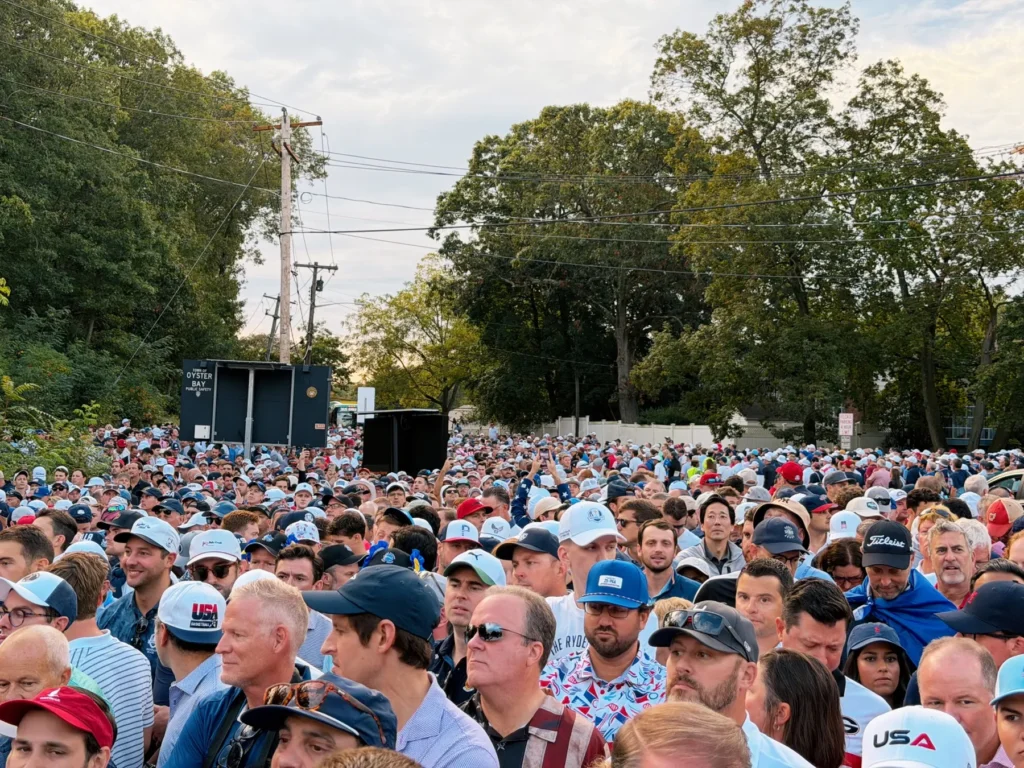
    Tens of thousands of fans descended on Farmingdale, Long Island with over an hour to spare before Bryson DeChambeau’s highly anticipated opening tee shot only to find the town completely overwhelmed by the flood of spectators.

    By 6:15 a.m. all roads leading to 99 Quaker Meeting House Road were moving at a crawl. By 6:45 a.m. traffic had come to a complete standstill. Patrons stuck in Ubers stuck in traffic nervously looked at the clock as the first match was set to tee off at 7:10 a.m.

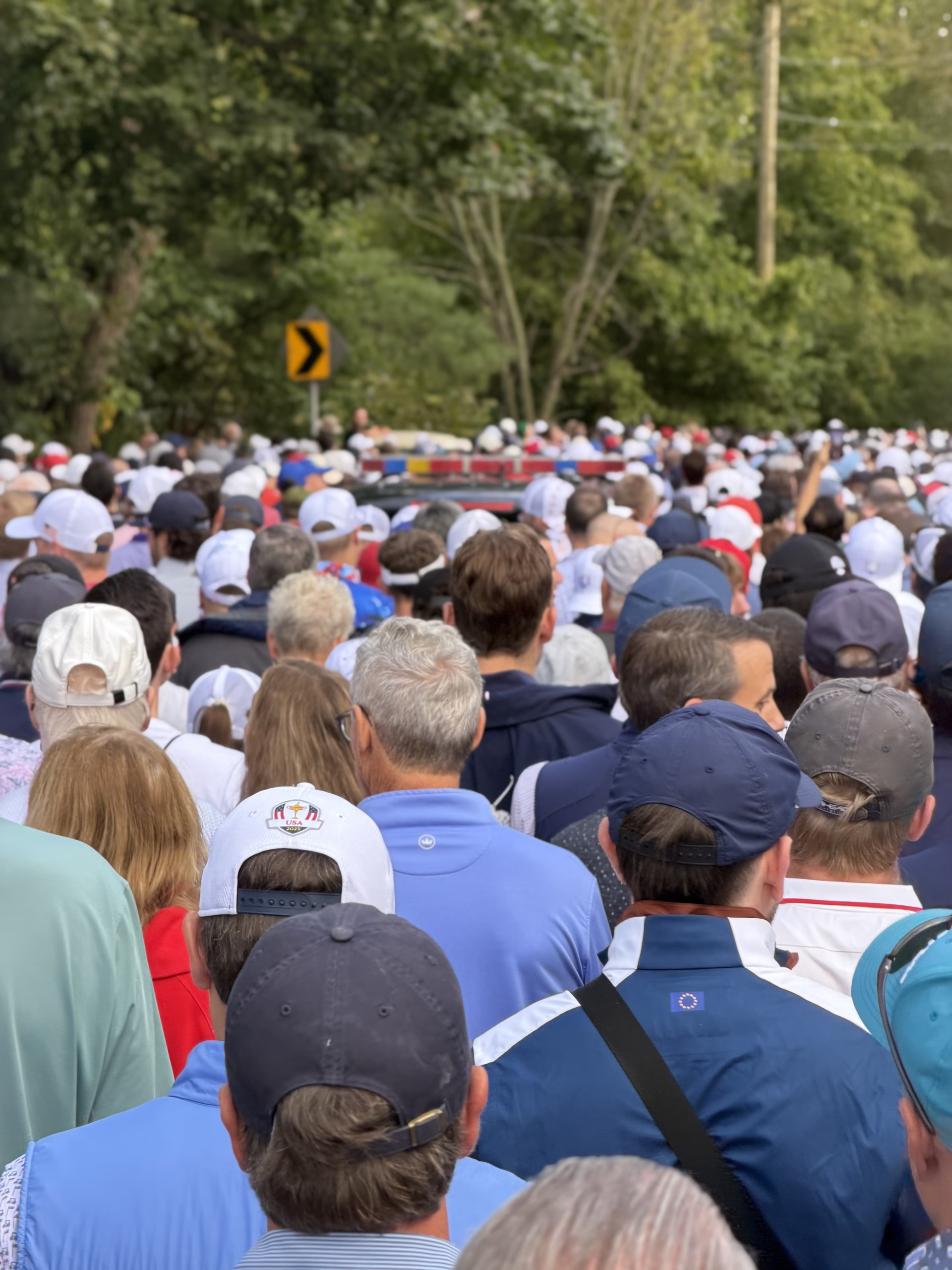
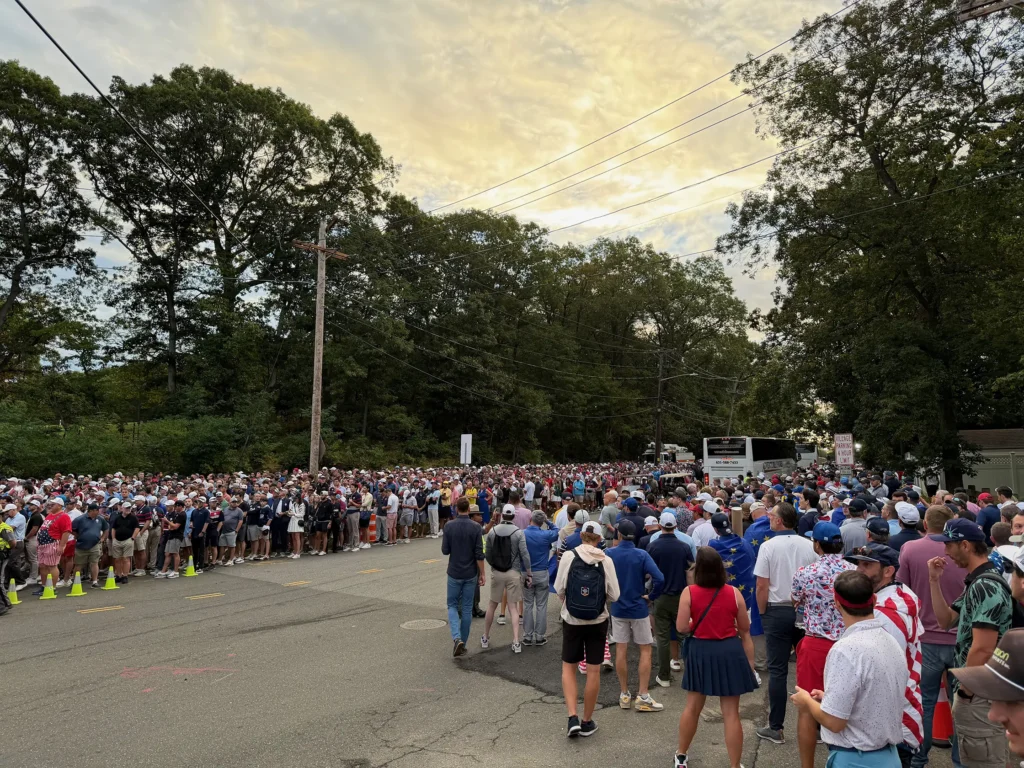
    Realizing they could get no closer by car, patrons abandoned their Ubers and shuttle busses and opted to walk the final half mile to the entrance gates at Bethpage Black. What began as a trickle of people walking along the main roads swelled into a river of fans cutting through the neighborhood streets, the hope of catching the opening tee shot still intact.

    But those hopes would be quickly dashed when the walkers met a sea of thousands already being herded by state troopers along Bethpage Road—a chaotic, unmoving mass of people that marked the end of the line for the general entrance still a quarter mile away.

    Photography by David Derwin

    DeChambeau’s opening tee shot came and went, as did all four tee times during the morning’s Foursomes matches while the thousands of patrons waited outside still trying to get in.

    Tournament volunteers, hospitality staff, and credentialed media entering on foot were denied access to their respective entrances and were redirected into the same gridlocked general entrance crowd, despite having backpacks and gear that required specialized screening.

    Compounding the issue, cell towers in the immediate area became overloaded as the congested mass simultaneously searched for a signal and patrons scanned the skies for satellite connection on their new iPhone 17s. Those lucky enough to have a signal sent texts to friends and coworkers who were already inside stating they would be late. Others pulled up the broadcast on their phones, and pockets of cheers erupted whenever a point went up for the Americans—or the Europeans.

    The 45th Ryder Cup at Bethpage Black caused controversy when it released ticket prices last October, announcing that match day tickets would cost $749.51— around $400 more than the last time the U.S. hosted the tournament in 2021. Billing the tournament as a “Tier 1 event that’s on par with a World Series”, the PGA of America was able to sell out Ryder Cup tickets at exorbitant prices, yet fans received less than Tier 1 treatment as they watched the event on their cell phones while standing in a confusing line trying to get into the venue.

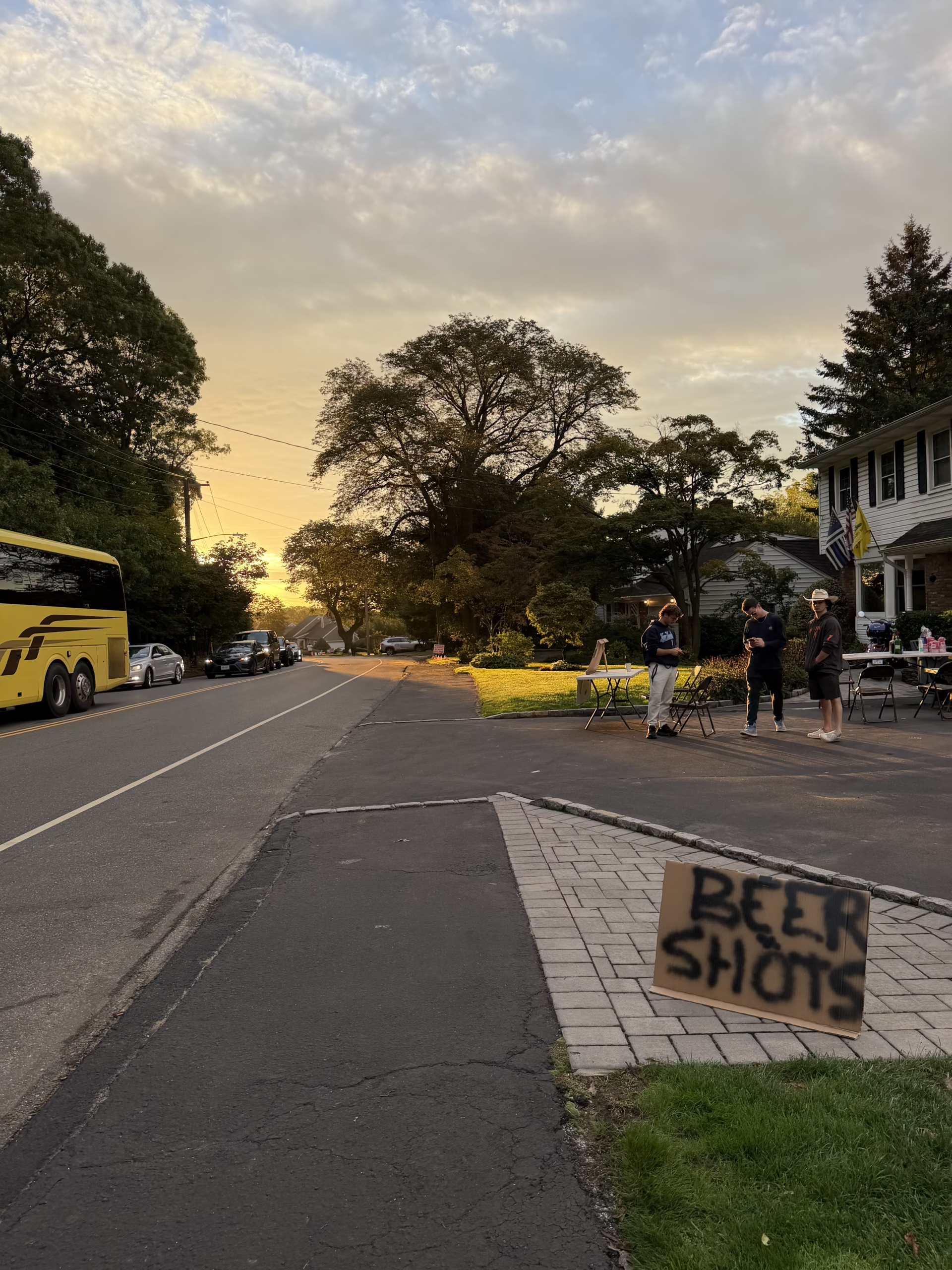
    Frustrated fans wanting to take the edge off didn’t have to look far. Eagle-eyed neighbors aiming to capitalize on the crowds outside their house set up a cardboard sign directly across the street from the unmoving entry line advertising BEER & SHOTS—a makeshift driveway speakeasy complete with a picnic table with folding chairs.

    Photography by David Derwin

    Despite the confusion and overall disbelief at the disorganization of the situation, the crowd was by no means unruly or even loud. Everybody was in it together, united by the passion for the sport and excitement for the day ahead.

    If the organizers knew tickets were sold out and the venue would be at capacity, how did they not have the entry logistics more figured out? Just how early did fans need to arrive to avoid the gridlock?

    According to troopers on the scene, fans started arriving as early as 3 :30 a.m. to queue up for the 5 a.m. gate opening. By 5:15 a.m. most of the grandstands at the first tee were already filled. Those on Lombardi Time would not only miss the first tee shot, they would miss half of the entire morning session as the general entry line ballooned to over two hours.

    As spectators trickled out after the afternoon matches, the young entrepreneurs who’d been selling beer and shots had pivoted their business model. A new cardboard sign now read: “Park Here.” It’s something ticket holders for the following day will surely consider when they plan their commute for Saturday’s matches—along with setting their alarm clocks a couple of hours earlier.


    Your Next Read