Category: News

  • One Week After PLAYERS Heartbreak, Matt Fitzpatrick Paints Perfect Finish at Valspar Championship

    One Week After PLAYERS Heartbreak, Matt Fitzpatrick Paints Perfect Finish at Valspar Championship

    Matt Fitzpatrick won the Valspar Championship with a clutch 14-foot birdie on the 72nd hole at the Copperhead Course, edging David Lipsky by one stroke. For Fitzpatrick, the scene was a copy-paste from one week prior at TPC Sawgrass: tied for the lead with one hole to play. This time, however, he closed the deal.

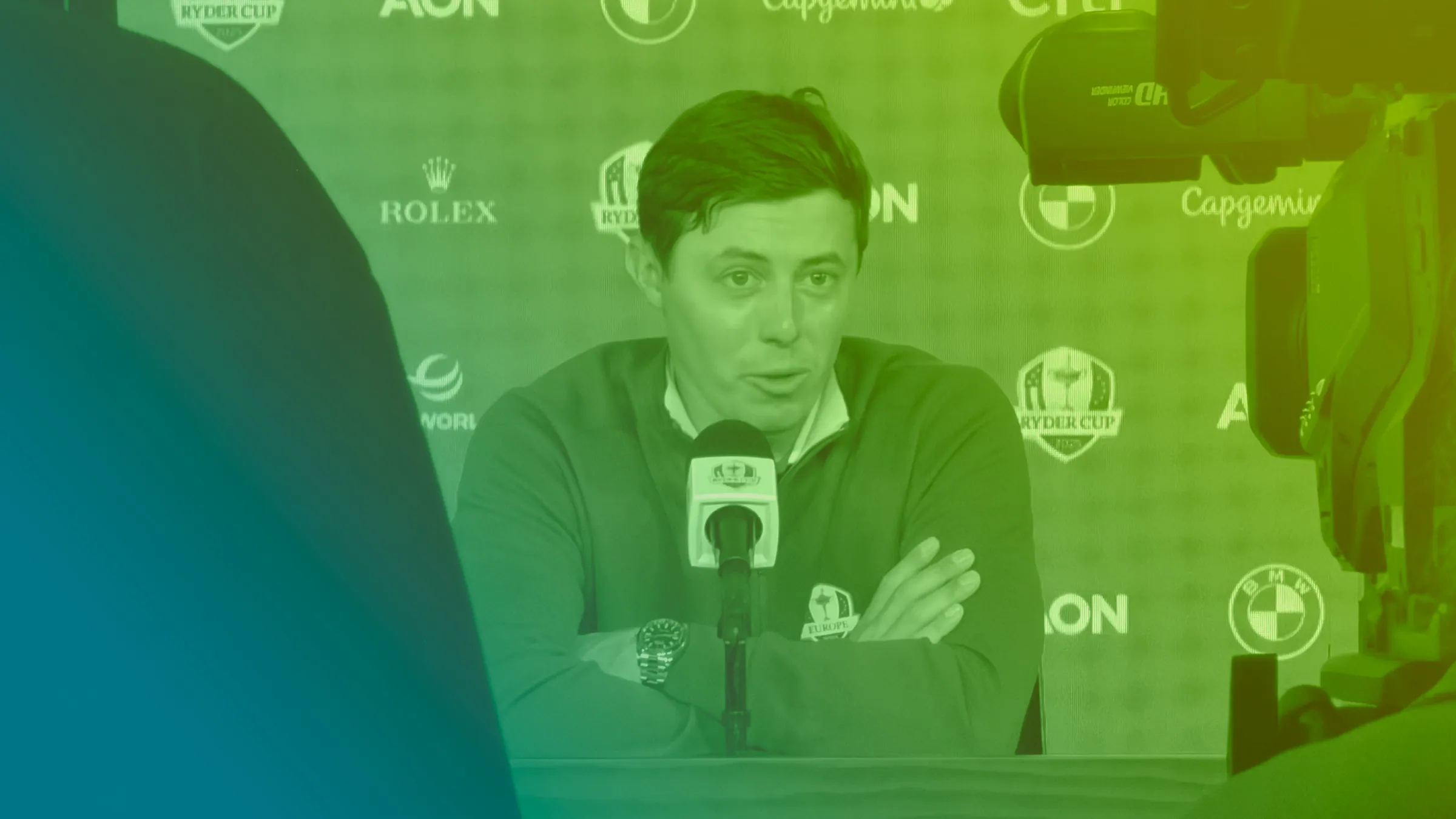
    “I felt like last week I played so well right until the end,” Fitzpatrick said, reflecting on his loss to Cameron Young one week ago at THE PLAYERS. “To lose the way I did, it’s always disappointing. This week was important to get back on the horse and try and push myself to continue playing well.”

    At the Valspar Championship, he did just that.

    The Leaderboard Shakes Up Early

    Fitzpatrick started the day three strokes back of the 54-hole leader, Sungjae Im, who got off to a poor start on Sunday. Im’s two-stroke lead over Brandt Snedeker quickly evaporated after going out in +4 (40) in a bogey-riddled opening nine, dropping him out of contention.

    With Snedeker tied for the lead with nine holes to play, the story of the week was shaping into Snedeker’s return to the winner’s circle after almost eight years—his last win was at the 2018 Wyndham Championship where he fired a blistering opening round 59. What the 45-year-old PGA TOUR veteran lacked in distance off the tee compared to the younger cohort in the field, he made up for in experience. Using the firmness of the course to his advantage, the nine-time PGA TOUR winner played driver off the deck multiple times from the tee, creating controlled low apex runners that put him into position rather than a “bomb and gouge” approach.

    Snedeker’s putting saved him all week, an area he’s improved since switching to a mallet putter after playing a blade for 23 years. The switch appears to have paid off. He had nine putts through the first eight holes on Sunday and ranked first in strokes gained putting in both the first and third rounds.

    But he wasn’t able to putt his way out of every situation coming down the back nine of the final round. A three-putt double bogey on 12 followed by a bogey on the par-3 13th derailed his bid back to the winners circle. Snedeker finished with a final round 76, -4 on the week, tied for 18th.

    As Snedeker faltered, the remaining traffic atop the leaderboard tied at -9 was left to battle it out. On a challenging course like the Copperhead Course that meant holding on and not dropping shots as much as it did trying to make birdies at some of the most difficult closing holes in golf.

    Fitzpatrick’s Bogey-Free Weekend

    It was Matt Fitzpatrick and David Lipsky who broke out of the pack, both getting to -10 with one hole to play. With Fitzpatrick in the group ahead, his mission was clear: post a number and apply pressure.

    Fitzpatrick did exactly that, making his 14-foot birdie putt with an emphatic fist pump among a gigantic roar from the Florida crowd that had been supportive of the Englishman all week.

    The crowd at Innisbrook who followed Fitzpatrick had a lot to cheer for. Fitzpatrick was bogey-free on the weekend and led the field in scrambling for the tournament. He was 100% in scrambling over the weekend. Despite hitting just over half of the greens in regulation (10/18) on Sunday, he was 8-for-8 in scrambling to maintain a clean final round scorecard.

    The 9-time DP World Tour winner made just four bogeys all week—a testament to Fitzpatrick’s shot control and deft short game on one of the TOUR’s most demanding layouts.

    The win marks Fitzpatrick’s third PGA TOUR victory and his first since the 2023 RBC Heritage.

    As his birdie putt dropped on the 72nd hole, Fitzpatrick became the third Englishman to win the Valspar Championship, joining Paul Casey and Luke Donald. His bogey-free final round also places him alongside Donald (2012) and Kevin Streelman (2013) as the only players to accomplish the feat at the event.

    The victory moves Fitzpatrick to No. 6 in the Official World Golf Ranking and No. 3 in the FedExCup standings.

    Why Matt Fitzpatrick Won the Valspar Championship

    It wasn’t just the putt on the 72nd hole—Fitzpatrick’s win was built on a combination of discipline, course fit, and elite approach play.

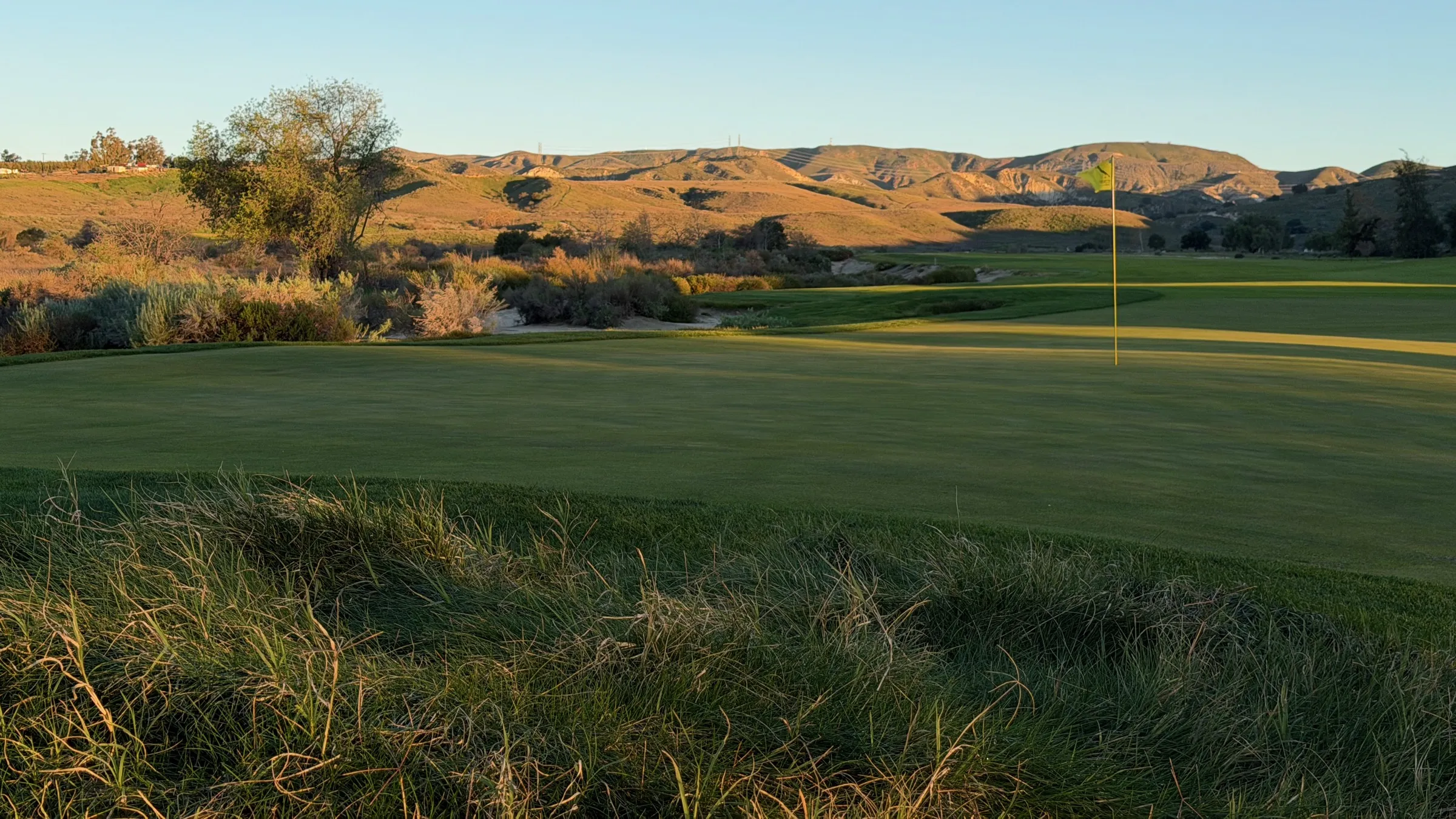
    Relative to par, the Copperhead Course at Innisbrook played the most difficult of any course on the PGA TOUR this season. Fitzpatrick’s -11 finish is the highest winning score of the 2026 season, two strokes higher than THE PLAYERS at TPC Sawgrass and four strokes higher than the Arnold Palmer Invitational at Bay Hill. The Copperhead Course played firm, fast, and unforgiving. It’s exactly the type of test Fitzpatrick relishes.

    Difficult courses suit him.

    “I hate birdie-fests. I don’t like playing where it’s spinning back five yards, ‘aim and fire,’” Fitzpatrick said during his post-round interview with the press. “I like the tough tests.”

    Fitzpatrick is more of a technician when it comes to course strategy. He prefers the challenge of a demanding golf course like TPC Sawgrass or Copperhead Course where you have to control your ball and plan out where to hit it, or perhaps more importantly, where not to miss it. More demanding courses better suit his approach to the game, one that is driven by collecting data to gain an understanding of how his past shotmaking tendencies might inform future outcomes of a given hole at a given time.

    A self-proclaimed “data weirdo,” Fitzpatrick logs every shot he hits. “Actual shots I’ve logged I’d probably say 5,000. Maybe 6,000.” Fitzpatrick uses this data to better understand what areas of his game are lacking, how much he needs to practice and specifically which part of his game he needs to practice depending on the course his next tournament is.

    It’s a system built over years, and it’s paying off.

    Fitzpatrick has been one of the most consistent players on tour this year. He has made seven cuts in seven starts this season, with five top-25 finishes. After beginning the year 99th in the FedExCup standings, he climbed to eighth following his runner-up finish at THE PLAYERS and now sits third after his victory at the Valspar.

    The turnaround is notable.

    Just a year ago, Fitzpatrick was searching. He changed caddies, struggled with consistency, and missed cuts at both THE PLAYERS and the Valero Texas Open.

    “That’s the way golf is,” he said. “It’s not easy.”

    A key to his recent resurgence has been his approach play. “My irons are just so much better.” The 31-year-old said. “Better distance control. Better accuracy left to right. Hitting the shape that I want to hit.”

    Fitzpatrick credits a range session with coach Mark Blackburn after Thursday’s round at THE PLAYERS as a turning point, one that has carried through his last seven rounds and culminated in a win.

    Lipsky’s Close Call

    For Lipsky, the week represented a near breakthrough. Seeking his first PGA TOUR victory, he embraced the challenge of Copperhead, and despite coming up one shot short, he almost pulled it off.

    “This course has teeth,” Lipsky said. “It’s tough out there, especially with the wind and the greens firming up, there are times you have to play safe out here and it’s part of the deal. The course is tough, but overall I’m really happy with how patient I was.”

    Standing near his ball in the rough on the 18th hole, Lipsky heard the roar as Fitzpatrick’s birdie putt fell. “I guess I gotta hit this close.” Lipsky said with a laugh, recalling the thought that ran through his head before playing his approach to the green. From a difficult lie in the rough and between clubs, Lipsky chose an aggressive play to give himself a chance in the birdie-or-bust situation. “It was close. Hats off to Matt for making that putt.”

    Big Moves on the Aon Swing 5 Leaderboard

    David Lipsky’s solo second finish at the Valspar Championship vaulted him to the top of the Aon Swing 5 leaderboard, up 30 spots from last week. Jordan Smith and Marco Penge also made massive moves, up 56 and 55 spots respectively to take 3rd and 4th spots. S.H. Kim rounds out the current Aon Swing 5 after his T7 finish at the demanding Copperhead Course at Innisbrook Golf Resort, moving up 28 spots.

    Here are the current Aon Swing 5 standings after the Valspar:

    1. David Lipsky
    2. Chandler Blanchet
    3. Jordan Smith
    4. Marco Penge
    5. S.H. Kim

    Looking Ahead to the Masters

    Coming off a second place finish at THE PLAYERS and a win at the Valspar Championship, Fitzpatrick will take a lot of confidence with him when he drives down Magnolia Lane heading toward the storied clubhouse at Augusta National in two weeks. The Englishman is well aware, however, of the difference between winning on the PGA TOUR and winning a major, let alone the Masters and the extra prestige and pressure that tournament carries.

    “There’s stuff that I still want to work on coming away from this week. There’s stuff that I want to improve and want to make sure that I’m ready for when I get to Augusta to be ready to play on Thursday morning.” Fitzpatrick said looking ahead to the Masters. “I’m really looking forward to that week.”
  • The Blade Is Not Dead: L.A.B. Golf Unveils LINK.2 Putters

    The Blade Is Not Dead: L.A.B. Golf Unveils LINK.2 Putters

    Golf trends on tour are sometimes hard to spot straight away. It’s not always obvious from a broadcast what driver or wedges a player is using. But one trend over the last couple of years, which is so visually obvious it can be seen from space, is the move from blade putters to mallets.

    Even long-time purists like Brooks Koepka have switched out their trusty blade for a mallet-style putter to take advantage of the stability, alignment and forgiveness that mallets offer. But what if a blade could offer the same benefits of a mallet and keep the traditional blade profile that players love?

    That would be the holy grail of blade putters, and it’s exactly what L.A.B. Golf is aiming to deliver.

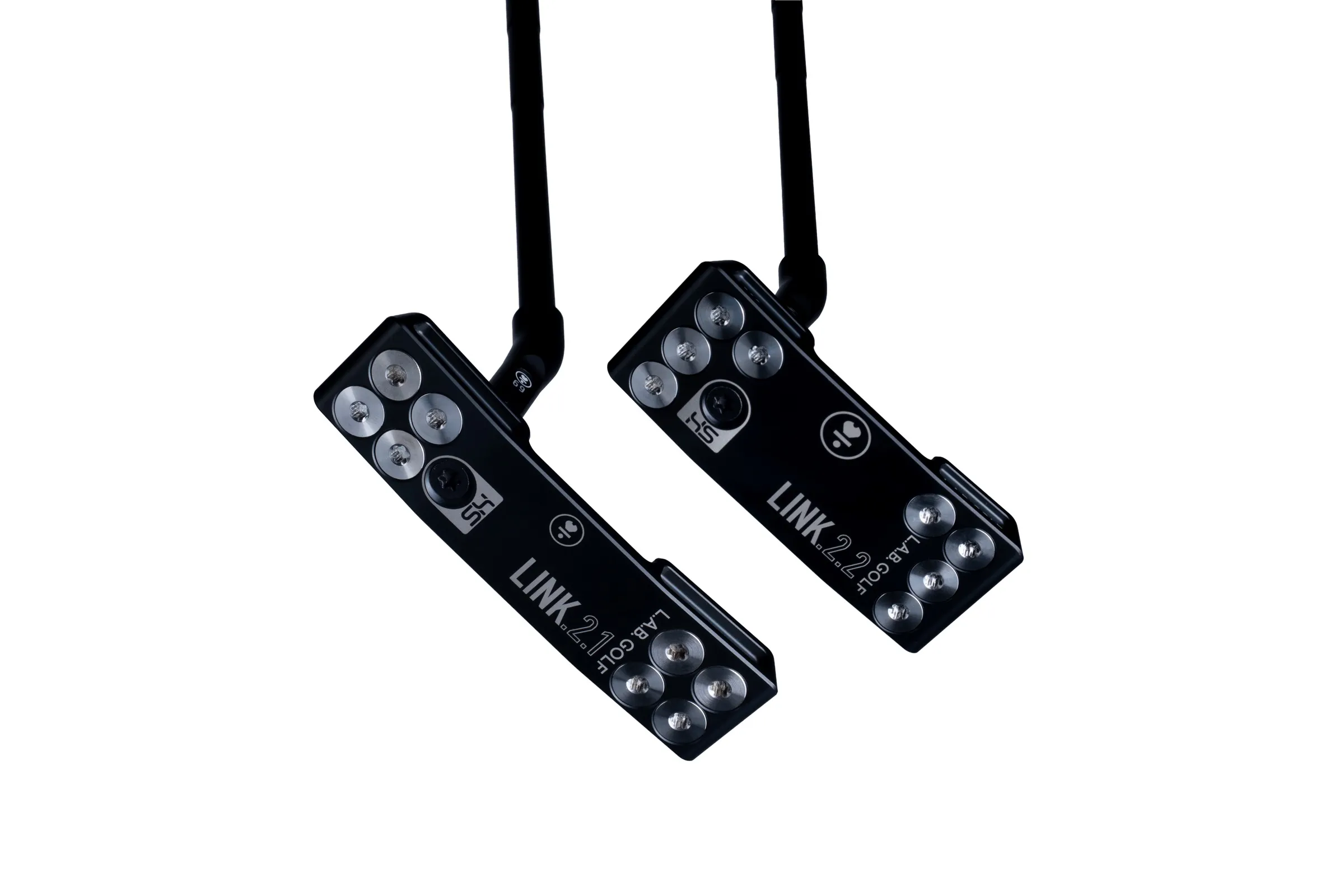
    Meet the LINK.2.1 and LINK.2.2.

    What is the LINK.2.1?

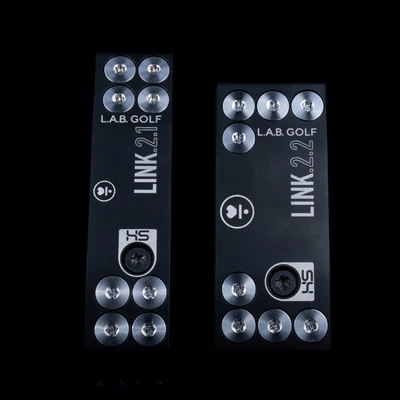
    The LINK.2.1 is a new heel-shafted blade putter by L.A.B. Golf. It has all of the lie angle balanced technology golfers love about L.A.B.’s putters in a traditional narrow-body blade with a thin topline that will appeal to a broad spectrum of players.

    What is the LINK.2.2?

    The LINK.2.2 is a wide-body blade featuring a square back which provides additional mass behind the ball and a slightly wider footprint.

    LINK.2.1 (left) and LINK.2.2 (right). Image Source: L.A.B. Golf

    The Specs

    Both the LINK.2.1 and LINK.2.2 are made from deep fly milled 303 Stainless Steel. They come in a black PVD finish and matching black shaft and grip for a sleek, all-black look in its stock configuration. Both models have zero degrees of shaft lean which means a press grip is not required. Players can use their preferred grip, allowing them to maintain a familiar feel at address.

    How Do They Do It?

    The LINK.2.1 and LINK.2.2 utilize L.A.B.’s proprietary riser mechanism which looks like a traditional hosel but is cleverly engineered to allow the shaft to connect to the putter at the heel while still achieving the distribution of weight required to maintain balance relative to the putter’s lie angle. The riser was first introduced with the OZ.1i HS, L.A.B.’s first-ever heel-shafted putter—a compact mallet that was designed alongside 14-time PGA TOUR winner, Adam Scott.

    What Inspired the LINK.2 Blades Series?

    In a post on their Instagram account, L.A.B. Co-Founder Sam Hahn mentioned the current conversation happening in the world of golf about the blade being “dead,” and it didn’t sit right with him. “There’s a lot of joy walking around with a blade,” Hahn says. Their timeless shape inspires confidence, even if they’re historically harder to putt with compared to modern mallets. L.A.B. wanted to make putting with a blade easier and more fun to play with.

    “Blades typically are going to be less forgiving, however a lie angle balanced blade is going to be more forgiving than traditional blades,” Hahn added.

    Hahn also gave a shout out to Karsten Solheim, the founder of PING and inventor of perimeter weighting in putters, which helped reduce unwanted twist on off-center strikes. Hahn describes the LINK.2 series blades as a “distant cousin” to Solheim’s PING Anser blade putter, which came out in 1966 and revolutionized the putting industry.

    How Much Do They Cost?

    The LINK.2.1 and LINK.2.2 start at $499 for the stock configuration and $599 for custom configurations.

    The stock configuration ships with a 69 degree lie angle and comes with a matte black premium steel shaft, Lamkin Deep Etched Black Grip and Link Family black head cover. It features a clean topline with a single alignment line on the back flange. The stock configuration comes in 33, 34 or 35 inch shaft lengths.

    For any lie angle other than 69 degrees, or for more custom options like choosing from a wide variety of topline and flange alignment guide options, premium shafts, grips and head covers—a custom order is required. Custom configurations start at $599, with additional costs depending on shaft, grip and head cover selections.

    The LINK.2.1 and LINK.2.2 are available to order now on L.A.B. Golf’s website.

    Whether they truly deliver mallet-like performance in a traditional blade profile remains to be seen, but L.A.B. Golf is clearly betting that the blade isn’t going anywhere.

  • Drive for Dough–Cameron Young’s Victory at THE PLAYERS Proved Bobby Locke’s Adage Wrong

    Drive for Dough–Cameron Young’s Victory at THE PLAYERS Proved Bobby Locke’s Adage Wrong

    Four-time Open Champion and 15-time PGA TOUR winner Bobby Locke is credited with coining one of the most frequently repeated quotes in the game— “drive for show, putt for dough.” In the saying, Locke, who was an exceptional putter, implies that while driving it long off the tee is fun to watch, it’s ultimately putting that wins tournaments.

    That might have been true during Locke’s time, but in the strokes gained era we’ve learned that putting, though massively important, isn’t the be-all-end-all to tournament victories as once thought—and to win at TPC Sawgrass Stadium Course at THE PLAYERS Championship this past weekend, Cameron Young and Ludvig Åberg demonstrated that you need to not only putt for dough, but drive for it as well.

    Åberg’s Unraveling

    Ludvig Åberg started the day at -13 with a three shot lead over Michael Thorbjornsen, four clear of Cameron Young. The two-time PGA TOUR winner led or co-led the tournament ever since the 9th hole on Friday and looked comfortably in the driver’s seat with just eight holes to play. Things can change quickly on the Stadium Course at TPC Sawgrass, and it took just two holes for Åberg to essentially play himself out of contention.

    The smooth swinging Swede’s unraveling began on the 11th hole where despite finding the fairway from the tee, a synchronization issue was brewing in his swing. A slow-motion replay close-up of Åberg’s driver face during the CBS telecast showed the ball was hit considerably off the toe, a sign that his arms were out of sync with his body. After finding the water on his second shot, Åberg walked off the par-5 11th hole with a bogey.

    Åberg’s drive on the 12th tee once again was hit off the toe, this time hooking into the water hazard to the left of the fairway, an errant tee shot that ultimately led to a double bogey. The back-to-back miscues into the water ballooned Åberg’s round from even par to +3 at a time when the group ahead of him played the same two holes at a combined one under par.

    Åberg stood on the 11th tee two shots ahead of Fitzpatrick. Two holes later he trailed Fitzpatrick by three.

    It was a remarkable reversal, one that completely upended the leaderboard and let the penultimate group back into the tournament.

    It seemed like Fitzpatrick—who hadn’t made a bogey all day—was next in command until a three-putt on the brutal 14th green, with its pin position dastardly placed along a ridge, gave his playing partner, Cameron Young, a putt to tie for the lead. Young made the clutch 6-footer which set the tone for a Young vs. Fitzpatrick match play style finish with the pair all square with four of the most difficult and volatile finishing holes in golf left to play.

    Putt for Dough

    A birdie on 15 put Fitzpatrick one ahead of Young, a lead the 31-year-old Englishman would take to the par-3 17th tee. Holding honors, Fitzpatrick played first to the often disastrous island green with a conservative line to the center of the green. Safely aboard and reasonably assured a two-putt par, Fitzpatrick forced Young to make a move.

    As chants of “U-S-A” rang out from spectators that packed the mounded stadium hills wrapping around the 17th hole, Young took the more risky line just left of 17’s famous back right Sunday pin position—a perfectly executed 57-degree wedge that hopped to the right and stopped just 9 feet, 7 inches from the hole.

    Young’s birdie putt fell with little pace to spare in one of the tournament’s most dramatic moments which once again brought the group to all square with one to play.

    Drive for Dough

    It was Young who now held honors and could set the tone for how the 72nd hole would be decided. He quickly and decisively pulled driver even though the 18th was playing downwind at over 20 mph—help that some players took and were opting for a long iron or fairway metal to take some risk out of the water along the entire left side.

    Young, however, took the risk head-on and absolutely pummeled a perfect drive 375 yards into the fairway.

    It wasn’t just the longest drive of the tournament—it was the longest drive on the 18th hole at TPC Sawgrass Stadium Course in the Shotlink era. In other words, with the tournament on the line, Cameron Young hit the longest drive on the 18th going back to when the PGA TOUR started collecting Shotlink data in 2004.

    Fitzpatrick’s drive went through the fairway and into the pine needles which left him no option but to punch out close to the front of the green and try to get up-and-down to save par. Young was left with only 100 yards in and from the fairway was able to generate enough spin to keep the ball just on the back fringe in a strong helping wind that was making the green increasingly difficult to hold.

    Fitzpatrick’s attempt for an up-and-down par was ultimately unsuccessful, clearing the stage for Young to clean up his 8-inch par putt to claim his second PGA TOUR victory.

    Lessons From the Ryder Cup

    Speaking to the press after the tournament, Young was asked about what was going through his mind standing on the 18th tee. “My thought process over that ball is, one, making sure that I’m committed to my line. And two, the overarching thought is, ‘I’m going to hit the best shot of my life right here.’” When asked to rank the shot against others in his career, Young was clear. “I don’t know if I can think of one that’s better,” he added. “It’s one of the best shots I’ve ever hit in my life.”

    It was also the first time Young had been in the position to win or lose a tournament on the last hole, not that he hadn’t been in contention in the past. On the 72nd hole of the 150th Open Championship at St. Andrews, Young delivered another clutch drive to the 18th green and made the eagle putt to card a blistering -7 (65). That eagle earned him a solo second finish, one stroke behind winner Cam Smith and one stroke ahead of Rory McIlroy.

    Young’s only win prior to THE PLAYERS was the 2025 Wyndham Championship where he won by six strokes and was never really in any danger of losing coming down the final nine holes.

    To deliver clutch moments at TPC Sawgrass under intense pressure, the 28-year-old credits his experience at the Ryder Cup at Bethpage Black. “Dealing with nerves is tricky. Your senses are kind of heightened, typically I hit the ball a little farther, so it makes you capable of more but if you kind of let them get in the way, obviously it can kind of be disastrous. It is a balancing act of knowing that they’re there and trying to use them to the best of your ability,” Young said after his PLAYERS victory.

    Young was a Captain’s Pick for Team USA at the 2025 Ryder Cup at Bethpage Black, where he emerged as one of the team’s top point-earners. In a blistering 3-1-0 debut, Young notably teamed up with Bryson DeChambeau to secure a point against none other than the European duo of Ludvig Åberg and Matt Fitzpatrick—the same two men he battled against at the Stadium Course on Sunday.

    “Ryder Cup, looking back I think is a huge learning experience on how I personally deal with those nerves and what I can do when I do feel that way.”

    That psychological breakthrough was the silent engine behind the most important shot of the tournament. It allowed Young to lean into the nerves and harness them for good rather than something to buckle underneath.

    While one could argue Fitzpatrick’s putt on 18 could have saved the hole, it was really his drive into the pine needles that put him against the ropes. A good putt can only bail out a poor tee shot so many times. This is where the fallacy of Bobby Locke’s quote comes into play. A player certainly needs to putt well to win, but they also need to drive it well, or at least well enough to put themselves in a position to make a putt to win. It was Åberg’s driver that ultimately derailed his PLAYERS bid and Fitzpatrick’s poor drive on 18 that gave the advantage to Young, who essentially won the tournament not with his putter, but with his driver.

    With his record-setting drive on the 72nd hole, Young showed that drives aren’t just for show, and there is a term in golf for a player who can hit long and straight drives on aggressive lines in pressure packed moments: THE PLAYERS Champion.

  • Akshay Bhatia Defeats Daniel Berger in Dramatic Bay Hill Playoff

    Akshay Bhatia Defeats Daniel Berger in Dramatic Bay Hill Playoff

    The premise of golf is simple: swing a stick to hit a ball into a hole. The player who does that in the fewest strokes over the course of a tournament, wins. Yet it’s what happens between the moment the ball is struck and when it finally falls into the hole that creates some of the most unpredictable moments in sport. Once the ball is struck, the player has no control over what happens next, and the slightest gust of wind or direction of a blade of grass can make all the difference in the outcome.

    While some tournaments are decided by a landslide, others, like yesterday’s final round of the Arnold Palmer Invitational, are decided by the smallest of margins. It’s what makes the game beautiful yet heartbreaking at the same time.

    Arnold Palmer summed this up best back in 1960 when he made this thesis statement about the game: “Golf is deceptively simple and endlessly complicated; it satisfies the soul and frustrates the intellect. It is at the same time rewarding and maddening.” 

    As Akshay Bhatia and Daniel Berger traded blows at Bay Hill yesterday, ‘The King’s’ words were a reminder as to just how complicated this simple game can get.

    A Wild Start to Sunday

    Because weather suspended play on Saturday, the final group had to finish the third round on Sunday morning. It was on the 18th hole—the final hole of that third round—where the first major shift occurred: Bhatia’s 14-foot birdie putt was tracking toward the hole but stopped and hung on the lip, agonizingly close without going in. Maddening. As Bhatia walked up to tap it in for par, the ball fell into the hole. Rewarding. With Berger in for bogey, the hole produced the first two-shot swing of the day, cutting Berger’s lead to one.

    The pair immediately exchanged another two-shot swing on the first hole of the fourth round, this time in Berger’s favor. As Berger steadied himself, Bhatia missed a 2-foot, 9-inch putt on the 9th hole, resulting in a bogey and yet another two-shot swing. Maddening, especially on a day where Bhatia’s putter had been so consistent. He went out in 38, +2 for the side, now five strokes behind Daniel Berger, whose path to victory looked relatively straightforward with just nine holes to play.

    Berger in Control

    The 32-year-old Florida native entered the week with four PGA TOUR victories and a career-high world ranking of No. 12, built on a reputation for precision iron play and calm under pressure. A former Ryder Cup and Presidents Cup player for the United States, Berger had once been ranked among the top players in the world before injuries interrupted his career.

    Comfortably in the driver’s seat, Berger continued to do what he did all week, follow his routine, find fairways off the tee with irons, 3-woods and a low driver shot that NBC On-Course Reporter Jim ‘Bones’ Mackay called the “crop duster.” Berger’s mission for the back nine was to play sensible golf and avoid big mistakes.

    Simple, right?

    Despite Berger’s exceptional play off the tee and solid -2 round through 11 holes, Bhatia’s putter was a thorn in Berger’s side that would not go away. Bhatia made 144 feet of putts during Sunday’s final round, including a 57 footer at the 11th— a 2% make-rate miracle putt that reverberated for the rest of the round.

    “That putt on 11 was a huge bonus for me that really switched my momentum,” Bhatia said during his post-round interview.

    He capitalized on that momentum immediately by making another birdie on the 12th.

    Bhatia, just 24 years old, turned professional at 17 and has quickly built a reputation as one of the TOUR’s most fearless shotmakers. Entering the week with two PGA TOUR victories—including the 2023 Barracuda Championship and the 2024 Valero Texas Open—Bhatia has shown a knack for thriving under pressure.

    Momentum Swings at Bay Hill

    Berger faced his first critical moment of the day when his approach into the 13th green plugged in the greenside bunker, a maddening “fried egg” that forced him to play away from the pin to avoid the water just behind the green. He was able to salvage bogey, a rewarding result from a potentially disastrous situation, but the mistake was capitalized upon when Bhatia made his fourth birdie in a row, resulting in yet another two-shot swing in favor of Bhatia.

    Bhatia was unflappable, and a miraculous second shot into the par-5 16th hole left Bhatia just three feet, six inches for eagle, which unlike back at the 9th hole, he made. It was a daring line directly at the flag that was rewarded with a clutch eagle which brought Bhatia’s round to -3 on the day and leaving him just one stroke behind Berger.

    The crescendo of pressure continued to ratchet up until the pair stepped on the 72nd tee with Bhatia tied for the lead with Berger.

    On the final hole of regulation, Berger’s fairway finder “crop duster” drive—which had been reliable all day— over cut and found the right rough, forcing him to lay up 70 yards short of the green. With the tournament on the line, he pitched to 13 feet, 8 inches. Bhatia’s approach narrowly cleared the water, leaving him a simple up and down for par.

    In a moment of ultimate reward, Berger drained the “had to have it” par putt to finish at -15, tied with Bhatia. It was a “Gladiator” moment that earned a call-out from NBC’s Lead Play-by-Play Announcer, Dan Hicks—“Are you not entertained?”—and forced the first playoff at Bay Hill since 1999.

    A Playoff Decides It

    The playoff, however, provided the decisive moments of the tournament.

    Berger’s tee shot found the left rough in a questionable lie, leaving 212 yards to the hole—the longest approach distance into 18 all day. After a brief disagreement with his caddie over the best play, Berger committed to aiming for the left front greenside bunker and found the green—a remarkable shot, but it left him a 106-foot putt.

    With Bhatia sitting three feet away for his par, Berger faced one final “gotta have it” putt from 7-feet, 7-inches.

    This time, it didn’t fall.

    The victory marked Bhatia’s third PGA TOUR win and his first Signature Event title. Remarkably, all three of his TOUR victories have now come in playoffs, making him just the eighth player in PGA TOUR history to win each of his first three titles that way.

    Rewarding and Maddening

    It was a thrilling finish at one of golf’s greatest venues. Rewarding for Bhatia because he won. Maddening for Berger to have lost.

    But for Berger, the week was also deeply rewarding when taken in context of his journey to get here.

    After a 2022 injury and a 2023 season spent on the sidelines watching his world ranking plummet from 16th to outside the top 600, being back in contention at a Signature Event was a major accomplishment.

    “I’m proud of myself,” Berger said during his post-round interview with Smylie Kaufman. “Obviously it didn’t go the way I wanted it to but at the start of the week if you told me I’d have a chance on the 18th hole to win Bay Hill, I’d be ecstatic with that so a lot of positives, a lot of things to learn from.”

    After Berger’s opening-round 63, he held the lead through 71 holes of the tournament. To come that close only to fall in a playoff is maddening, no doubt, but the performance also marked something important: his return to contention.

    “My game is sharp,” Berger said afterward. “It’s tough to win, it’s tough to battle, but I feel like I did a good job. A shot here or there was the difference.”

    For Bhatia, the victory was another milestone in a remarkable young career.

    The 24-year-old, who moved to Wake Forest, North Carolina at age 10 and was nicknamed “Golf Kid” for wearing his golf clothes to school so he could head straight to the course afterward, now owns three PGA TOUR titles.

    He also understands how fragile victory can be.

    “Daniel played amazing,” Bhatia said. “This game is so crazy. It’s been crazy for these last couple of weeks, watching Bridgeman win and then watching Nico win, you just never know what can happen in this game.”

    As Arnold Palmer said, golf “satisfies the soul and frustrates the intellect. It is at the same time rewarding and maddening.”

    At Bay Hill on Sunday, it was both.

  • Here Are the Aon Next 10 and Aon Swing 5 Storylines to Follow This Week at Bay Hill

    Here Are the Aon Next 10 and Aon Swing 5 Storylines to Follow This Week at Bay Hill

    The ‘Signature Event’ era was designed to bring the world’s best players together more often, and that vision is fully realized this week at the Arnold Palmer Invitational. While the top of the FedExCup standings often feels like an exclusive club, the Aon Next 10 and Aon Swing 5 categories provide consistent and trending players an opportunity to earn a seat at the table.

    Following last week’s dramatic finish at the Cognizant Classic where the leaderboard shifted by the minute, 15 players have officially punched their tickets to Bay Hill. From breakthrough winners to veteran players, these are the storylines to track as they compete for a $20 million purse and 700 FedExCup points.


    The Aon Next 10

    1. Jake Knapp

    Knapp has tightened his grip on the No. 1 spot in the Next 10 standings thanks to four top-10 finishes in just five starts this season. His effortless power and smooth tempo are tailor-made for the daunting par 5s at Bay Hill. 
    What to watch: Can he maintain his composure in a Signature field that includes every healthy superstar in the world?

    2. Nico Echavarria

    Fresh off a life-changing victory at the Cognizant Classic, Echavarria vaulted from No. 15 to No. 2 in the standings. He played nearly flawless golf over the weekend at PGA National to secure his first individual win in two years. 
    What to watch: The “victory hangover.” It’s notoriously difficult to win and then compete the very next week, especially at a course as punishing as Bay Hill.

    3. Min Woo Lee

    “The Chef” is starting to cook at just the right time. Lee has been one of the most consistent performers on the Florida swing, and his elite ball-striking is a perfect match for a course that demands high, soft-landing long irons into firm greens. 
    What to watch: Putting. If Min Woo finds his rhythm on these lightning-fast Bermuda greens, he is a genuine threat to win the whole tournament.

    4. Pierceson Coody

    The former Texas Longhorn is finally showing why he was the No. 1-ranked amateur in the world. He has quietly amassed enough points to sit comfortably in the Next 10, proving his game belongs at the highest level. 
    What to watch: This is Coody’s biggest stage yet. Look to see if his aggressive style holds up under the intense “Signature” pressure.

    5. Ryo Hisatsune

    The reigning DP World Tour Rookie of the Year continues to prove his game travels globally. He hasn’t had the flashy wins of a Knapp or Echavarria, but his relentless consistency has kept him inside the “magic number” all season. 
    What to watch: Accuracy. Bay Hill rewards those who stay out of the thick rough; Hisatsune is one of the better “fairway finders” in this group.

    6. Adam Scott

    The veteran and former World No. 1 is leaning on the Next 10 to ensure he doesn’t miss out on the season’s biggest stages. Scott has a storied history in Florida and knows exactly how to navigate the coastal winds that often buffet Bay Hill.
    What to watch: The flatstick. We know the swing remains the gold standard, but Scott needs to avoid the costly 3-putts that often plague players on Bay Hill’s tiered greens.

    7. Aldrich Potgieter

    The 21-year-old South African is the “young gun” of the group. With massive speed and a fearless approach, he’s a statistical outlier who can overpower courses that usually demand caution. 
    What to watch: Course management. Arnie’s place is famous for baiting players into “hero shots.” Can the youngster play disciplined golf?

    8. Austin Smotherman

    Smotherman is the feel-good story of the week. He entered the Cognizant Classic ranked 31st in the standings and needed a massive result to qualify. His T2 finish vaulted him to No. 8, earning him his first-ever Signature Event start. 
    What to watch: The “happy to be here” factor. Smotherman admitted he’s watched Bay Hill on TV for years; now he has to face the reality of its difficult conditions.

    9. Matt McCarty

    McCarty has been a steady climber through the early part of 2026. He has made a habit of hanging around the top 25 of leaderboards, which is exactly how you grind your way into a Signature Event. 
    What to watch: Scoring on the par 3s. Bay Hill’s par 3s are some of the toughest on TOUR, and McCarty’s iron play will be tested.

    10. Sahith Theegala

    Theegala is the highest-profile name in this category. While he is a star in his own right, his 2026 season has been a series of “close but no cigar” finishes including T8 at The American Express and T7 at the Farmers Insurance Open at Torrey Pines. 
    What to watch: Creativity. Theegala is at his best when he’s scrambling and hitting shots from tricky lies. Bay Hill’s thick rough provides plenty of opportunities for his unique brand of magic.


    The Aon Swing 5

    1. Nicolai Højgaard

    The Danish powerhouse topped the Swing 5 standings. He has the length to turn Bay Hill’s par 5s into par 4s, which is the exact blueprint for success at this venue. 
    What to watch: Can he lead the European charge? Højgaard looks like a man on a mission to secure a permanent spot in the world’s top 20.

    2. Patrick Rodgers

    Rodgers remains one of the best players without a PGA TOUR win. He secured his spot through steady play over the West Coast and Florida swings. 
    What to watch: Sunday pressure. Rodgers is often in the mix through 54 holes; watch how he handles the final stretch at Bay Hill if he’s in contention.

    3. Taylor Moore

    Moore shot all four rounds in the 60s at the Cognizant Classic, a feat only two players accomplished last week. That form makes him a dangerous sleeper in Orlando. 
    What to watch: Ball striking. Moore’s iron play was elite last week, and that’s the primary prerequisite for surviving the hazards at Bay Hill.

    4. Andrew Putnam

    Putnam is ranked third in strokes gained Driving Accuracy Percentage this season, hitting 72.32% of fairways, which will help him navigate around Bay Hill. He doesn’t overpower the course, but he rarely makes the big mistakes that lead to double bogeys. 
    What to watch: Can he survive the length? At nearly 7,500 yards, Bay Hill is a big golf course. Putnam will need to be solid with his short game to stay competitive.

    5. Keith Mitchell

    Mitchell needed a birdie on the 72nd hole on Sunday at the Cognizant Classic to secure his spot—and he delivered, edging out Joel Dahmen by a single point for the final Swing 5 slot. 
    What to watch: The driver. Mitchell is statistically one of the best drivers of the ball on TOUR. If he’s in the fairway, he can attack a course most others are just trying to survive.


    What About Joel Dahmen?

    While Dahmen narrowly missed out on the Swing 5, he finds himself in the field this week through another avenue. With the Arnold Palmer Invitational aiming for a specific field size, Dahmen’s position at No. 43 in the current season-long FedExCup standings made him the first man in once the Aon categories were settled. 
    What to watch: Momentum. Dahmen is coming off a T9 finish at the Cognizant Classic and a T7 at the Farmers Insurance Open earlier this year. He is playing some of the most consistent golf of his career.


    All Roads Lead to the 18th

    For these players, the journey to Bay Hill was earned through grit over the last two months. But while the qualification race ended on the 18th green at the Cognizant Classic, their biggest challenge awaits on the 18th at Bay Hill.

    Known as one of the most punishing finishing holes in golf, the 458-yard par 4 requires a terrifying approach shot over water to a narrow, rock-lined green. It is the site where legends are made and where names like Tiger Woods have famously punctuated their dominance. For the Aon Next 10 and Swing 5, surviving the 18th with the tournament on the line isn’t just about the $20 million purse—it’s about proving that they belong among the elite of the “Signature” era. As Arnold Palmer himself used to say, “You must play boldly to win.” This week, these players have no other choice.

  • Shane Lowry Led the Cognizant Classic by Three Shots with Three Holes to Play—That Changed with Two Swings

    Shane Lowry Led the Cognizant Classic by Three Shots with Three Holes to Play—That Changed with Two Swings

    For most of Sunday afternoon at the Cognizant Classic, the outcome felt inevitable. Shane Lowry went out in 33 (-2) on the front nine, navigating a congested leaderboard before igniting the back nine with an eagle at the par-5 10th and back-to-back birdies on 12 and 13. It was a stretch of phenomenal golf from the 2019 Open Champion.

    With a clean card through 15 holes, Lowry stood at six-under for the round, three shots clear with three to play. Friends and family looked on as the local favorite walked to the 16th tee. It felt like a coronation—a stress-free stroll to the finish.

    Then everything unraveled.

    Lowry chose long iron off the tee at the 434-yard par-4 16th, a dogleg right with water guarding the approach. What should have been a conservative position play was instead a dead block that was water-bound almost without crossing land at all. It was the shortest tee shot hit on the hole all day and the only one to find the hazard off the tee.

    Because the ball last crossed land just 140 yards from the tee, Lowry had no realistic chance to attack the green after taking his penalty drop. He was forced to lay up and ultimately walked off with a double bogey.

    While Lowry was scrambling on 16, Nico Echavarria was mounting his own charge.

    Standing on the 17th tee with a clean card at four-under for the day, Echavarria fired directly at the par-3 flag, barely carrying the water by a matter of feet. Echavarria knew it was a close call, grabbing the bridge of his nose and letting out a smile as the ball settled just 10 feet, 5 inches from the hole.

    He poured in the birdie putt with authority to tie Lowry at 17-under.

    Then came the swing Lowry absolutely could not afford. His tee shot at the 17th was blocked hard right, again finding water and resulting in another double bogey. He was the only player to make double bogey, double bogey on 16 and 17 all week.

    Shane Lowry held a three-shot lead on the 16th tee. He walked to the 18th tee two shots behind.

    Echavarria closed with par on the 72nd hole to win the 2026 Cognizant Classic by two strokes, securing his third PGA TOUR victory. Lowry finished tied for second alongside Taylor Moore and Austin Smotherman, who recorded the best finish of his 82-start PGA TOUR career.

    So, what happened?

    “Golf happened,” said CBS announcer Dan Hicks during the broadcast, calling it, “one of the most unlikely PGA TOUR victories we have seen in a long, long time.”

    Lowry is no stranger to pressure. A three-time PGA TOUR winner and major champion, he has also delivered on the biggest stages. At the Ryder Cup at Bethpage Black in 2025, Lowry made the decisive putt on the 18th green to halve his match against Russell Henley, securing the Europeans their final half point to retain the Ryder Cup.

    Yet closing has proven elusive at times. Lowry is now 1-for-5 converting 54-hole leads on the PGA TOUR. In the past five years, he has finished inside the top 11 at the Cognizant without lifting the trophy. While a three-stroke lead with three to play sounds inevitable, the script can be flipped in just minutes.

    It goes without saying how difficult it is to win on TOUR. Just ask Tommy Fleetwood, who went 163 starts before his breakthrough win at the TOUR Championship in 2025. Even commanding leads are fragile. Ask Jacob Bridgeman, who saw a six-shot lead after 54 holes evaporate down the home stretch at Riviera before making a nervy 3-footer on the 72nd hole to win the 2026 Genesis Invitational by one.

    Under normal circumstances, Lowry could hit a bucket of balls from the 16th tee and never hit one into the water. But pressure exposes the smallest disconnects. His back-to-back misses to the right suggested a breakdown in synchronization between arms and body, a flaw magnified under the weight of the moment and during a physical motion that takes just over one second to complete.

    In a 72-hole tournament defined by hundreds of swings, sometimes it takes only two to undo four days of brilliance.

    Winning, of course, requires a little bit of luck as well. While Lowry’s block on 16 was a clear technical error, the game’s inherent cruelty was on full display just minutes later at the 17th. As Echavarria’s tee shot hung in the humid Florida air, it looked destined for the same watery grave that claimed Lowry’s. Instead, it cleared the water by just a few feet—a microscopic margin on a 166-yard shot.

    But, that’s golf.

    What the “Golf Gods” taketh from one, they sometimes giveth to another.

    Lowry, to his credit, remained a class act, signing autographs for kids just off the 18th green even after the devastating finish. He’ll have little time to dwell on it, however. Bay Hill awaits next week—another opportunity to respond.

  • Aon Next 10 and Swing 5 in Focus at Cognizant as Players Vie for Coveted Spots in Arnold Palmer Invitational

    Aon Next 10 and Swing 5 in Focus at Cognizant as Players Vie for Coveted Spots in Arnold Palmer Invitational

    With one round to play at the Cognizant Classic, the stakes extend well beyond who holds the trophy on Sunday. The tournament marks the final opportunity for players to lock up positions in the Aon Next 10 and Aon Swing 5 which will determine the final entries into next week’s Signature Event, the Arnold Palmer Invitational.

    After 54 holes, several players near the top of the leaderboard are playing for access to one of the most coveted fields of the season.

    High Stakes on the Leaderboard

    Austin Smotherman enters the final round of the Cognizant Classic in The Palm Beaches tied for the lead alongside fan favorite and Jupiter, Florida resident, Shane Lowry. A strong finish this week carries major implications for the 31-year-old.

    Smotherman began the week ranked 31st in the Aon Next 10 standings. With his current performance through three rounds, he is projected to surge into contention for a qualifying spot. A victory tomorrow would not only secure Smotherman’s first PGA TOUR win, but it could jump him as high as second in the Aon Next 10, which would secure his spot in the Arnold Palmer Invitational.

    Further down the leaderboard, the pressure is just as real.

    A.J. Ewart fired a third-round 68 and sits T6 after 54 holes. Ewart currently sits outside the top five in the Swing 5 standings, meaning he likely needs a strong final round to move into a qualifying position.

    For players on the bubble, every shot on Sunday could determine whether their season includes a start at Bay Hill—or a missed opportunity.

    Why This Week Matters

    The Cognizant Classic serves as the cutoff event for both Aon categories. Once play concludes, the standings will be finalized and the final invitations into the Arnold Palmer Invitational field will be determined.

    That added layer of pressure has become a defining feature of the PGA TOUR’s Signature Event structure. With limited fields and elevated purses, gaining entry into these tournaments can significantly impact a player’s season both financially and in the season long FedExCup race.

    What Is the Aon Next 10 and Swing 5?

    The Aon qualification system was introduced by the PGA TOUR to ensure that recent performance and not just long-term status can earn players access to Signature Events. While the top 50 players from the previous season are automatically invited to Signature Events, the Aon qualification system ensures that players who are peaking right now can play their way in.

    Those pathways are called the Aon Next 10 and Aon Swing 5. The Aon Next 10 is a season-long ranking that is more like a marathon compared to the Aon Swing 5 which is like a sprint— ranking players based on the most recent cluster of Full-Field Events between the Signature Events.

    Aon Next 10: This rewards consistent play throughout the current season. It takes the top 10 players in the season-long FedExCup standings who aren’t already exempt. For players playing consistently well for months, this is their best pathway into Signature Events.

    Aon Swing 5: This rewards players trending in the most recent cluster of tournaments, or “Swing”. It looks only at the points earned during a specific set of tournaments that take place between Signature Events. For the Arnold Palmer Invitational, the Swing 5 is determined by FedExCup points earned at the Sony Open in Hawaii, The American Express, Farmers Insurance Open, WM Phoenix Open and this week’s Cognizant Classic. It’s the ultimate opportunity for a player to change their season in just a matter of weeks.

    Together, these categories ensure that the best fields in golf stay dynamic, rewarding both long-term stability and immediate momentum.

    Players to Watch: Sunday Scenarios

    As Sunday approaches, the leaderboard at PGA National represents more than a chance to win. For those on the bubble, it is an opportunity to change the trajectory of their season in a single afternoon.

    While Andrew Putnam currently sits in fourth place in the Aon Swing 5, his missed cut this week leaves him vulnerable to the surging leaderboard. Here is how the path to Bay Hill looks for the men in the hunt:

    • Austin Smotherman (T1, -13): Entering the final round tied for the lead, Smotherman is in the driver’s seat. A victory tomorrow would move him as high as 2nd in the Aon Next 10, but even a solo second-place finish should be enough to secure his spot in the Arnold Palmer Invitational.
    • Taylor Moore (T3, -12): Currently just one shot off the lead, Moore is projected to move safely into the Aon Swing 5 with a top-10 finish. However, a podium finish (Top 3) would make him a lock, providing him with a massive boost in the FedExCup standings heading into March.
    • A.J. Ewart (T6, -10): The Canadian rookie is the ultimate “Swing 5” wildcard. After firing a third-round 68, Ewart has climbed into the conversation, but the math is tight. He likely needs a solo 4th finish or better on Sunday to leapfrog into a qualifying position.
    • Joel Dahmen (8th, -9): A fan favorite who thrives under pressure, Dahmen sits just four shots back of the lead. Currently sitting at 3rd in the projected Aon Swing 5 standings, Dahmen’s mission is simple: hold the line. A steady par-filled round might be enough to keep his spot, but with so many players close behind, he’ll likely need a sub-70 round to ensure he stays inside the qualifying number.

    With Bay Hill spots hanging in the balance, the final day at the Cognizant Classic is sure to provide drama beyond just who wins, but who plays well enough to earn their way onto one of the PGA TOUR’s biggest stages next week.

  • How a Bogey at Pebble Beach Helped Jacob Bridgeman Win at Riviera

    How a Bogey at Pebble Beach Helped Jacob Bridgeman Win at Riviera

    Jacob Bridgeman is officially a winner on the PGA TOUR, having weathered a storm of nerves and a charging field to secure his maiden victory at the Genesis Invitational. But if you want to understand how the 26-year-old managed to close out a Signature Event at one of the most storied venues in the sport, you have to look back seven days at the last hole Bridgeman played before teeing it up at Riviera.

    Turning Disaster Into Resilience

    Bridgeman entered the final round of the AT&T Pebble Beach Pro-Am just three strokes off the lead. By the time he reached the 18th hole on Sunday, however, he had lost ground and was no longer in contention for the win. Still, he kept his foot on the pedal and played aggressively to the green in increasingly strong winds, going for one last eagle.

    From 207 yards out in the fairway, Bridgeman pressed for that eagle, only to see his approach find the rocks to the left of the green. He attempted to play from the rocks, but his ball ricocheted off the cliffs and back into the Pacific Ocean. Forced to take a penalty drop, he played his 5th shot from 156 yards out, stuck it to just over five feet, and calmly drained the putt.

    In total, the sequence of events took 20 minutes and resulted in a bogey. He turned a nightmare situation into a best case scenario, securing a top-10 finish (T8). Had Bridgeman made double bogey, he would have fallen to a tie for 14th. That one-shot-at-a-time mindset was the resilience he would need just one week later at Riviera, when he found himself in an even higher-stakes scenario: nursing a shrinking lead and needing to close out the tournament on the 72nd hole.

    Retested at Riviera

    Bridgeman started the final round at the Genesis Invitational with a massive six stroke lead on the field, an almost “let’s see what else is on” size lead that could have led to a total blowout. But despite his lead actually growing to seven at one point on Sunday, it wasn’t exactly a walk in the park for Bridgeman. With a star-studded field in front of him, including a playing partner who owns a career Grand Slam, no lead is safe for a player seeking his first PGA TOUR win.

    Coming down the final stretch on Sunday, Bridgeman saw his lead evaporate to just one stroke, forcing him to navigate Riviera’s demanding 18th hole with his first career title on the line. Relying on the iron play that kept him atop the field all week, Bridgeman found the putting surface from 195 yards, leaving himself 20 feet away. He left his first putt short, leaving a nervy 3-foot, 5-inch par putt for the win.

    What we learned about Bridgeman at Pebble Beach was his calm in the face of disaster. At Pebble, that composure saved him a top-10 finish; at Riviera, it saved him the tournament. Bridgeman stayed steady. He calmly rolled in the three-footer and accomplished a life-long dream, something that even Tiger Woods never did—win at Riviera.

    After the round, Bridgeman was refreshingly candid about the physical toll of that final stretch. “It was honestly easy until I got to about 16, and then it got really hard,” he admitted. He noted that the nerves didn’t truly seize him until he stood over a five-footer for bogey on the 16th hole. “I didn’t really feel crazy nervous until I had a five-footer for bogey on 16; that one was sketchy. I hit a really good putt and luckily it went in, and then I was really nervous from there on out. I couldn’t even feel my hands on the last couple greens, I just hit the putt hoping it would get somewhere near the hole.”

    When he finally walked off the 18th green, the nerves gave way to relief. As he moved toward the trophy presentation, tournament host Tiger Woods was waiting at the top of the stairs. For a player who grew up idolizing Woods, it was the crowning moment of the week. As they shook hands, Woods offered a grin and a simple piece of praise: “You’ve got one on me.”

    It was a lighthearted jab—a nod to the fact that even in his legendary career, Woods never conquered Riviera. “I got one thing,” Bridgeman joked later. “He’s got all the other ones, but I’ve got one.” It was the perfect ending to a week where Bridgeman learned that you don’t need to play perfect golf to win—you just need to know how to handle the worst-case scenario when it arrives.

  • Is Ted Scott the X-Factor Scottie Scheffler Needs to Win the Genesis Invitational?

    Is Ted Scott the X-Factor Scottie Scheffler Needs to Win the Genesis Invitational?

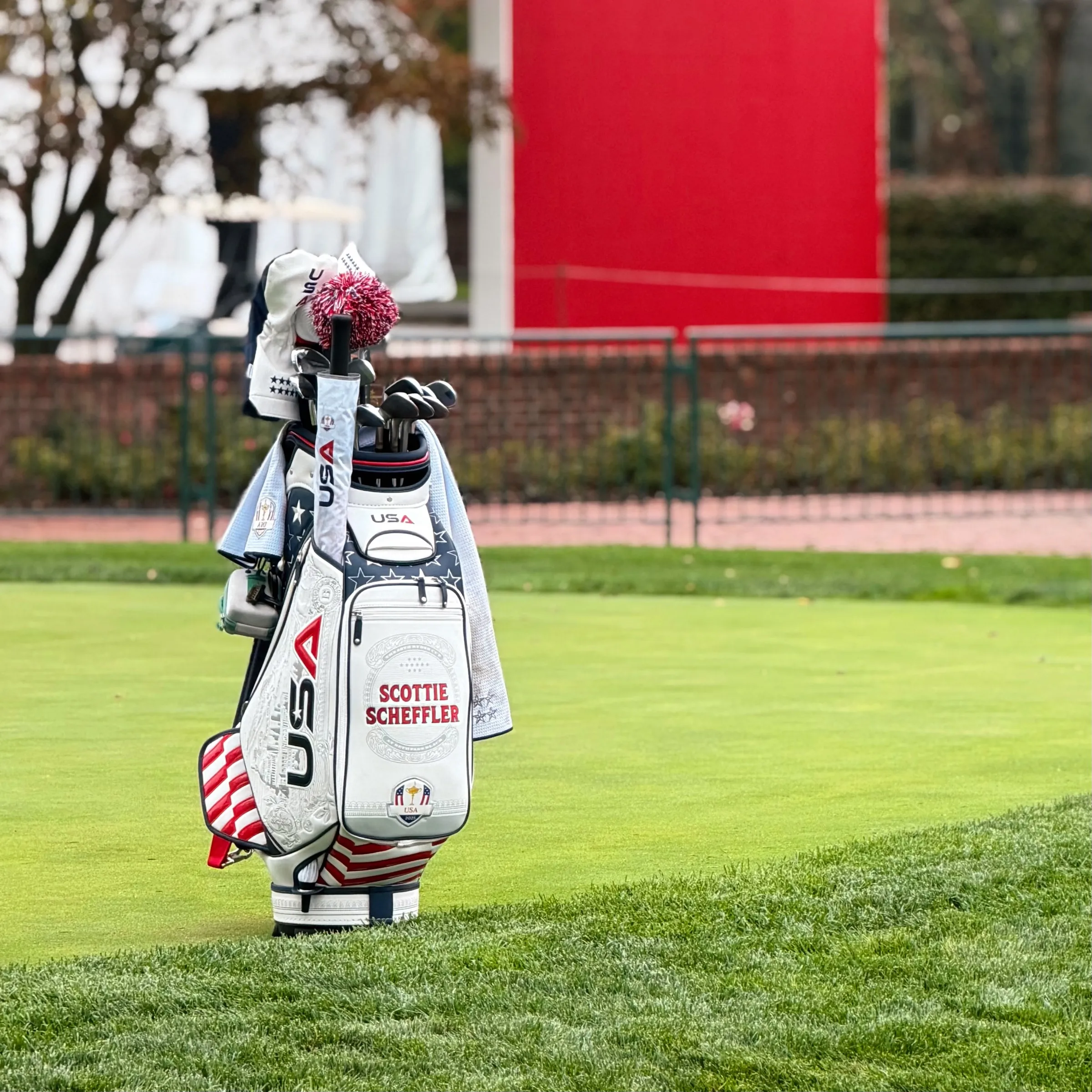
    Scottie Scheffler arrives at Riviera Country Club this week as the world’s top-ranked player, yet he is still seeking his first victory at the prestigious Genesis Invitational. While his relentless ball-striking and world-class short game make him a perennial favorite, his true secret weapon this week may not be a swing thought or a putting fix, but the man walking alongside him: veteran caddie Ted Scott.

    Scott is the most successful caddie in the field at Riviera, and his unparalleled history on the unique course provides an advantage no other player has.

    The Winningest Man on the Bag

    Ted Scott holds the remarkable distinction of being the winningest caddie in the modern history of the Genesis Invitational. His mastery of Riviera Country Club was proven while on the bag for Bubba Watson, whom he guided to an incredible three victories at Riviera: in 2014, 2016, and 2018. This intimate knowledge is crucial because Riviera is unlike almost any other course on the PGA TOUR schedule. Scott’s experience at this venue provides a tactical blueprint that can save Scheffler vital strokes, especially when navigating the challenging green complexes.

    The George C. Thomas, Jr. masterpiece is famed for its Kikuyu fairways and rough, a grass type that produces unpredictable lies and challenging approaches. Idiomatic of Thomas’s golf course design philosophy, Riviera is a “thinker’s course” with tricky runoffs and strategic doglegs that favors creative shotmaking and forces players to commit fully to every shot. This design principle dates back to Thomas’s first course that he designed on his own, Marion Golf Club in Massachusetts. Though Marion is certainly no Riviera, it provides a fascinating look into Thomas’s ability to extract complexity and challenge from a plot of land, a trait he perfected at Riviera.

    Scheffler’s Near Misses

    Despite his consistent dominance on the PGA TOUR, the Genesis Invitational remains one of the titles Scheffler has not yet claimed. He has certainly contended, though. His best finishes at the event include a tied for third place in 2025 and a tied for seventh place in 2022. These results underscore that while his talent puts him near the top of the leaderboard time and again, he has yet to piece together the four rounds required to beat the field—a puzzle that a caddie with Scott’s course-specific winning experience may be uniquely qualified to solve.

    A Tournament with Few Repeat Winners

    Further solidifying Riviera’s reputation as one of the PGA TOUR’s toughest assignments is the tournament’s history of unique winners. In the last 26 years alone (1999-2024, not including 2025 which was played at Torrey Pines due to the fires in Los Angeles), the Genesis Invitational has produced 21 unique champions, making it one of the biggest curve balls in terms of predicting who will win each year. This statistic underscores the difficulty players have in mastering the track, and it’s why a caddie’s experience is so valuable.

    From Pebble Beach Success to Riviera’s Test

    Scheffler enters the week in strong form, having posted a T4 finish last week at the AT&T Pebble Beach Pro-Am with a blistering final round 63. But while his recent performance confirms his game is dialed in throughout the bag, Riviera presents a different kind of test. It’s a place where talent alone often isn’t enough—notable names who never won at Riviera include Tiger Woods and Jack Nicklaus.

    Ted Scott’s experience on the bag for multiple wins where so many others have only one-off success is perhaps the X-factor Scheffler needs to ensure his name doesn’t join Woods and Nicholas on that list.

    The partnership between Scheffler and Scott has been dominant in golf since they began working together in late 2021. With Scott on the bag, Scheffler has won 20 PGA TOUR events, including four majors—the Masters (2022, 2024), the PGA Championship (2025), and The Open Championship (2025)—along with the 2024 FedEx Cup and a 2024 Olympic Gold Medal.

    For a player known for his discipline and process, having Scott’s proven formula for success at Riviera is the ultimate ace up the sleeve for the player who already holds the most dominant hand in golf.

  • At Pebble Beach, a Career First for Scottie Scheffler

    At Pebble Beach, a Career First for Scottie Scheffler

    Eagles were flying during Sunday’s final round at Pebble Beach, and not just the bald eagles that use the nearby Monterey Coast as a breeding ground. Soft conditions and Pebble’s modest 6,989-yard layout yielded low numbers throughout the week at the AT&T Pebble Beach Pro-Am, the first signature event of the PGA TOUR season.

    While there were many notable eagles on the week, including Sepp Straka’s eagle on the 72nd hole to jump into a share of second with Min Woo Lee, it was Scottie Scheffler who made a career first on Sunday when he carded three eagles in a single round.

    Scheffler had a slow start to the week with an even-par 72 at Pebble Beach. He bounced back with a 66 at Spyglass Hill and a 67 back at Pebble on Saturday. He began Sunday eight shots off the lead, tied for 22nd.

    But, you can never count the world number one out.

    On Sunday’s final round, Scheffler got off to a hot start: birdie-eagle-birdie. He made his second eagle of the day on the par-5 sixth hole and followed it with another birdie at seven, going out in 30 on the front nine.

    Scheffler stayed aggressive on the back nine, reaching 18-under with one hole to play. Needing another eagle at the 72nd hole to have an outside chance at winning the tournament, Scheffler played the mentally nerve-racking 18th at Pebble Beach in textbook fashion—a blistering 329-yard drive left him just 189 yards in. From there, Scheffler hit a beautiful flighted 6-iron against the coastal winds to 2 feet, 7 inches.

    “I hit a really nice flighted five iron into 17, so I used that visual to hit another nice shot into 18 with a six iron,” Scheffler said of his approach into the 72nd hole, knowing he needed eagle.

    With winds strengthening, Scheffler backed off his short eagle attempt multiple times before converting. The putt capped a 9-under 63 and a clubhouse lead at 20-under par. It marked the first time in 550 career rounds that Scheffler had made three eagles in a single round. He played Pebble’s par-5s in seven-under on Sunday alone.

    He also rolled in 151 feet of putts during the final round, a career best, and on Pebble’s often unpredictable poa annua greens, no less.

    “I had to do something special today to give myself a chance,” Scheffler said in his post-round interview. “On the back nine I felt like I needed to get to 21 or 22 under, so I was playing really aggressive — a bit more aggressive than maybe I normally am. I knew I needed to post a number, and I did a good job of fighting all week.”

    Behind him, the wind refused to settle, and the remaining players faced increasingly challenging conditions.

    Min Woo Lee birdied the final two holes to move one ahead of Scheffler, erasing the clubhouse lead. But, it was Collin Morikawa who was in control down the stretch. After birdies at 15 and 16 and a bogey at 17, Morikawa needed one more birdie at the 72nd to secure the title. He converted, closing out the victory in the season’s first signature event.

    While three eagles in one round is rare on the PGA TOUR, it is not unprecedented. In recent seasons, players have managed similar outlier rounds, with Chandler Phillips becoming the first player to record three eagles at THE PLAYERS Championship in 2025.

    It begs the question: has any player made four eagles in a single round? Yes, at the very same event. Willie Wood carded four eagles during the third round of the AT&T Pebble Beach Pro-Am in 1990.

    In the end, Scheffler’s Sunday charge came up two shots short, but it was a momentum-building performance he can carry into next week’s Genesis Invitational at Riviera Country Club.

    “These are the weeks I’m pretty proud of. I feel like I’m battling all week just to give myself a chance, and then to have some special stuff happen today and put myself in the clubhouse with maybe a chance is always nice,” Scheffler said. “Overall, I put up a good fight this week.”