Golfers are constantly searching for better equipment.
A new driver promises more distance with greater forgiveness. A new putter can inspire confidence on the greens and take pressure off the approach. Those purchases are exciting because they represent the idea that even a small improvement in equipment might lead to better shots and a more enjoyable round.
Golf gloves rarely inspire that same level of consideration, even though they’re the only piece of equipment that physically connects the player to the club. A poorly fitting glove can become a distraction, drawing attention away from the shot and toward something the player shouldn’t have to think about.
A golf glove often becomes a necessity rather than a decision. Most golfers find one they like and keep buying it.
I was no different.
For years, I have primarily worn Titleist Perma-Soft or Players gloves. They fit well and perform exactly as expected from a premium golf glove.
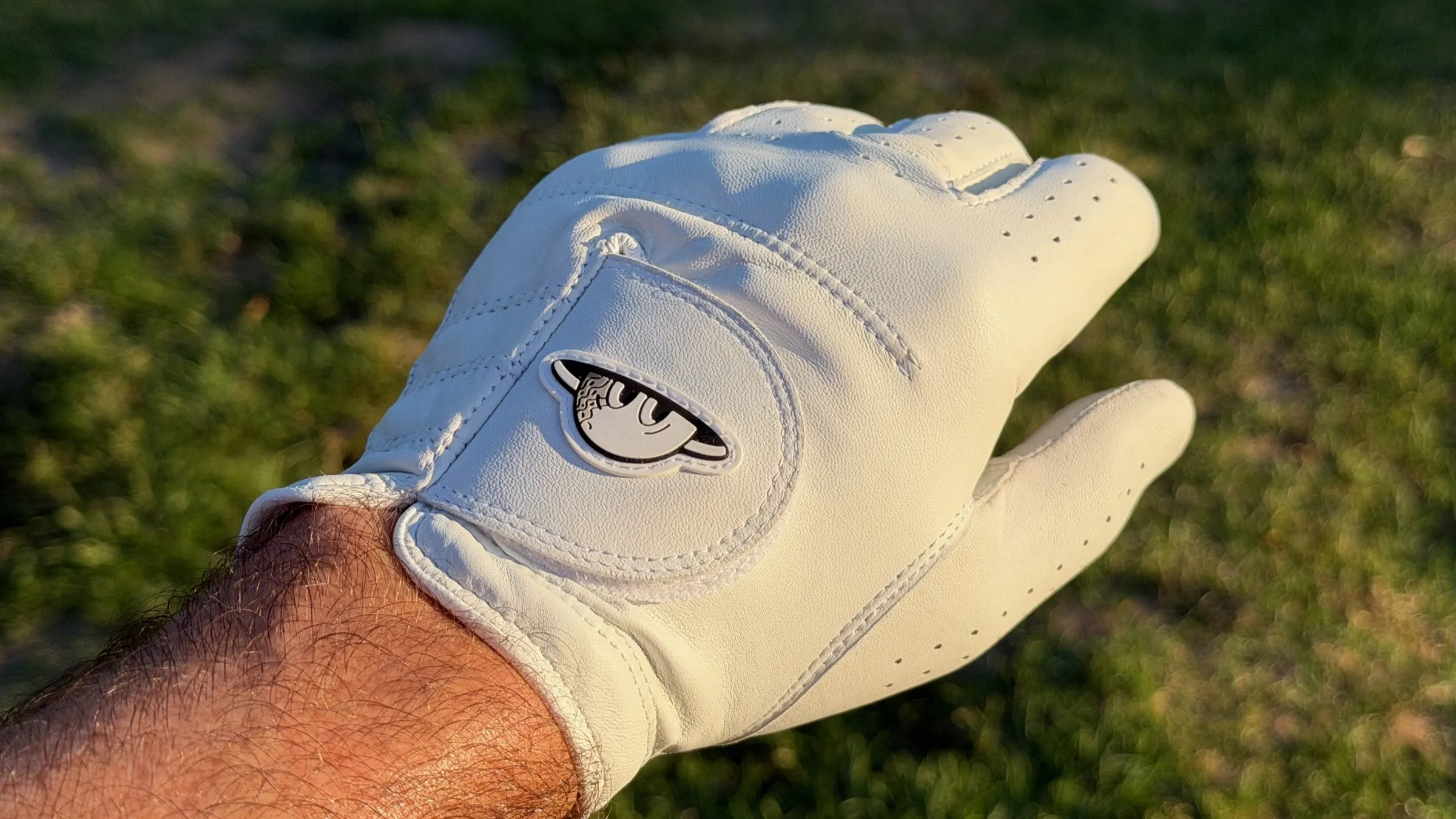
Then I tried RADMOR’s Limited Edition Player Performance Glove, and it immediately stood out.
The fit was unusually precise. The Velcro closure landed exactly where it should, there was no excess material around the fingers or palm, and the leather was exceptionally soft. It felt tailored rather than merely sized.
After a few holes, I stopped noticing the glove altogether and simply played golf. It also left me wondering: What makes this glove feel a notch above other premium gloves? Was this simply a glove that happened to fit my hand particularly well, or was there something more intentional behind the design?
I got in touch with RADMOR co-founder Scott Morrison to find out.
Designing a Better Golf Glove
RADMOR is best known for its approach to sustainable golf apparel, creating products with an emphasis on thoughtful materials, responsible manufacturing, and removing unnecessary synthetic materials from the clothing golfers wear.
A golf glove presented a different challenge altogether. Unlike apparel, it is a consumable product, one golfers expect to replace regularly. I was curious what inspired RADMOR to create a glove in the first place.
Scott Morrison, who co-founded RADMOR with Bob Conrad, said the idea grew out of their own experience as golfers.
“A golf glove is one of the few pieces of equipment most golfers use on almost every swing,” Morrison said. “Bob and I have both worn a glove since our college days and we felt it deserved the same level of attention to materials, design, and craftsmanship that we bring to RADMOR apparel.”
That idea was the foundation of the project.
Rather than creating another premium golf glove and competing solely on softness or branding, RADMOR approached the product the same way it approaches its apparel.
“We weren’t interested in just making another golf glove,” Morrison said. “We were interested in making the glove we would want if we could make it exactly the way we wanted.”
That process took far longer than expected.
The Complexity Behind Something Simple
A golf glove looks simple. It is a piece of leather shaped around a hand. They’ve been around so long one might assume there is a straightforward playbook to manufacture a golf glove.
But as with many well-designed objects, simplicity is often the result of solving complicated problems.
“What appears simple is often the hardest thing to get right,” Morrison said.
The RADMOR Player Performance Glove took nearly three years of development, including multiple rounds of prototypes, pattern adjustments, leather selections, and fit refinements.
RADMOR initially worked with one factory before realizing it wasn’t the right partner for the project.
“Eventually we found the right partner, but that took some time,” Morrison said.
The challenge was finding the right balance.
A golf glove needs to provide softness and feel while maintaining enough structure to hold its shape. Thicker leather can improve durability but may reduce feedback. Thinner leather creates a softer connection to the club but can wear more quickly.
RADMOR selected premium AAA cabretta leather sourced from Indonesia, choosing a material that balanced softness, consistency, tactile feedback, and durability.
“Most tour quality premium cabretta gloves optimize almost entirely for softness, often at the expense of longevity. We spent considerable time selecting a tour quality leather that provided a balance of thickness, weight, hand feel, stretch characteristics, and durability,” Morrison said.
“It had to offer exceptional feel while not ignoring longevity and shape retention.”
That balance is what separates a good glove from a great one.
Fit, Feel, and Restraint
When asked about the primary goals during development, Morrison gave a simple answer.
“Three things: fit, feel, and restraint.”
The word restraint stood out.
Golf equipment often competes for attention. Bright colors, bold graphics, and new technology are designed to be noticed. A golf glove succeeds by doing the opposite.
“We wanted exceptional tactile feedback, a precise tailored fit, and an aesthetic that felt more like a beautifully made leather good than a piece of sporting equipment,” Morrison said.
“If you notice the glove visually, we’ve probably done too much.”
That philosophy explains why the glove feels different.
After several rounds, what impressed me most wasn’t the softness. It was that I never thought about the glove again. I never tugged at the fingers or adjusted the closure before gripping the club. It simply stayed where it belonged, allowing me to focus entirely on the shot ahead.
Rethinking a Consumable Product
Golf gloves have a much shorter lifespan than golf apparel, which creates an interesting challenge from a sustainability standpoint.
How does a company focused on responsible production approach a product that golfers will eventually replace?
“Sustainability isn’t just about making products that last forever—although that would be something in the case of a golf glove,” Morrison said. “It’s as much about making products thoughtfully, using better materials, producing less, and avoiding unnecessary excess.”
The Player Performance Glove was produced as a very limited release of 1,250 units rather than a mass-market product.
The goal was not to flood the market with another disposable product. It was to create something golfers would genuinely appreciate using.
The Sign of Good Design
Golf gloves rarely receive the same level of consideration as other pieces of equipment. Yet they’re the only thing connecting a golfer’s hands to the club. While playing with RADMOR’s Player Performance Glove, I’ve come to appreciate just how much thought can go into getting that connection right. Most golfers will never think about pattern adjustments, leather thickness, or years of prototype testing, but they’ll almost certainly feel the result.
When players first put on RADMOR’s Player Performance Glove, Morrison hopes they notice the quality, fit and softness for a few holes before forgetting about the glove entirely.
“That’s usually the sign of good design,” he said.
After spending several rounds with the Player Performance Glove, I’d say he accomplished exactly that.
Availability: The RADMOR Limited Edition Player Performance Glove is sold in packs of two for $52. This initial production run is limited to 1,250 units and is available directly from RADMOR while supplies last.